
India's female workforce surges in rural areas, lags in cities post-pandemic
India's female labour force participation rose to 40% since 2019, with rural areas gaining 13 points versus 5 in cities, shows Periodic Labour Force Survey

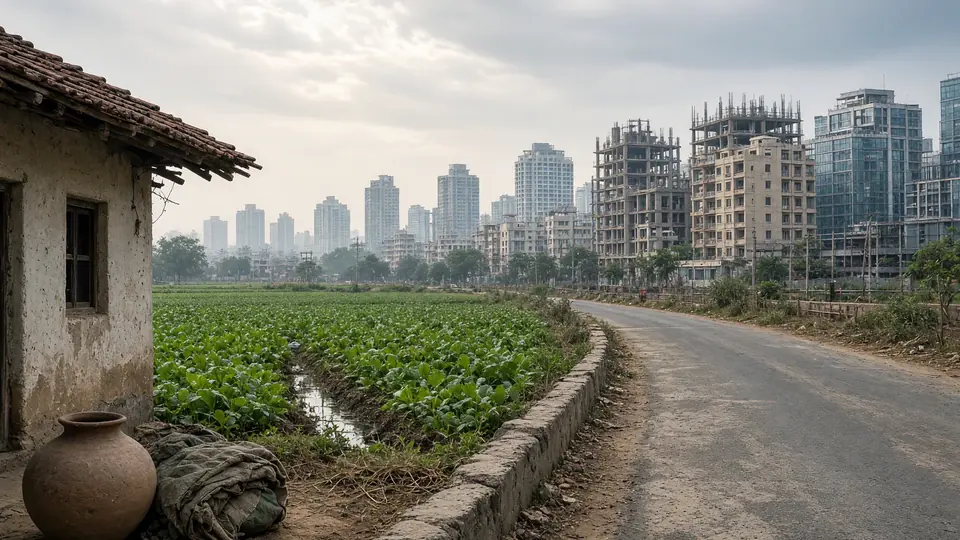
India's female workforce expanded sharply after the COVID-19 pandemic, but the gains split starkly along geographic lines: rural participation surged by nearly 13 percentage points between 2019–20 and 2025, while cities added fewer than five points, according to the Periodic Labour Force Survey 2025.
The overall female labour force participation rate for those aged 15 and above climbed from 30% to 40% during the period. Rural areas drove the bulk of that increase, rising from 33% to 45.9%, compared with 23.3% to 27.7% in urban centres. That disparity underscores how differently cities and villages absorbed women into the workforce after the pandemic shock.
Measuring pace, not just level
To understand which states moved fastest, the survey calculates Average Annual Percentage Point change—a measure of momentum, not a league table. In rural areas, West Bengal, Uttar Pradesh, Gujarat, Odisha, Bihar, Rajasthan and Haryana exceeded the all-India rural average. Most other states, including Madhya Pradesh, Punjab, Jharkhand, Chhattisgarh, Uttarakhand, Maharashtra, Goa, Himachal Pradesh and the five southern states, stayed below that benchmark, though nearly all posted positive annual gains.
Urban trajectories varied more. Rajasthan and Gujarat recorded improvements above two percentage points per year. Uttarakhand, Kerala, Chhattisgarh, Karnataka, Odisha, Bihar and Andhra Pradesh also beat the urban national average, while the rest lagged; Goa registered a negative change. Several states achieved strong urban gains even though cities nationwide advanced more slowly than villages.
Why starting points matter
Speed alone tells only part of the story. A state sprinting from a low base may still trail one that improved less quickly but began higher. Bihar, Uttar Pradesh, West Bengal and Haryana started rural participation relatively low yet posted above-average annual gains, signalling catch-up momentum. Goa and Punjab began low but improved more slowly, wasting headroom.
Odisha, Gujarat and Rajasthan began with higher rural participation and still accelerated faster than the national average, proving that momentum is not confined to laggards. Madhya Pradesh, Jharkhand, Uttarakhand, Chhattisgarh, Maharashtra, Himachal Pradesh and the five southern states started higher but slowed relative to the rest.
In cities, Rajasthan, Gujarat, Uttarakhand and Bihar began low and raced ahead. Uttar Pradesh, Jharkhand, Haryana and Punjab also started low but moved more slowly. Among states with already elevated urban participation, Kerala, Karnataka, Chhattisgarh, Odisha and Andhra Pradesh sustained above-average gains, while Tamil Nadu, Telangana, West Bengal, Maharashtra, Madhya Pradesh, Himachal Pradesh and Goa decelerated despite their head start.
Taken together, the patterns show that pace and level must be read in tandem: a modest annual gain may reflect an already high ceiling, while a steep climb may still leave participation low. Pairing the 2019–20 baseline with subsequent momentum offers a clearer picture of how women's workforce integration unfolded across India after the pandemic.
Source: The Hindu
Frequently asked questions
How much did India's female workforce participation grow after the COVID-19 pandemic?
India's overall female labour force participation rate for those aged 15 and above climbed from 30% to 40% between 2019–20 and 2025, according to the Periodic Labour Force Survey 2025.
Did female workforce growth differ between rural and urban areas?
Yes, significantly. Rural areas saw female participation surge from 33% to 45.9% (a gain of nearly 13 percentage points), while urban centres rose from 23.3% to 27.7% (fewer than 5 percentage points).
Which states showed the fastest growth in rural female workforce participation?
West Bengal, Uttar Pradesh, Gujarat, Odisha, Bihar, Rajasthan and Haryana exceeded the all-India rural average for annual percentage point change in female participation.
Why do starting participation levels matter when comparing state performance?
Starting points matter because a state with rapid growth from a low base may still have lower overall participation than a state with slower growth but a higher starting level. Both pace and level must be read together to understand true progress.
Which states showed strong urban female workforce gains despite slower nationwide city growth?
Rajasthan, Gujarat, Uttarakhand, Kerala, Chhattisgarh, Karnataka, Odisha, Bihar and Andhra Pradesh all beat the urban national average, even though cities nationwide advanced more slowly than villages.
You may also like
 Uttar Pradesh
Varanasi schools shut as heavy rains trigger widespread waterlogging across city
 Politics
BJP leader urges Modi to mandate sewage treatment before river discharge nationwide
 Uttar Pradesh
Woman files dowry harassment complaint against husband and in-laws in Muzaffarnagar
 Defence
India completes testing of indigenously made AK-203 assault rifle Sher
Most read
- 1
Uttar Pradesh extends healthcare and raises pay for 4,006 school cooks in Firozabad
- 2
Kanpur Dehat schools shut August 24 for heavy rain and religious observance
- 3
The Success Story: IPS officer left dentistry to crack UPSC, now inspiring civil services …
- 4
Ten accused convicted of double murder in Auraiya after coordinated prosecution effort
- 5
Auraiya police bust goat theft ring, arrest two suspects with weapons
Comments
No comments yet. Be the first to comment.