
India Excludes Sugar-Based Ethanol From 2026-27 Tender to Protect Supplies
India's oil firms exclude sugar-based ethanol from the 2026-27 tender and cut the maize ethanol procurement price to support sugar supplies.

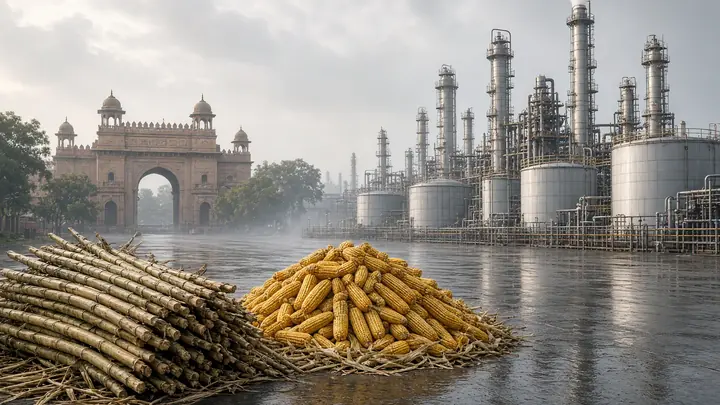
State-run oil marketing companies have excluded ethanol made from sugarcane juice, sugar syrup and B-heavy molasses from their latest procurement tender for the 2026-27 supply year. The decision is intended to protect domestic sugar supplies while allowing the nationwide petrol-blending programme to continue.
The tender, issued by Bharat Petroleum Corporation Limited (BPCL) on behalf of oil marketing companies (OMCs), seeks bids for around 11 billion litres of ethanol. The supply year begins in November and the procurement is meant to meet the requirement of blending 20% ethanol in petrol.
Sugar diversion directed to zero
The tender document said, “The Government of India has issued directions that sugar diversion for ethanol be reduced to zero for the ethanol supply year 2026-27.” It added, “No offers have been sought for ethanol produced from sugarcane juice, sugar or sugar syrup and B-heavy molasses in this quantity bid tender.”
The restriction marks a change in the feedstock mix for India’s ethanol-blended petrol programme, which has used both grain-based and sugarcane-based ethanol. The programme was developed to reduce crude oil imports and cut vehicle emissions.
The latest tender permits bids for ethanol produced from maize, broken rice, surplus rice procured by the Food Corporation of India (FCI) and C-heavy molasses. This leaves grain-based feedstocks and C-heavy molasses as the permitted alternatives to the sugar-based sources excluded from the tender.
The tender covers the ethanol supply year from November 2026 to October 2027. The shift is expected to increase the importance of feedstock availability, procurement prices and distillery capacity in meeting the blending requirement.
Maize procurement price reduced
The tender also lowers the procurement price for maize-based ethanol to ₹68.86 per litre from ₹71.86. The reduction in the maize incentive is ₹2.79 per litre from ₹5.79.
The lower incentive is expected to reduce returns for producers supplying ethanol made from maize. At the same time, the exclusion of sugar-based feedstocks makes alternative raw materials more important for distilleries participating in the procurement cycle.
The move comes amid concerns about domestic sugar availability and rising prices. Poor rainfall in key sugar-producing states, including Maharashtra and Karnataka, has raised the risk of lower output, according to the source material.
Balancing fuel and sugar needs
India, the world’s largest sugar consumer, has increasingly used ethanol blending to reduce its dependence on imported crude oil. However, diverting sugarcane and sugar to fuel production can compete with supplies available for food consumption, particularly when output is constrained.
India has adopted petrol containing up to 20% ethanol, known as E20, as the nationwide standard. The policy is part of efforts to reduce oil import dependence and emissions.
Ethanol is produced from agricultural feedstocks, including sugarcane and grains, and is blended with petrol to displace part of fossil fuel consumption. The programme has created a substantial market for domestic distilleries while providing farmers with an additional source of demand for agricultural produce.
The latest procurement decision therefore underscores the government’s effort to balance energy-security objectives with the need to maintain adequate sugar supplies and contain domestic prices. With sugar-based ethanol excluded from the 2026-27 cycle, grain-based production will assume greater importance in meeting the country’s petrol-blending requirements.
Source: The Hindu
Frequently asked questions
Why did India exclude sugar-based ethanol from the 2026-27 tender?
To protect domestic sugar supplies and reduce sugar diversion to ethanol to zero.
Which ethanol feedstocks are allowed in the 2026-27 tender?
Maize, broken rice, surplus rice procured by the FCI and C-heavy molasses.
How much ethanol does the tender seek?
Around 11 billion litres for the November 2026 to October 2027 supply year.
What is the new procurement price for maize-based ethanol?
₹68.86 per litre, down from ₹71.86 per litre.
What blending requirement is the procurement intended to meet?
The requirement to blend 20% ethanol in petrol.
You may also like
 Opinion
Big Indian AI SuperChip Dream: Bharatiya Chips Powering the Electronic Revolution
 Politics
BJP MP Gulam Ali Khatana alleges Pakistan orchestrated OIC’s anti-India resolutions
 National
Singareni revises pay scales for 1,800 officers, aligning them with Coal India
 Sports
Nandani Sharma Climbs 26 Places to 45th in ICC T20I Rankings
Most read
- 1
Air China Adds Extra Flight for Passengers Stranded in Fuel-Starved Cuba
- 2
Western disturbance to bring rain, hail and strong winds across north India
- 3
Yogi Adityanath Directs No Occupied Houses Be Demolished for Achhalda Bridge
- 4
Gwalior Temple Truck Crash Kills 12, Injures 28-29 Devotees During Navratri
- 5
Heavy Rain Waterlogs Bengaluru, Snarls Traffic; Ride-Hailing Fares Surge
Comments
No comments yet. Be the first to comment.