
HML Uses Drone Seeding to Restore 15 Acres in Idukki
HML utilizes drone seeding to restore 15 acres in Idukki, reviving native biodiversity and addressing ecological concerns.

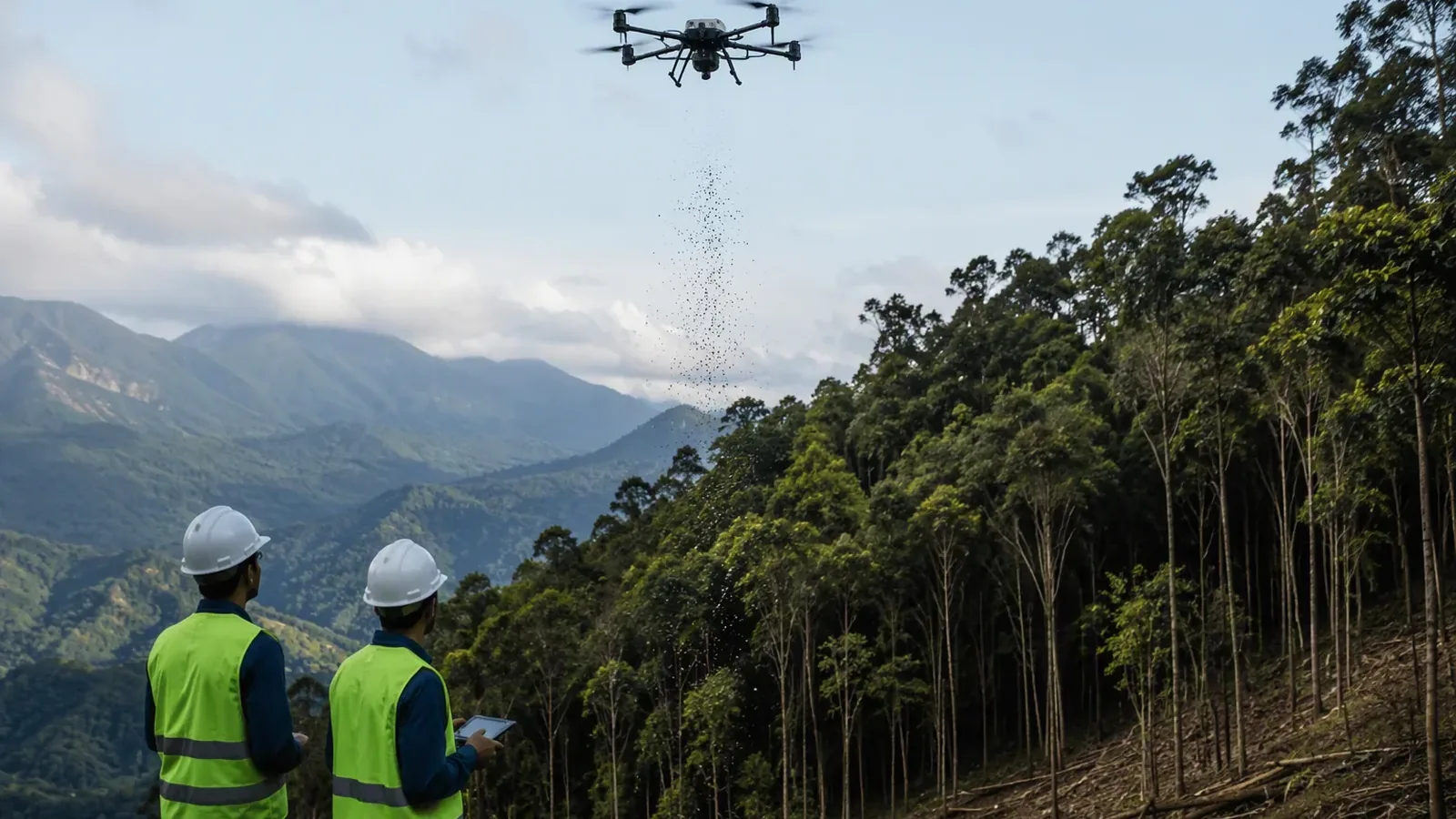
In a pioneering effort, Harrisons Malayalam Limited (HML) has successfully utilized drone seeding technology to restore 15 acres of land in Idukki that was previously dominated by exotic eucalyptus plantations. The eco-restoration project, carried out at the Pattumallay Estate near the Peerumade hills, marks a significant step towards reviving native biodiversity in the region.
Native Species Take Root
HML vice-president Anil George revealed that the company partnered with the Kerala Forest Research Institute (KFRI) to source seeds for the project. The initiative involved dispersing a diverse mix of 24 native species, including trees, shrubs, herbs, and lianas, such as Terminalia bellirica (Thanni), Spondias pinnata (Kattambazham), Albizia falcataria (Kattamaram), Phyllanthus emblica (Indian Gooseberry/Nelli), and Wrightia tinctoria (Dhanthapala).
The drone-based seeding approach was chosen to ensure uniform distribution, reduce labour costs, and minimise soil disturbance. Over 1.12 lakh seeds were dispersed across the site using drone technology and seed ball applications. HML expects to achieve a minimum plant density of 5,000 plants per hectare, translating to 30,000 plants across the restored area, by the end of the five-year establishment period.
Addressing Environmental Concerns
The restoration effort comes in response to the detrimental ecological impact of eucalyptus monocultures, which have been found to deplete soil moisture, suppress undergrowth, and reduce native biodiversity. A Rapid Biodiversity Assessment (RBA) conducted prior to the project confirmed the soil's capacity to support natural regeneration, with 24 native species already present in and around the site. The restored land is located near the Parunthumpara hills, which are home to natural grasslands.
Scaling Up Success
HML views the project as a model for future eco-restoration initiatives. “The drone-seeding technology was a big success, and we plan to replicate the model in other areas,” said George. The company has also recently experimented with drone-based transport for moving freshly harvested tea leaves from fields to weighment centres and processing factories, showcasing its commitment to innovative solutions.
This initiative underscores the potential of technology-driven approaches in addressing environmental challenges while fostering sustainable practices in the plantation industry.
Source: The Hindu
Frequently asked questions
What technology did HML use for restoring land in Idukki?
HML used drone seeding technology to restore 15 acres of land in Idukki.
How many native species were dispersed in the restoration project?
A diverse mix of 24 native species was dispersed in the restoration project.
What is the expected plant density after the restoration period?
HML expects to achieve a minimum plant density of 5,000 plants per hectare, translating to 30,000 plants across the restored area.
Why was the restoration project initiated?
The restoration project was initiated in response to the ecological impact of eucalyptus monocultures, which deplete soil moisture and reduce native biodiversity.
What are HML's future plans regarding the drone-seeding model?
HML plans to replicate the drone-seeding model in other areas as a model for future eco-restoration initiatives.
You may also like
 International
Solar expansion in China linked to significant bird species decline, study finds
 Karnataka
Bengaluru clay idol makers resist eco-friendly push as customers demand painted alternatives
 Tamil Nadu
First comprehensive field guide catalogues over 100 fish species in Chennai's waters
 Gujarat
20 Blackbucks Released in Gujarat's Banni Grasslands on Independence Day
Most read
- 1
Air China Adds Extra Flight for Passengers Stranded in Fuel-Starved Cuba
- 2
Western disturbance to bring rain, hail and strong winds across north India
- 3
Yogi Adityanath Directs No Occupied Houses Be Demolished for Achhalda Bridge
- 4
Gwalior Temple Truck Crash Kills 12, Injures 28-29 Devotees During Navratri
- 5
Schools Shut in Five Tamil Nadu Districts, Including Chennai, Amid Heavy Rain
Comments
No comments yet. Be the first to comment.