
Solar expansion in China linked to significant bird species decline, study finds
Research shows Chinese solar panel expansion correlates with reduced bird diversity, particularly in developed regions where habitat fragmentation threaten

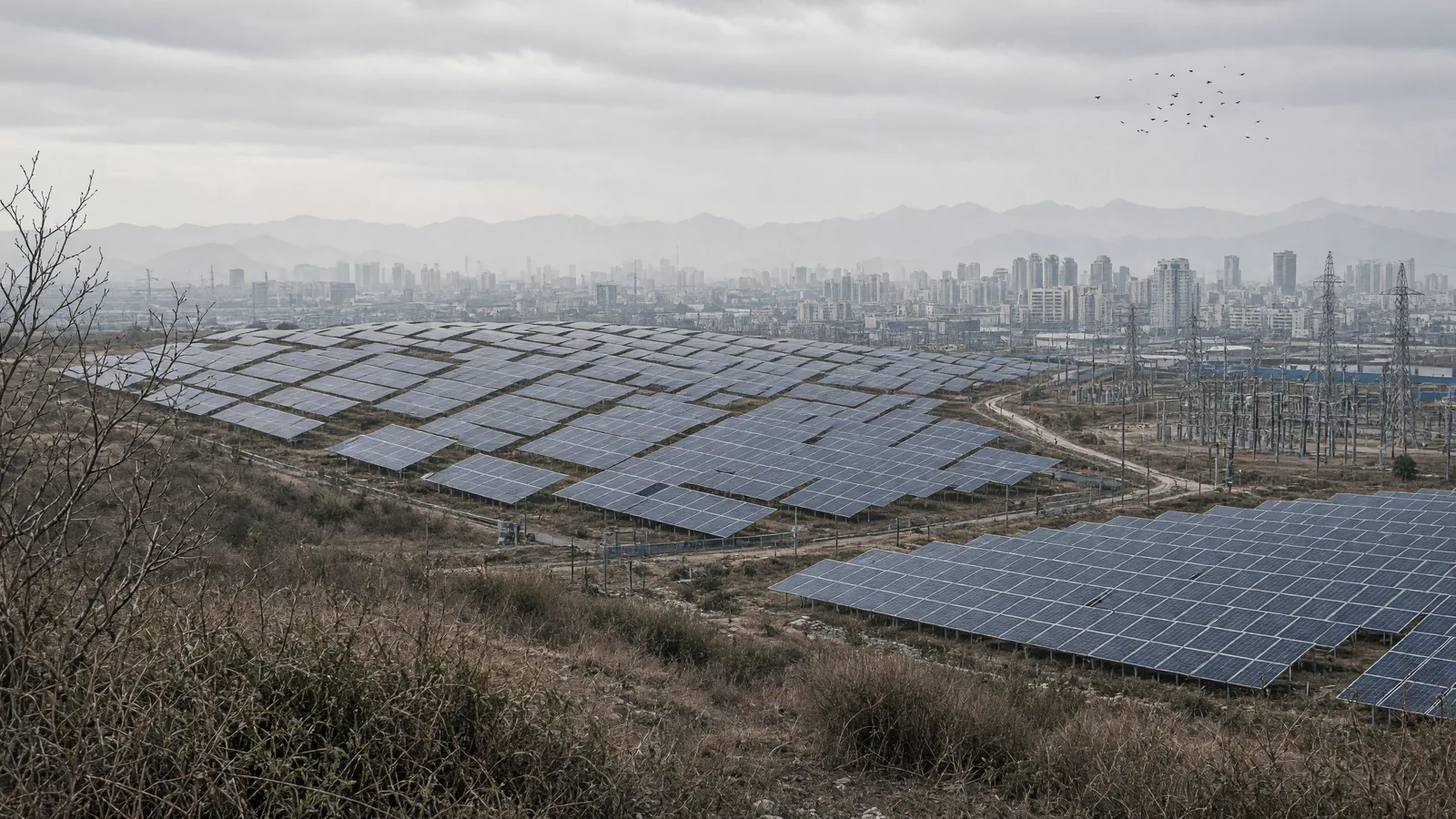
A China-U.S. research collaboration has documented biodiversity loss linked to solar panel installations across China, revealing that regions with stronger government incentives for photovoltaic development experienced sharper declines in bird species.
The study, published Friday in the peer-reviewed journal Science, identified a direct correlation between state support for solar energy and diminishing bird diversity, with economically developed and non-desert areas suffering the most significant species loss.
Habitat fragmentation drives species decline
Solar infrastructure expansion has encroached on critical foraging and breeding grounds for birds, while fragmenting remaining habitats and creating what the researchers describe as a "critical green dilemma" between carbon reduction targets and biodiversity protection.
The research team, led by scientists from Nanjing University of Information Science and Technology and including colleagues from China, Vietnam, and the United States, warned that policy-driven solar expansion risks inadvertently undermining local ecosystems without careful spatial planning.
'Inferior greening' masks ecological damage
Investigators uncovered a phenomenon they term "inferior greening", an increase in leaf coverage that fails to translate into viable wildlife habitat. This finding challenges conventional assumptions about vegetation growth as a proxy for ecological health in areas undergoing renewable energy development.
"Future photovoltaic development should be accompanied by strict biodiversity safeguards, especially in economically developed regions with high habitat complexity," the research team stated in their paper.
The findings underscore tensions inherent in China's dual environmental objectives: accelerating solar capacity to meet climate commitments while preserving the integrity of ecosystems already under pressure from development.
Source: South China Morning Post
Frequently asked questions
What does the China-U.S. study reveal about solar expansion and birds?
A research collaboration published in Science found a direct correlation between government incentives for solar energy development and declining bird species diversity in China, with economically developed and non-desert areas experiencing the most significant species loss.
How does solar infrastructure harm bird populations?
Solar panel installations encroach on critical foraging and breeding grounds for birds, fragmenting remaining habitats and reducing viable wildlife habitat despite increases in vegetation coverage in these areas.
What is 'inferior greening' and why does it matter?
Inferior greening refers to increased leaf coverage in solar development areas that fails to provide actual wildlife habitat. This challenges the assumption that vegetation growth alone indicates ecological health during renewable energy expansion.
What do researchers recommend for future solar development?
The research team calls for strict biodiversity safeguards accompanying future photovoltaic development, especially in economically developed regions with complex habitats, to balance climate commitments with ecosystem preservation.
You may also like
 International
China's solar capacity overtakes coal as largest power source for first time
 International
China's Perovskite Solar Farm Surpasses Silicon in Major Trial
 Politics
Modi accuses developed nations of shifting climate blame to India
 Agriculture
Karnataka farmer leases land for solar power hub benefiting thousands of pumps
Most read
- 1
Air China Adds Extra Flight for Passengers Stranded in Fuel-Starved Cuba
- 2
Western disturbance to bring rain, hail and strong winds across north India
- 3
Yogi Adityanath Directs No Occupied Houses Be Demolished for Achhalda Bridge
- 4
Gwalior Temple Truck Crash Kills 12, Injures 28-29 Devotees During Navratri
- 5
Schools Shut in Five Tamil Nadu Districts, Including Chennai, Amid Heavy Rain
Comments
No comments yet. Be the first to comment.