
Hathras Skeleton Remains Unidentified After DNA Fails to Match Claimant's Father
A human skeleton recovered during excavation in the courtyard of a house in Hathras has remained unidentified even after two years.

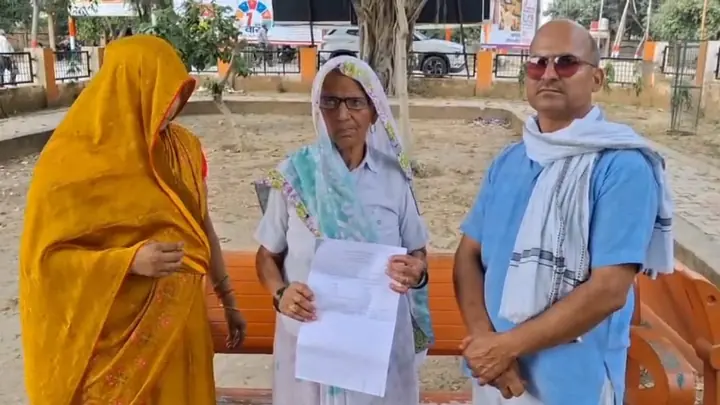
A human skeleton recovered during excavation in the courtyard of a house in Hathras has remained unidentified even after two years. The mystery has deepened after a DNA test failed to match the skeleton with Punjabi Singh, who had claimed that it belonged to his father.
The case has come to light from Gilondpur village in the Mursan area of Hathras. The recovery was made in September 2024, when excavation was being carried out in the courtyard of a house owned by Punjabi Singh. A human skeleton was found during the digging.
Punjabi Singh had claimed that the skeleton was that of his father. According to his claim, his father had been murdered around 30 years ago and his body had been buried in the courtyard of the same house.
In connection with the case, Punjabi Singh had accused Rajveer, a resident of the village, and his two real brothers, Mukesh and Pradeep, of murder. The allegations were made in the area under Kotwali Mursan police station.
To establish the truth in the case, police arranged for the recovered skeleton to undergo DNA testing. However, the test report showed that the DNA of the skeleton did not match Punjabi Singh’s DNA. After the report, the case became even more complicated.
The DNA result raised a central question: whose skeleton was recovered from the courtyard, and who had buried it there? The report did not establish that the skeleton belonged to Punjabi Singh’s father.
On Wednesday, Punjabi Singh reached the district collectorate with his mother, Urmila. During a conversation with the media, both said that around two years had passed since the incident, but the mystery had still not been solved.
They said that the family was still waiting for the truth of the case to come out. Despite the passage of time and the DNA investigation, no clear answer has emerged about the identity of the skeleton.
The case has drawn comparisons with the Ajay Devgn film Drishyam, in which a skeleton found during excavation becomes central to the mystery and complicates the entire story. A similar mystery has unfolded in Mursan, where the skeleton recovered from a house courtyard has still not been identified.
The biggest questions now remain: whose skeleton was buried in the courtyard for around 30 years, and who buried it there and why? Even after the DNA report, these questions remain unanswered. The Gilondpur case in Mursan continues to be a mystery two years later.
Frequently asked questions
Where was the human skeleton found?
It was found during excavation in the courtyard of a house owned by Punjabi Singh in Gilondpur village, Mursan, Hathras.
Whom did Punjabi Singh claim the skeleton belonged to?
He claimed that it belonged to his father, who he said had been murdered around 30 years earlier and buried in the same courtyard.
What did the DNA test reveal?
The DNA of the skeleton did not match Punjabi Singh’s DNA, so the test did not establish that it was his father’s skeleton.
Has the skeleton been identified?
No, the skeleton remains unidentified, and questions about whose skeleton it was and who buried it remain unanswered.
You may also like
 Politics
Former Hathras Municipal Chairperson Appeals Teachers to Vote for BJP MLC Candidates
 National
ABVP Hathras to Organise District-Level Agnishikha Conference on October 27
 National
Bike Allegedly Stolen Outside Hathras SDM Office, CCTV Security Under Scrutiny
 Politics
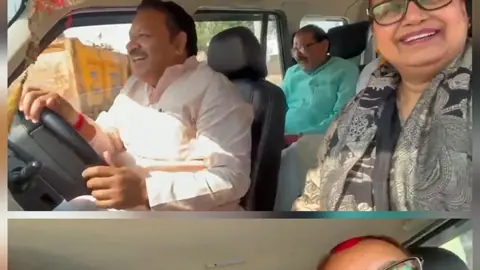
Hathras MP Drives as BJP Leaders Travel Together on Final Campaign Day
Most read
- 1
Air China Adds Extra Flight for Passengers Stranded in Fuel-Starved Cuba
- 2
Western disturbance to bring rain, hail and strong winds across north India
- 3
Yogi Adityanath Directs No Occupied Houses Be Demolished for Achhalda Bridge
- 4
Gwalior Temple Truck Crash Kills 12, Injures 28-29 Devotees During Navratri
- 5
Heavy Rain Waterlogs Bengaluru, Snarls Traffic; Ride-Hailing Fares Surge
Comments
No comments yet. Be the first to comment.