
Gulf states forge new military alliances as Iran strikes expose great power limits
Kuwait, Saudi Arabia pivot to Pakistan and Turkey for defense as US and China fail to shield them from Iranian strikes during six-month conflict.

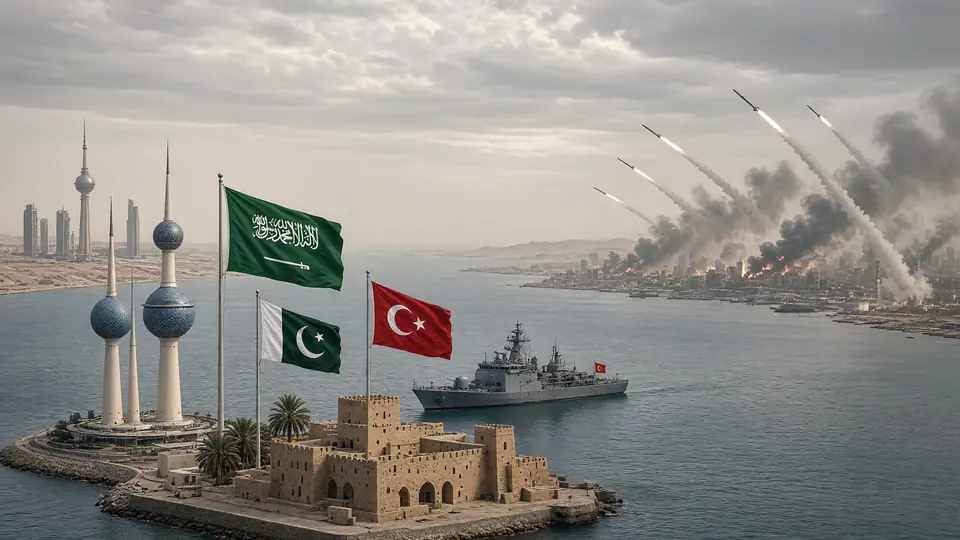
Gulf monarchies are signing military cooperation pacts with Pakistan and Turkey as the war in Iran stretches into its sixth month, turning to new defensive partners after discovering that neither Washington nor Beijing can shield them from Iranian strikes.
Kuwait signed a military cooperation agreement with Pakistan on Thursday that will provide training and bolster the city state's defensive capacity. The deal comes after Saudi Arabia concluded a three-way pact with Turkey and Pakistan featuring a NATO-style mutual defence clause treating an attack on one member as an attack on all.
New alliances expose limits of major powers
The strategic pivot follows repeated attacks on Gulf states, forcing their leaders to confront the reality that neither the United States nor China can protect them from Iranian military action. On Wednesday, the Iranian army warned that any "possible future war" with the US could spread across the region and target energy and communications infrastructure.
Observers warned that the Gulf states' shift towards self-reliant defence networks could test China's "involvement without commitment" strategy in the region. Beijing has pursued economic and diplomatic engagement across the Middle East while avoiding security guarantees or military entanglements that would force it to choose sides in regional conflicts.
The emerging security architecture marks a departure from the Gulf states' traditional reliance on Washington's security umbrella and Beijing's economic partnerships, suggesting both powers have lost credibility as guarantors during the current crisis.
Source: South China Morning Post
Frequently asked questions
What new military agreements have Gulf states signed recently?
Kuwait signed a military cooperation agreement with Pakistan on Thursday to provide training and bolster defensive capacity. Saudi Arabia also concluded a three-way pact with Turkey and Pakistan that includes a NATO-style mutual defence clause treating an attack on one member as an attack on all.
Why are Gulf states forming new military alliances?
Gulf monarchies are turning to new defensive partners after discovering that neither the United States nor China can shield them from Iranian strikes. The shift follows repeated attacks on Gulf states during the six-month war in Iran.
How does this shift affect the United States and China's influence in the region?
The Gulf states' move towards self-reliant defence networks marks a departure from their traditional reliance on Washington's security umbrella and Beijing's economic partnerships, suggesting both powers have lost credibility as guarantors during the current crisis.
What are the potential consequences for China's Middle East strategy?
The emerging security architecture could test China's "involvement without commitment" strategy in the region, as Beijing has pursued economic and diplomatic engagement while avoiding security guarantees that would force it to choose sides in regional conflicts.
You may also like
 International
Trump considers ending Iran conflict without new nuclear deal
 International
Pakistan may cut fuel prices after US-Iran peace deal
 International
Trump's Iran Deal Offers Economic Relief, Contradicts Surrender Demands
 International
Trump-Iran MoU Aims to Restore Pre-Conflict Conditions Amid Key Omissions
Most read
- 1
Tesla audits Chinese suppliers to scale up Optimus robot production
- 2
Former minister Lakhan Singh Rajput to inaugurate temple bhandara at Shri Chakreshwar Mahadev
- 3
Firozabad BSA finds four government schools locked during inspection
- 4
Tamil Nadu dengue cases fall for third consecutive year to 17,049
- 5
Social workers stage silent protest at Fufund railway station for train halts
Comments
No comments yet. Be the first to comment.