
Gill’s 223 Not Out Powers India’s Record 406 Chase Against West Indies
Shubman Gill hit an unbeaten 223 as India chased 406 against West Indies in Guwahati, winning the second ODI by eight wickets.

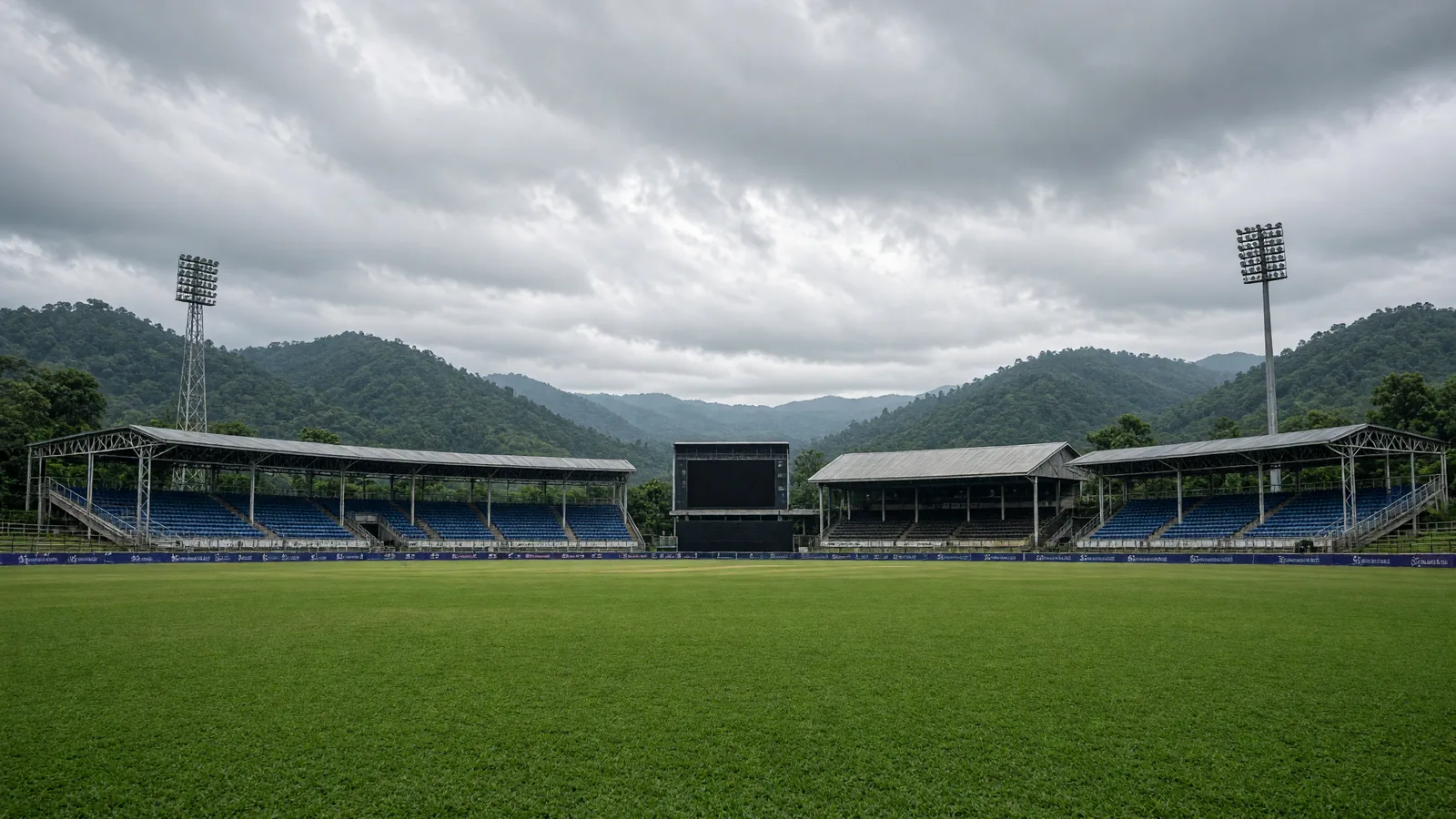
India chased down 406 in 43.3 overs in Guwahati as Shubman Gill’s unbeaten 223 turned West Indies’ record 405-7 into a losing total in the second ODI.
The result gave India an eight-wicket win after West Indies had posted their highest-ever ODI total and looked favourites at the interval.
Gill’s 223 not out was described by BBC as a career-best score and by Cricinfo as the quickest double-century and the highest score in an ODI chase.
India finished on 406-2, with Rohit Sharma making 101 and Gill remaining unbeaten after an innings that carried India to victory with 39 balls to spare.
Gill makes 223 not out in record chase
Gill brought up his century off 62 balls and reached 200 just 55 balls later, turning a target of 406 into what Cricinfo called an absolute stroll.
His 117-ball double-hundred was the fastest in ODI history, and the innings also became the highest score in an ODI chase.
Gill hit eight sixes and 26 fours, while Cricinfo recorded that he struck 34 of India’s 56 boundaries in the chase.
The India captain’s unbeaten 223 was the third-highest individual score in men’s ODIs, according to BBC.
Cricinfo also described it as the highest score for a captain in ODIs.
The innings gave Gill two scores of 200-plus in just 69 ODIs.
Cricinfo placed the performance in the context of his ODI record, noting that at the age of 27 he had 11 hundreds and 31 fifty-plus scores in just 69 matches.
Gill scored his runs in every corner of the ground, according to BBC’s description of his boundary map.
Cricinfo wrote that the night belonged to Gill, adding that he has shown repeatedly that there needs to be something extraordinary in the surface or the bowling to test him.
He celebrated with his helmet on top of the bat handle, in a gesture Cricinfo compared to Chris Gayle, who was often evoked on a day of special batting.
Rohit’s 101 gives India a 255-run start
Gill’s main support came from Rohit Sharma, who made 101 as India put on 255 for the first wicket.
Cricinfo described the stand as India’s biggest partnership in a chase.
Rohit was the only other man in the partnership to have scored multiple double-centuries in ODIs.
Rohit was quick to begin his innings and reached 35 off 27 balls.
Gill then welcomed Shamar Joseph to the crease with a four and a six to move to 36 off 21 balls.
Keemo Paul gave Rohit a second free hit of the night, and Rohit used it to reach a 32-ball fifty.
By the time Paul returned in the 15th over, Gill was moving into another gear and hitting even good balls away.
Gill charged the quicks, pulled the short balls that followed, and attacked the part-time offspin of Roston Chase.
Gill overtook Rohit and, according to Cricinfo, never looked back.
At 62 balls, Gill’s century was his quickest and also the quickest of the match.
By the time Rohit reached his century in 72 balls and highstepped the 100th run in celebration, Gill had raced to 142 off 82 balls.
Gill also took 18 off an over from Jayden Seales, whom Cricinfo described as West Indies’ best bowler.
Seales later dismissed Rohit for 101 with a ball that seamed in appreciably off the surface.
Virat Kohli then made 29 off 19 balls before being brilliantly caught on the fence by Sherfane Rutherford.
Ruturaj Gaikwad joined Gill after Kohli’s dismissal and helped ensure India won in style and with what BBC called remarkable ease.
West Indies’ 405-7 still not enough
West Indies had set up what looked like a winning position by making 405-7 in 50 overs.
Their innings was built on centuries from John Campbell, Shai Hope and Amir Jangoo.
Campbell made 101, Hope made 104, and Jangoo made 114.
The total was West Indies’ highest ever in the ODI format.
BBC wrote that West Indies looked to be favourites at the interval after posting that score.
The innings also made this only the sixth time in ODI history that a team had three centurions in one innings.
Cricinfo said the match was the first ODI in history to feature five centuries.
Four of those centuries were among the five quickest in India-West Indies ODI cricket, according to Cricinfo.
Campbell and Hope put on 110 in 79 balls for the second wicket.
Hope and Jangoo then added 182 for the third wicket to set the platform for West Indies’ record total.
Cricinfo wrote that a partnership worth 182 runs at nearly nine an over usually suggests brutal hitting, but said Hope and Jangoo’s work was anything but that.
Jangoo accelerated to take 55 off the last 23 balls he faced, yet Cricinfo wrote that he hardly played a shot in anger.
Campbell’s century came off 65 balls, making it West Indies’ fifth-quickest hundred.
He also registered West Indies’ joint-quickest half-century against India.
Campbell scored 101 of the 147 runs made while he was at the wicket.
He struck five sixes in his rapid century and took 22 off one Prasidh Krishna over.
Cricinfo wrote that Campbell took apart the seventh over of the afternoon, bowled by Krishna, and that a full house in Guwahati watched in pindrop silence as West Indies raked up 50 boundaries.
Hope went past Brian Lara’s tally of 19 hundreds during his innings.
Jangoo began against the old ball and still went as quickly as Campbell in making 114 off 77 balls.
India recover with ball despite injuries
India needed resourcefulness because their bowling effort was affected by injuries and West Indies’ remarkable batting.
BBC reported that Prasidh Krishna and Naman Dhir picked up injuries.
Cricinfo said India lost Krishna to injury after he had bowled five overs.
Dhir’s part-time offspin conceded 38 in 6.1 overs before he got injured.
Kuldeep Yadav finished with figures of 10-0-65-2.
That analysis made Kuldeep the second-quickest Indian to 200 ODI wickets.
Cricinfo wrote that Kuldeep’s figures should be seen in perspective given the conditions and the scoring.
Auqib Nabi had a difficult debut, conceding 84 runs.
BBC said 84 runs was the fourth-most conceded by an Indian winning his first ODI cap.
Cricinfo, however, said India had Nabi’s comeback to thank for after Krishna’s injury.
Nabi strung together three tight overs at the end of the West Indies innings.
The last 11 overs of West Indies’ innings produced 82 runs for five wickets.
Cricinfo wrote that this phase might have been the difference between an easy chase and what might have tested India.
If there was criticism of a batting unit that scored 405, Cricinfo said all three centurions fell to what could be termed soft shots.
Campbell pulled a regulation short ball from Gurnoor Brar to deep square leg.
Hope repeated his last dismissal by going against the turn of a Kuldeep googly.
Jangoo cut Ravindra Jadeja straight to point, giving Jadeja his first wicket in 46.3 overs since he got Temba Bavuma out last December.
Sherfane Rutherford repeated Campbell’s dismissal for a golden duck.
Keemo Paul hit Kuldeep straight to long-on.
Guwahati conditions leave bowlers with little help
Cricinfo said the conditions in Guwahati offered bowlers nothing.
The report listed little swing, little seam, negligible turn, hardly any variable bounce or loss of pace in the surface, and no reverse swing.
It also said the outfield was lightning quick, with many defensive pushes hurtling across for four.
Cricinfo wrote that the first signs of a hopeless day for bowlers came when Hope found his first boundaries through gentle pushes down the ground.
It took Kuldeep coming on in the 12th over for there to be an over without a boundary.
That quiet did not last long, as Campbell drove Kuldeep over extra cover for six in his second over.
Campbell did that after receiving treatment from swinging hard in the heat and humidity.
West Indies had made a similar start in the previous match but fell away after losing Campbell.
In Guwahati, Hope and Jangoo ensured India had to work harder.
The conditions still required skill, discipline, intent, appetite and fitness from the batters, according to Cricinfo.
BBC described Gill as being in sublime form.
Cricinfo said the surface and outfield did not remove the need for batters to execute what was done.
Five centuries and more than 800 runs
The match produced more than 800 combined runs across the two innings.
India’s 406-run chase was the second-highest successful run chase in ODI history, according to the Yahoo Sports report.
Cricinfo called it only the second successful chase of over 400 in ODI cricket.
West Indies made 405 for 7 before India reached 406 for 2.
The match saw a record five centuries.
Campbell, Jangoo and Hope scored centuries for West Indies, while Rohit and Gill scored centuries for India.
Yahoo Sports said the numbers told the story of a surface that gave batters everything and bowlers almost nothing.
Both sides crossed 100 with barely a wicket down at different points in the match.
The scoring imbalance reopened a familiar debate almost immediately, according to Yahoo Sports.
Fans and commentators shifted attention from the record-breaking individual efforts to the Barsapara pitch.
They questioned whether a surface offering bowlers this little should be hosting matches at all.
Yahoo Sports described the Guwahati ODI as one of the most extraordinary run-fests in the format’s history.
Fans and commentators criticise the pitch
Fans and commentators criticised the Barsapara pitch, arguing it offered bowlers no chance at all.
One fan wrote, “Who gives Guwahati serious cricket matches man? Terrible ODI pitch, terrible Test pitch. Tin pot ground. Light issues. Pan bahar ads. Everything ugly af.”
Yahoo Sports said the comment reflected frustration beyond one match because it grouped complaints about the surface, floodlights and advertising boards into a dismissal of the venue as a whole.
Journalist Boria Majumdar wrote, “100's for both openers to go with the 3 from the West Indies. What pitches are these? 400 will be overhauled in 45 overs.”
Majumdar then connected the match to Rohit’s recent form before returning to his complaint about the surface.
He wrote, “Rohit 2 hundreds in 3 games. Lord's and this. And yes he isn't retired yet! At the end of this series the narrative won't start again and that's a relief.”
Yahoo Sports said Majumdar’s framing captured a tension in how the innings was being remembered because it celebrated Rohit’s form while insisting the conditions were doing the batters’ work for them.
Majumdar added, “Gill 200 is on. This is not fair on the bowlers. You can't prepare these decks and reduce the game to a graveyard for bowlers.”
Another fan argued that bowlers were being blamed unfairly for a problem that sat with the groundstaff.
That fan wrote, “I see everyone is too harsh on the bowlers but there should be more criticism about the pitch. We have been preparing extreme wkts for tests and completely opposite of it in white ball cricket since 2 years. And anyway bowlers did a fantastic job in the 1st Odi.”
One user wrote, “These kind of pitches will kill cricket!”
Another fan questioned the broadcast coverage and wrote, “Not ONE commentator has said anything negative about this pitch. Not a single one. You wonder if they actually care.”
Yahoo Sports reported that fans remained frustrated with the overall condition of the pitch despite India winning the match.
Why the chase matters
The match matters because a total of 405 was overtaken with more than six overs unused.
Yahoo Sports wrote that a contest where 405 is overhauled with more than six overs unused is not really a contest in the traditional sense.
The report described it as a batting exhibition with fielders standing in the way.
Yahoo Sports said it was possible to enjoy Gill’s double-century and Rohit’s continued renaissance while still agreeing that the pitch made the whole exercise slightly hollow.
The deeper concern raised by fans, according to the report, was worth taking seriously beyond this single match.
Yahoo Sports said that if Indian curators were producing extreme, spin-friendly surfaces for Tests while going to the opposite extreme for white-ball cricket, that would be a deliberate policy choice rather than a one-off accident.
The report added that such a pattern would raise questions about what Indian conditions were being calibrated to test heading into a home-heavy stretch before the 2027 World Cup.
West Indies’ batting performance also came less than a week after news that their players must take a 25% pay cut as part of wider cost-saving measures.
BBC reported that the two-time World Cup winners were also facing a battle to qualify directly for next year’s competition.
BBC added that West Indies had been consigned to a qualifier in early 2027.
West Indies’ attack strengthened, but India took control
West Indies had reinforced their attack with the addition of Shamar Joseph and the left-arm spin of Vitel Lawes.
Jayden Seales began the defence well with a testing first over, during which Gill nearly played him on.
From the moment Alzarri Joseph opened the tap in the second over with ordinary lines and lengths, Cricinfo said the deluge never stopped.
For a long time, Gill and Rohit matched each other shot for shot.
Rohit eventually fell lbw for 101, according to BBC.
Cricinfo reported that Seales got Rohit out with the one ball that seamed in appreciably off the surface.
Kohli’s 29 did not last long enough for another century to be possible, with Cricinfo noting there were not enough runs left for him to score one.
Rutherford’s boundary catch ended Kohli’s innings.
Gill then stayed through to the finish as India reached 406-2.
India won by eight wickets.
The victory came in 43.3 overs.
The chase was completed with 39 balls to spare.
The full score and key numbers
West Indies made 405-7 in 50 overs, with Jangoo scoring 114, Hope 104 and Campbell 101.
India replied with 406-2 in 43.3 overs, with Gill unbeaten on 223 and Rohit making 101.
Kuldeep took 2-65 for India.
Gill’s 223 not out was his career-best ODI score.
His innings was the third-highest individual score in men’s ODIs.
His double-century was completed in 117 balls.
His century came off 62 balls.
His 200 came 55 balls after his century.
Rohit’s century came off 72 balls.
Rohit reached fifty off 32 balls.
The India opening stand was worth 255.
Campbell and Hope added 110 in 79 balls.
Hope and Jangoo added 182 for the third wicket.
Campbell struck five sixes.
Gill struck eight sixes and 26 fours.
The match featured five centuries.
It was only the sixth time in ODI history that a team had three centurions in one innings.
It was the first ODI in history to feature five centuries.
The match produced more than 800 combined runs.
India’s chase was the second-highest successful run chase in ODI history.
Cricinfo described it as only the second successful chase of more than 400 in ODI cricket.
West Indies’ 405-7 was their highest team total in the format.
Auqib Nabi conceded 84 runs on debut.
That was the fourth-most by an Indian winning his first ODI cap.
Kuldeep became the second-quickest Indian to 200 ODI wickets.
Dhir’s 6.1 overs cost 38 runs before his injury.
The last 11 overs of West Indies’ innings brought 82 runs and five wickets.
A run-fest remembered for both brilliance and conditions
The match combined individual milestones with a wider argument over the balance between bat and ball.
BBC’s report centred on Gill’s career-best unbeaten 223 and India’s sensational pursuit of West Indies’ record 405-7.
Cricinfo placed the innings among ODI landmarks by noting the fastest double-century, the highest score in a chase and India’s biggest partnership in a chase.
Yahoo Sports focused on the reaction to the Barsapara pitch after more than 800 runs and five centuries.
The cricket itself produced a rare scorecard in which West Indies’ highest ODI total was beaten with 39 balls unused.
The reaction around it showed that some fans and commentators saw the same numbers as evidence of a pitch that reduced the game to a “graveyard for bowlers,” in Majumdar’s words.
India’s scoreline, however, remained emphatic: 406 for 2 in 43.3 overs, an eight-wicket win, and Gill unbeaten on 223.
Frequently asked questions
What total did India chase against West Indies in Guwahati?
India chased down 406, finishing on 406-2 in 43.3 overs to win by eight wickets.
How many runs did Shubman Gill score?
Shubman Gill scored an unbeaten 223, described as a career-best score and the highest score in an ODI chase.
Why was Gill’s innings historic?
Gill reached his double-century in 117 balls, making it the fastest double-hundred in ODI history, and his 223 not out was the third-highest individual score in men’s ODIs.
Who supported Gill at the top of the order?
Rohit Sharma made 101 and shared a 255-run opening stand with Gill, India’s biggest partnership in a chase according to Cricinfo.
What was West Indies’ total in the match?
West Indies made 405-7, their highest-ever ODI total, but India chased it with 39 balls to spare.
You may also like
 Opinion
Big Indian AI SuperChip Dream: Bharatiya Chips Powering the Electronic Revolution
 Politics
BJP MP Gulam Ali Khatana alleges Pakistan orchestrated OIC’s anti-India resolutions
 National
Singareni revises pay scales for 1,800 officers, aligning them with Coal India
 Sports
Nandani Sharma Climbs 26 Places to 45th in ICC T20I Rankings
Most read
- 1
Air China Adds Extra Flight for Passengers Stranded in Fuel-Starved Cuba
- 2
Western disturbance to bring rain, hail and strong winds across north India
- 3
Yogi Adityanath Directs No Occupied Houses Be Demolished for Achhalda Bridge
- 4
Gwalior Temple Truck Crash Kills 12, Injures 28-29 Devotees During Navratri
- 5
Heavy Rain Waterlogs Bengaluru, Snarls Traffic; Ride-Hailing Fares Surge
Comments
No comments yet. Be the first to comment.