
Could Lord's ODI Be Rohit Sharma's Last for India? What We Know
Reports say India may move on from Rohit Sharma after the England series, but neither BCCI nor Rohit has announced his ODI retirement. Here is the verified picture.

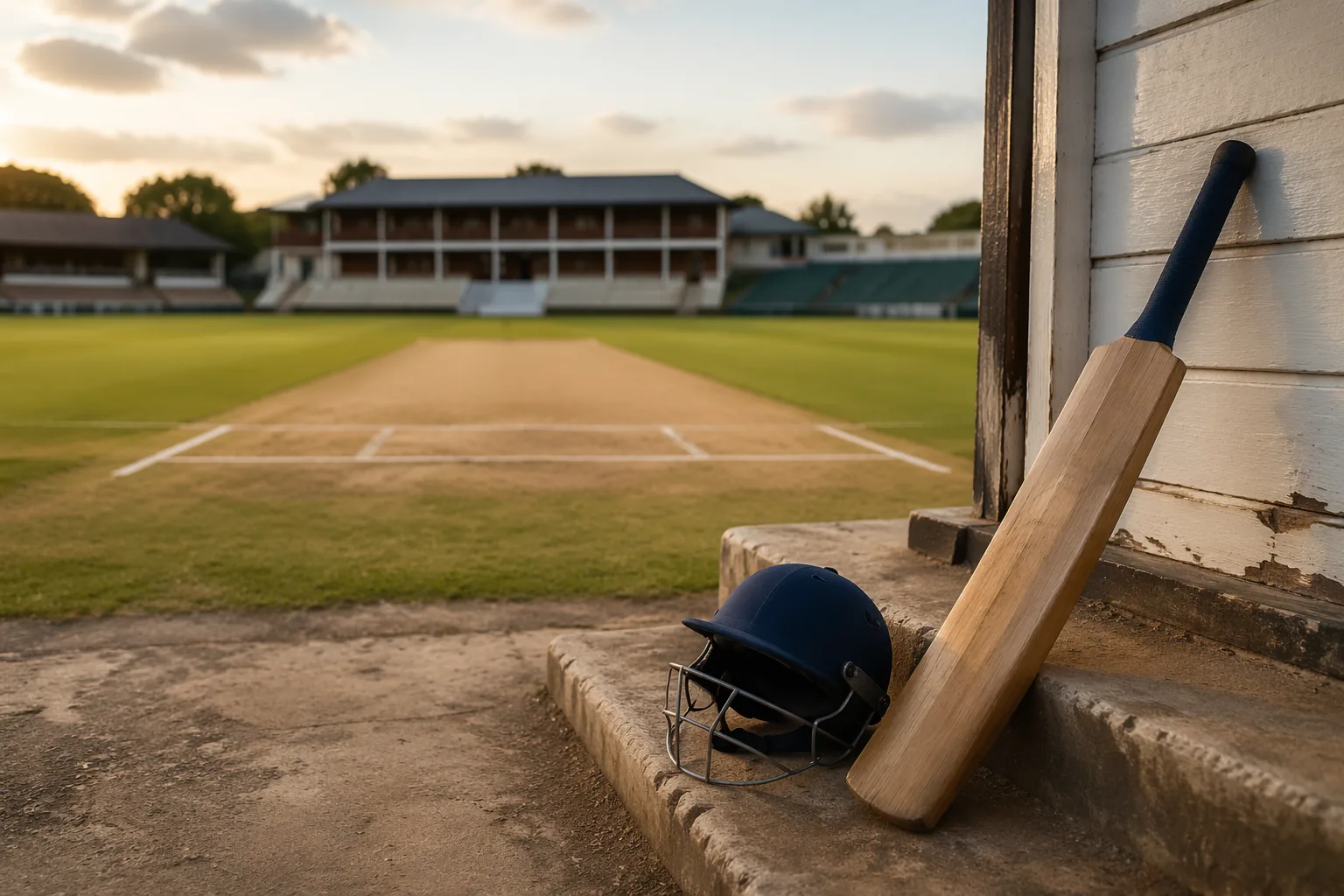
Rohit Sharma may walk out at Lord's on July 19 for what could be his final One-Day International for India. That possibility has triggered an emotional debate across Indian cricket, but the most important fact remains unchanged: neither the Board of Control for Cricket in India nor Rohit Sharma has announced his retirement from ODI cricket.
The discussion began after The Indian Express reported on July 16 that the senior selection committee had informed Rohit that it wanted to move on after the three-match England series. The report, based on unnamed board sources, said the selectors were looking towards the 2027 ODI World Cup and wanted to create opportunities for younger openers such as Yashasvi Jaiswal. Several other national outlets subsequently reported the same possibility.
That makes the Lord's match a potentially significant moment, but not a confirmed farewell. Until Rohit speaks publicly or the BCCI issues an official statement, any description of the match as his “last ODI” must be treated as a report rather than an established fact.
What the retirement report actually says
The Indian Express report says the selection panel spoke to Rohit and head coach Gautam Gambhir before the final phase of the England tour. According to the report, the committee does not see the veteran opener in its plans for the 2027 World Cup and believes the team should now invest in a younger top order. It also says the final decision about making a retirement announcement has been left to Rohit.
The context is important. Rohit is no longer India's ODI captain; Shubman Gill now leads the side. Rohit has already ended two major chapters of his international career. He retired from T20 internationals after captaining India to the 2024 T20 World Cup title and announced his retirement from Test cricket in May 2025. ODI cricket is the only international format in which he continues to play.
The selection question is therefore not only about one series or a short run of scores. It is about whether India believes a 39-year-old opener can remain central to a World Cup plan that will reach its decisive stage in late 2027, when Rohit will be 40.
What is confirmed, and what is not
Three points are confirmed. First, Rohit is part of India's current ODI squad in England. Second, the third and final match of the series is scheduled at Lord's on July 19. Third, there has been no formal retirement announcement from the player or the BCCI.
What remains unconfirmed is the private conversation attributed to the selectors, the exact nature of India's long-term plans, and whether Rohit intends to make any announcement after the series. Selection discussions are often fluid. Form, fitness, team balance and the availability of younger players can all alter a plan before the next major tournament.
That is why the most accurate description is that Rohit's ODI future is under serious review. Calling the Lord's game his confirmed farewell would go beyond the available evidence.
Why the 2027 World Cup is driving the debate
World Cup planning usually starts well before the tournament itself. India must decide who will open, who will captain, and how the batting order will adapt to conditions in South Africa, Zimbabwe and Namibia, the hosts of the 2027 edition. A younger opening combination would need enough matches to develop an understanding and learn how to handle different phases of a 50-over innings.
Yashasvi Jaiswal is one of the leading candidates for a long-term role at the top. Shubman Gill, already the captain, is another established opener. India also has to balance experience against the need for continuity. Rohit's knowledge of tournament pressure is difficult to replace, but selectors must also calculate the physical demands of another 15 months of international and domestic cricket.
The argument for retaining him is straightforward: few players understand ODI tempo better. Rohit can absorb pressure against the new ball and then accelerate so dramatically that a match changes within a few overs. The argument for transition is equally clear: a World Cup side cannot be built at the last moment, and younger players need a sustained run rather than occasional appearances.
From middle-order uncertainty to a legendary opener
Rohit's early international career did not immediately suggest that he would become one of the greatest ODI openers. He made his ODI debut against Ireland in June 2007 and was part of India's title-winning squad at the inaugural T20 World Cup later that year. For several seasons, however, he moved in and out of the middle order and struggled to convert his obvious talent into consistent international returns.
The turning point came in 2013, when captain Mahendra Singh Dhoni promoted him to open the batting in ODIs. The role gave Rohit time to judge the new ball, build an innings and then use his full range once set. His combination of patience, timing and power transformed both his career and India's approach at the top of the order.
He became especially dangerous because his hundreds so often grew into enormous scores. Bowlers who failed to dismiss him early could find the game escaping rapidly in the middle and final overs. That ability made the nickname “Hitman” more than a marketing label; it became a description of how decisively he could control a limited-overs contest.
The 264 and three ODI double-centuries
Rohit's most famous individual record came at Eden Gardens on November 13, 2014, when he scored 264 against Sri Lanka. It remains the highest individual score in men's ODI cricket. The innings contained 33 fours and nine sixes and demonstrated his rare capacity to turn a careful start into a record-breaking finish.
He is also the only batter to have scored three ODI double-centuries: 209 against Australia, 264 against Sri Lanka and an unbeaten 208 against Sri Lanka. A double hundred in a 50-over match is exceptional because it requires endurance, strike rotation and sustained boundary-hitting. To do it three times placed Rohit in a category of his own.
A World Cup record that defines his peak
The 2019 ODI World Cup provided another landmark. Rohit scored five centuries in a single edition, the most by any batter in one World Cup. He finished as the tournament's leading run-scorer and repeatedly gave India control at the start of important matches.
At the 2023 World Cup, his contribution looked different but was just as influential. As captain and opener, he attacked the powerplay, accepted the risk of early dismissal and created space for the middle order. India won ten consecutive matches before losing the final to Australia. The trophy did not arrive, but the aggressive template shaped the team's identity.
Captaincy, trophies and a lasting influence
Rohit's leadership legacy extends beyond bilateral results. He captained India to the 2024 T20 World Cup title, ending a long wait for a global trophy, and then led the team to the 2025 Champions Trophy. His success with Mumbai Indians, where he captained five IPL title-winning campaigns, had already established his reputation as a calm and tactically flexible leader.
Players and coaches have often highlighted his ability to communicate roles clearly and support younger teammates. That experience is part of the selection dilemma. Moving on may create room for the next generation, but it also removes a player who understands the pressure of knockout cricket and the demands of leading a high-profile Indian side.
Why Lord's would be a symbolic stage
Lord's carries a special place in cricket history. If July 19 does become Rohit's final appearance for India, the venue would add symbolism to the moment. A career that began with uncertainty and grew into one of the most remarkable ODI journeys would close at the sport's most famous ground.
Yet sport does not always provide a planned farewell. Selectors can change direction, players can decide to continue, and performance can reopen a conversation that appeared settled. The uncertainty surrounding Rohit is precisely why the match has attracted so much attention.
The bottom line
There is credible reporting that India's selectors are considering a future without Rohit Sharma and that the Lord's ODI could be his last international match. There is also a clear absence of official confirmation. Both facts must be presented together.
For now, Rohit remains an active ODI player and one of the format's defining batters. Whether he leaves at Lord's, continues for another series or attempts to reach the 2027 World Cup will become clear only through an official announcement or future selection decisions. Whatever happens next, his three double-centuries, record 264, five hundreds at the 2019 World Cup and trophy-winning captaincy have already secured his place in cricket history.
Frequently asked questions
You may also like

Most read
- 1
Air China Adds Extra Flight for Passengers Stranded in Fuel-Starved Cuba
- 2
Western disturbance to bring rain, hail and strong winds across north India
- 3
Yogi Adityanath Directs No Occupied Houses Be Demolished for Achhalda Bridge
- 4
Gwalior Temple Truck Crash Kills 12, Injures 28-29 Devotees During Navratri
- 5
Schools Shut in Five Tamil Nadu Districts, Including Chennai, Amid Heavy Rain
Comments
No comments yet. Be the first to comment.