
China faces pressure to shape maritime law as Pacific islands sink beneath rising seas
China faces pressure to take a position on whether maritime boundaries should shift as sea levels rise, affecting Pacific island nations like Tuvalu and Ki

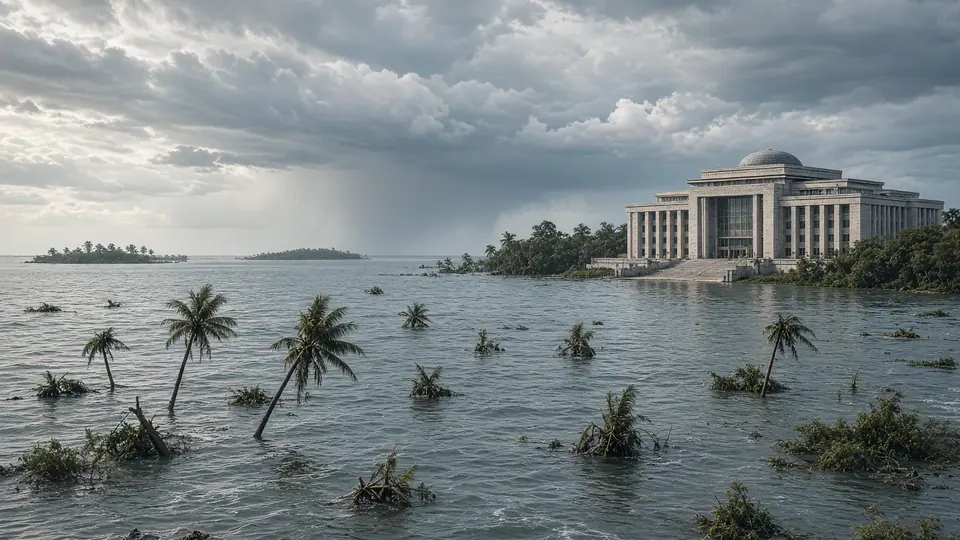
China is coming under pressure to clarify its position on one of the most pressing questions in international law: whether maritime boundaries should shift as coastlines erode or remain permanently fixed in place.
The debate has emerged as rising sea levels threaten the territorial foundations of low-lying Pacific island states such as Tuvalu and Kiribati. For these nations, rising sea levels represent not merely an existential crisis but one that fundamentally challenges the very meaning of statehood itself.
At the heart of this lies a contentious question that carries profound implications not only for the survival of vulnerable island nations but also for the rest of the world. The question is whether maritime boundaries should move with changing coastlines or be frozen in place permanently.
While rising sea levels do not pose a direct existential threat to China, their impact on international maritime law could have knock-on effects in other areas, according to the source material.
Some analysts have argued that Beijing should position itself as both a legal advocate and technical partner for Pacific nations. They suggest China could offer tangible support to these island states, including surveying expertise, coastal protection technology and advocacy for fixed maritime boundaries.
Such a stance would place China at the center of a debate that will help determine how international law adapts to climate change in the coming decades. The position Beijing ultimately adopts could shape the trajectory of maritime law globally, setting precedents that extend far beyond the Pacific region.
The call for China to engage with this issue reflects the growing recognition that climate-driven changes to coastlines are creating unprecedented legal challenges. Traditional frameworks for determining maritime zones were designed for a world of stable coastlines, not one where entire island nations face the prospect of disappearing beneath the waves.
For Pacific island states, the stakes could not be higher. If maritime boundaries are allowed to shift inward as coastlines erode and islands shrink, these nations stand to lose vast stretches of ocean territory along with the fishing rights and seabed resources those waters contain. Conversely, fixing boundaries at their current positions would preserve these rights even as the physical land masses diminish.
China's potential role in this debate is significant given its growing presence and influence in the Pacific region. By offering both legal support and practical technical assistance such as surveying capabilities and coastal protection infrastructure, Beijing could position itself as a key partner for vulnerable island states navigating this unprecedented challenge.
The question of maritime boundaries in an era of climate change represents uncharted legal territory, and the international community is still grappling with how to respond. Whether China chooses to play an active role in shaping that response, and what position it ultimately takes, will have ramifications that extend well beyond the Pacific islands themselves.
Frequently asked questions
What is the maritime boundary debate affecting Pacific island nations?
The debate centers on whether maritime boundaries should shift as coastlines erode due to rising sea levels or remain permanently fixed in place. This question has profound implications for low-lying Pacific island states like Tuvalu and Kiribati, as changing boundaries could affect their territorial waters, fishing rights, and seabed resources.
Why does China's position on maritime law matter for Pacific island states?
China has growing influence in the Pacific region and could position itself as both a legal advocate and technical partner for vulnerable island nations. By offering surveying expertise, coastal protection technology, and support for fixed maritime boundaries, China could help shape how international law adapts to climate change and set global precedents.
What would happen to Pacific island nations if maritime boundaries shift with eroding coastlines?
If boundaries move inward as coastlines erode, island nations would lose vast stretches of ocean territory along with the fishing rights and seabed resources those waters contain. Conversely, fixing boundaries at current positions would preserve these rights even as the physical landmasses diminish.
Why were traditional maritime law frameworks not designed for this challenge?
Traditional frameworks for determining maritime zones were created for a world with stable coastlines. They do not account for unprecedented climate-driven changes where entire island nations face the prospect of disappearing beneath rising seas, creating legal challenges that international law is still grappling with.
You may also like
 International
US pledges 150 million dollars to counter China's influence across Pacific islands
 Accident
Glacier collapse triggers deadly mudslide in Himalayas, hundreds missing
 International
Xi's anti-corruption drive accelerates after more than a decade in power
 Business
Pacific island nations play superpowers, securing Western defence deals and Chinese investment
Most read
- 1
Tesla audits Chinese suppliers to scale up Optimus robot production
- 2
Former minister Lakhan Singh Rajput to inaugurate temple bhandara at Shri Chakreshwar Mahadev
- 3
Firozabad BSA finds four government schools locked during inspection
- 4
Tamil Nadu dengue cases fall for third consecutive year to 17,049
- 5
Social workers stage silent protest at Fufund railway station for train halts
Comments
No comments yet. Be the first to comment.