
Glacier collapse triggers deadly mudslide in Himalayas, hundreds missing
Glacier collapse at 5,000m triggers mudslide in Nepal and China, killing hundreds. Climate experts warn of new climate risks beyond sea-level rise.

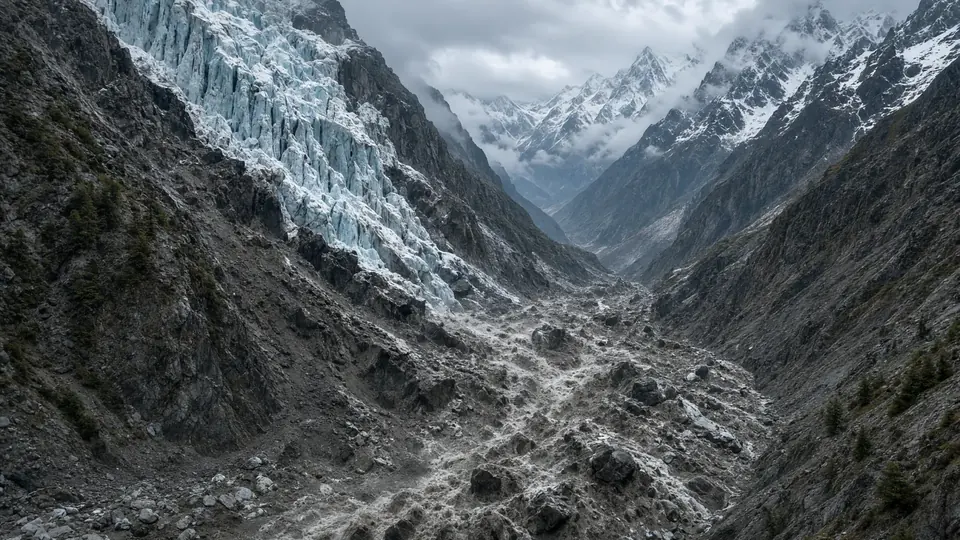
The rapid transformation of glacier ice into a lethal mudslide at high altitude now ranks among the frontline dangers of global warming, according to a Chinese academic writing in the wake of the deadly Himalayan disaster that claimed hundreds of lives across Nepal and China in late August.
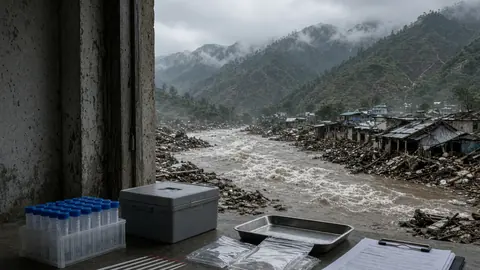
A glacier section collapsed above 5,000 metres on the Nepalese flank of the Himalayas on August 26, sending ice and rock cascading down a steep valley at approximately 50 metres per second. Within seven minutes the debris had morphed into a high-speed mudslide that struck Gyirong Port on the Chinese side, largely burying the border facilities. Hundreds remain missing on the Chinese side, while entire Nepalese villages were swept away, leaving hundreds dead and thousands unaccounted for.
Beyond rising seas
Dr Zhengxu Wang, a distinguished professor at the School of Public Affairs at Zhejiang University, argues that the disaster exposes a more complex geography of climate vulnerability than the low-lying island and coastal cities that have dominated public attention. While sea-level rise remains real, urgent and predictable enough to drive institutional responses, including sea walls in megacities from Shanghai to Mumbai to New York, and relocation treaties for small island states purchasing land abroad as climate insurance, it is no longer the only face of existential risk.
Extreme rainfall now ranks as the second most immediate threat. For several years Beijing and large areas of inland China, traditionally drier regions, have endured catastrophic floods that overwhelmed drainage systems never designed for the intensity of precipitation now falling from a warmer atmosphere, affecting millions.
Drought exposes buried history
Drought constitutes the third major risk. A severe and persistent drought coupled with record heatwaves created a crisis across much of Europe this summer, pushing the Rhine, Danube and Loire to historically low levels and disrupting river transport. France alone faces an estimated €10, 15 billion in heat-related losses and a projected 35 per cent drop in maize yields. Low river levels and wildfires have also exposed unexploded ordnance from World War II that had long been submerged or buried.
The Himalayan mudslide underscores that destabilised ice and snow at high altitudes now represent an increasingly urgent dimension of climate risk, one that demands the same institutional vigilance as coastal defences.
Source: South China Morning Post
Frequently asked questions
What caused the mudslide in the Himalayas in August?
A glacier section collapsed above 5,000 metres on the Nepalese flank of the Himalayas on August 26, sending ice and rock cascading down a steep valley at approximately 50 metres per second. Within seven minutes, the debris had transformed into a high-speed mudslide that struck Gyirong Port on the Chinese side.
How many people were affected by the Himalayan disaster?
Hundreds were killed and thousands remain unaccounted for. Entire Nepalese villages were swept away, and hundreds remain missing on the Chinese side, largely from the largely buried border facilities at Gyirong Port.
What are the main climate-related threats beyond sea-level rise?
According to the article, extreme rainfall ranks as the second most immediate threat, causing catastrophic floods in traditionally drier regions like inland China. Drought constitutes the third major risk, with severe droughts and record heatwaves affecting Europe and disrupting river transport.
Why does the Himalayan mudslide represent a new climate risk?
The disaster exposes that destabilised ice and snow at high altitudes now represent an increasingly urgent dimension of climate risk, one that has been less prominent in public attention than coastal threats like sea-level rise, but demands the same institutional vigilance and response.
You may also like
 Accident
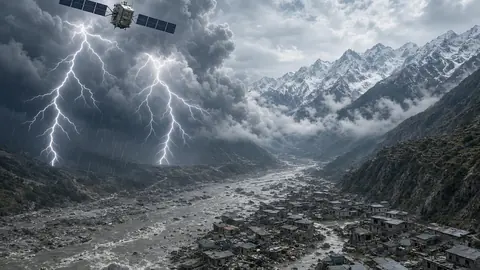
China deploys weather satellite to track storms over Nepal glacier disaster zone
 International
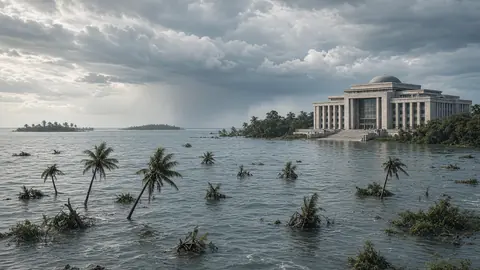
China faces pressure to shape maritime law as Pacific islands sink beneath rising seas
 National
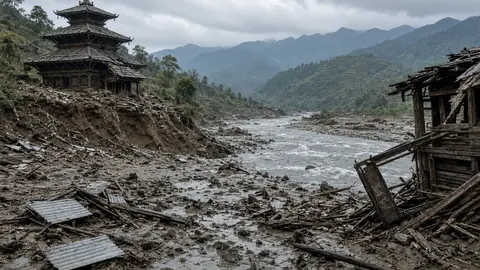
Nepal floods push thousands toward migration as homes and livelihoods wash away
 Weather
Nepal uses DNA to identify over 1,300 flood victims as search continues
Most read
- 1
Tesla audits Chinese suppliers to scale up Optimus robot production
- 2
Former minister Lakhan Singh Rajput to inaugurate temple bhandara at Shri Chakreshwar Mahadev
- 3
Firozabad BSA finds four government schools locked during inspection
- 4
Tamil Nadu dengue cases fall for third consecutive year to 17,049
- 5
Social workers stage silent protest at Fufund railway station for train halts
Comments
No comments yet. Be the first to comment.