
Baththa Review: Vijay Sethupathi’s Don Drama Marks Balaji’s Comeback
Balaji Tharaneetharan returns with Baththa, a funny and moving Vijay Sethupathi film seen through a schoolboy's fear of a local don.

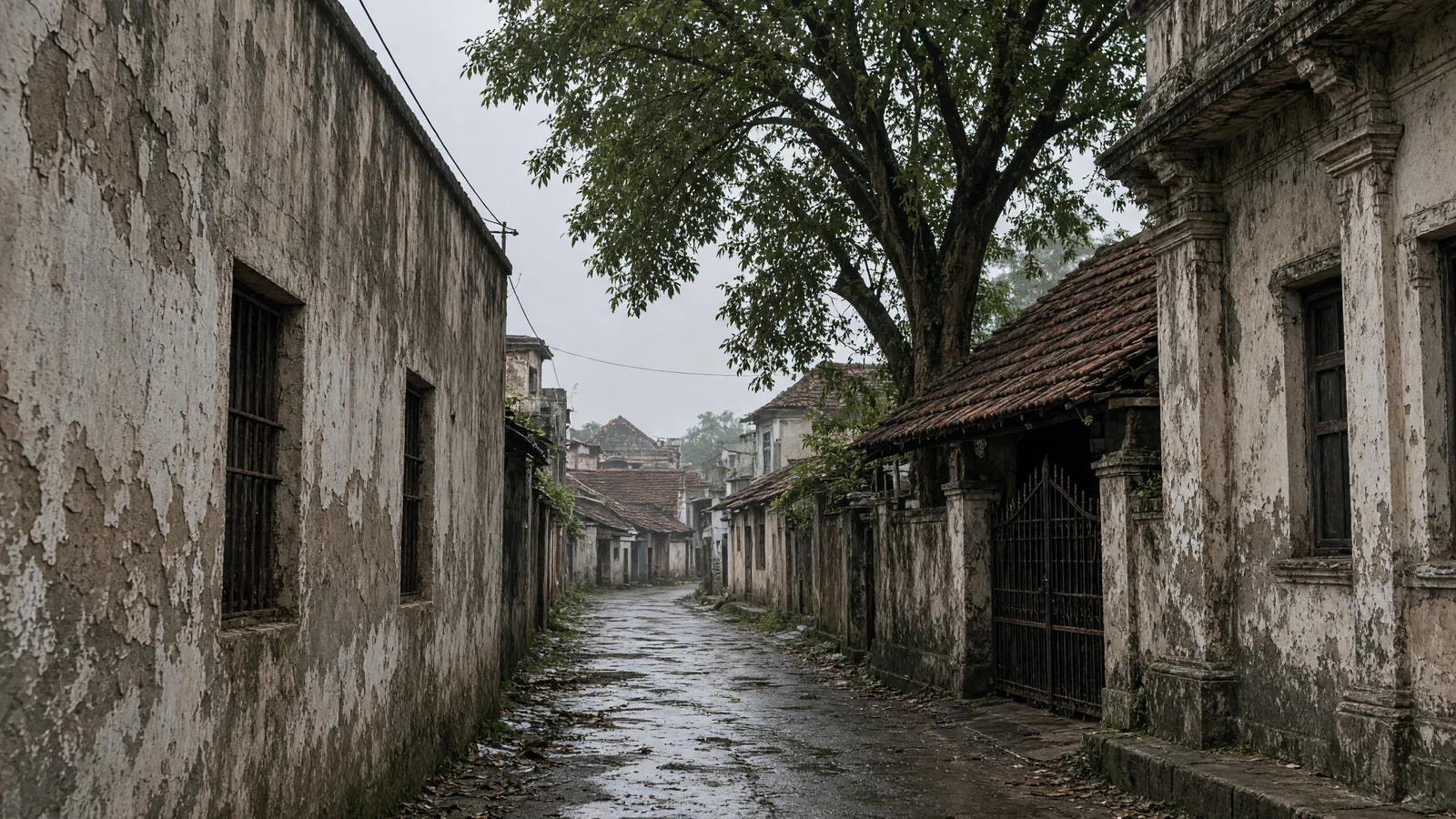
Now running in theatres, Baththa brings Balaji Tharaneetharan back to theatrical releases after eight years with a comedy-drama that frames a feared don through the eyes of a frightened schoolboy.
A feared man, seen by a child
At the centre of Baththa is the titular don, played by Vijay Sethupathi, who begins as a man shaped by fear and reputation before an accidental meeting with a schoolboy forces him toward a buried sense of self.
The film asks who people are when they no longer perform the roles society has pushed on them, and how repression can become a mask that corrodes others.
Balaji’s story is set in 1986, and its emotional hook comes from a childhood space many viewers may recognise: the classroom, the neighbourhood rumour mill and the exaggerated mythology around local tough men.
The reviewer recalls studying in a primary school in Thiruvottiyur, Chennai, where a difficult classmate terrorised the class by claiming to be related to a local gangster.
That gangster’s reputation was well-known, and one rumour said he had bitten off an enemy’s ear before swallowing it whole.
Baththa builds a similar world of fear around Sabari, played wonderfully by Sai Prithvi Raj, after the child sees the dreaded Baththa thrashing a bloodied man in the middle of the street.
The incident shakes Sabari to his core, and when he narrates it to his friends, the boys respond with their own wild stories about the gangster.
Their stories include “Baththa has a pet lion in a cage,” “Baththa once broke through a jail cell with just sheer strength,” and “Baththa once heard a man slander his name from miles away.”
In that child’s-eye mythology, Baththa can do this and Baththa can do that, until he becomes less a man than a legend.
Vijay Sethupathi returns to a familiar comic zone
The film compares Baththa to The Undertaker of this world, the kind of figure everyone knows has seven lives.
Yet the Baththa first seen on screen is also a recognisable local ruffian, a brute who instils fear among the locals and moves around with his yes-men.
His public persona is built on intimidation, but his home life is not shown as one-note villainy.
He adores his daughter Thenmozhi, played by Sahasra Shree, and his wife Kanimaa, played by Lijomol Jose, even though his domestic life also contains moments of outbursts.
For Sabari, who lives with his doting mother, played by Santhy Balachandran, and father, played by Hari Krishnan, Baththa is a merciless animal in human form.
The drama turns on what happens when Sabari and Baththa cross paths at an unfortunate event that will forever change both their lives.
The first half of the film is described as sailing smoothly because of the period setting and because Vijay Sethupathi returns to a zone he had long mastered in films such as Idharkuthane Aasaipattai Balakumara and Kadhalum Kadandhu Pogum.
What begins like another gangster drama comes alive through a unique, darkly comic twist involving Sabari and Baththa.
In a pre-release chat with The Hindu, Balaji said Baththa was inspired by events he witnessed in his own childhood in Triplicane.
Sabari, in that sense, becomes the film’s route back to what childhood felt like.
Sabari’s viewpoint keeps the film intimate
Sabari is described as naive but secretly street-smart, and Balaji makes the viewer feel like a passenger in a car driven by a child who is only partly in control of his situation.
That point of view matters because the film does not turn Baththa’s misfortunes into a puzzle about enemies and motives.
The writer-director could have shaped the film as a whodunit by presenting Baththa’s many enemies, including Jyoti, played by Arjun Chidambaram, as possible culprits.
The film could also have delayed the explanation of how Baththa landed in his misfortunes and made Baththa, rather than the child, the protagonist.
Balaji chooses not to complicate the story in that direction.
Instead, he takes the audience through Sabari’s perspective as the boy tells the story.
That choice gives the screenplay room for truly hilarious ideas, including one involving powdered rusk.
Even when the momentum dips in the second half, the review says something in Balaji’s screenplay still commands attention or produces a chuckle.
The plight that befalls Baththa is said to tap into a primal fear that those who grew up in the pre-mobile phone era would instinctively remember from behind closed doors.
In typical Balaji Tharaneetharan fashion, the screenplay makes the viewer both cry and laugh at Baththa.
Why the 1986 setting matters
The period setting works largely in favour of what the review calls a simple and sweet story.
The film would lose much of its essence in today’s world, where people are busy looking at mobile phones and making split-second decisions.
That is also why the film’s pre-mobile-phone atmosphere is not merely decorative, but central to how its fears, misunderstandings and emotional stakes are felt.
The review argues that what Balaji conveys through the story remains relevant, and that a film like Baththa is necessary today.
Its relevance is framed through ordinary memories and sights: a woman and a child like Kannima and Thenmozhi sitting outside a police station, waiting for a loved one who has gone missing.
The film also draws from small childhood acts, such as stealing a few rupees from a father’s pocket to buy snacks from a roadside shop.
It evokes the annoying uncle in the neighbourhood who would take a child along with his family to shop in T Nagar.
It recalls the certainty of being dressed up as a cop or a freedom fighter.
It also remembers weddings or parties where a man happily sings out of tune on stage while wearing a mirror-fitted costume bright enough to blind the audience.
The review adds another recognisable ache of childhood: being too attached to a toy that disappeared someday.
Balaji, in the interview, described that time as “those were the golden days,” and the film is presented not only as a simple, moving story about the goodness in people but also as a tribute to those golden days.
A comedy-drama about fear, memory and goodness
Baththa works because its gangster surface gives way to a story about performance, fear and the possibility of recovering what a person has hidden from himself.
The feared don’s image is built through rumour, public violence and neighbourhood awe, but the film’s emotional movement depends on what happens when that image is disrupted by Sabari’s presence.
Vijay Sethupathi’s Baththa is not introduced as a distant myth alone, because the film also shows him as a man with a daughter, a wife and a home marked by both affection and outbursts.
Sai Prithvi Raj’s Sabari gives the film its crucial angle, because the don’s terrifying reputation is filtered through a child who is frightened, imaginative and more resourceful than he first appears.
Balaji’s restraint in keeping the story close to Sabari, rather than turning it into a crime mystery around Baththa’s enemies, helps preserve the film’s warmth and humour.
The review’s account of the film suggests that its comedy does not erase its sadness, and its sadness does not stop it from finding moments that are sharply funny.
That balance is captured in a pivotal line from Baththa: “You realise the value of certain things only when it nears the end.”
Baththa is currently running in theatres.
Source: The Hindu
Frequently asked questions
What is Baththa about?
Baththa is a comedy-drama about a feared don, played by Vijay Sethupathi, whose life is seen through the frightened perspective of a schoolboy named Sabari.
Who directed Baththa?
Baththa marks Balaji Tharaneetharan’s return to theatrical releases after eight years.
When is Baththa set?
The story of Baththa is set in 1986 and draws on childhood spaces such as classrooms, neighbourhood rumours and local gangster myths.
Who plays the schoolboy in Baththa?
Sai Prithvi Raj plays Sabari, the schoolboy whose fear helps build the mythology around Baththa.
How does the review describe Vijay Sethupathi’s role?
The review says Vijay Sethupathi returns to a familiar comic zone while playing Baththa, a local ruffian whose intimidating public image contrasts with his affection for his family.
You may also like
 Entertainment
Rishikanth and Anishma shine in Modha Rathri's witty, heartfelt comedy-drama debut
 National
Bigg Boss Tamil introduces commoners in historic new season
 National
Vijay Sethupathi shares childhood struggles with debt collectors and family hardships
 Weather
Heavy rain hits Tirupati as low-pressure area forms off Tamil Nadu coast
Most read
- 1
Air China Adds Extra Flight for Passengers Stranded in Fuel-Starved Cuba
- 2
Western disturbance to bring rain, hail and strong winds across north India
- 3
Yogi Adityanath Directs No Occupied Houses Be Demolished for Achhalda Bridge
- 4
Gwalior Temple Truck Crash Kills 12, Injures 28-29 Devotees During Navratri
- 5
Schools Shut in Five Tamil Nadu Districts, Including Chennai, Amid Heavy Rain
Comments
No comments yet. Be the first to comment.