
Ancient Chinese Royal Families Washed Elephants in Prayers for Good Fortune
Royal families in ancient China washed elephants in a ritual for prosperity, a tradition that ended after a deadly late Qing dynasty parade incident.

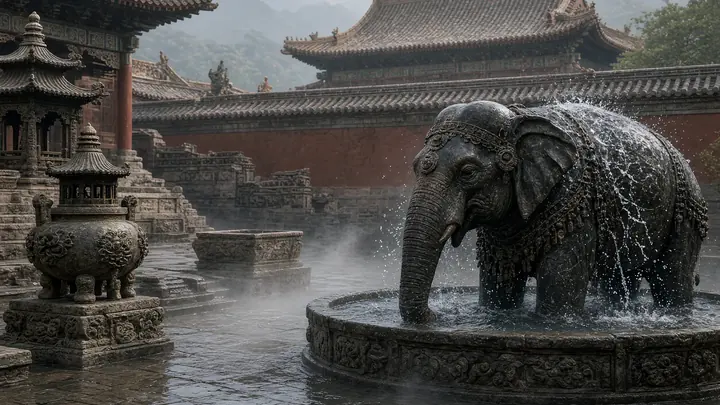
In ancient China, royal families washed elephants as part of a ritual to pray for good fortune. The tradition continued for centuries, but came to an end in the late Qing dynasty after a parade elephant went rogue, crushed a general’s carriage and killed a eunuch.
The ritual was linked to the special place elephants held in Chinese society and court culture. Before the violent incident that ended the practice, royal elephants were washed as families sought blessings and good fortune.
Elephants had been seen and documented in China as early as 4000 BC. They are believed to have once been familiar animals in the Central Plains. Over time, however, they gradually moved south towards more remote regions.
This long history gave elephants an important place in China’s royal and cultural traditions. Their presence at court was also connected to the language used to describe them and to the symbolic meaning attached to that word.
From the Han dynasty, which lasted from 202 BC to 220, elephants were presented to the royal court as tribute. Their arrival at the court was not seen as ordinary. Elephants carried deeply auspicious meanings, partly because of a connection between their name and the idea of good fortune.
The Chinese word for “elephant” is xiang. It is a homophone of xiang, the word associated with auspiciousness. That word forms the core half of ji xiang, which means “good fortune.”
This linguistic connection helped give elephants a strongly auspicious meaning in royal life. It also helps explain why Chinese royal families washed elephants while praying for prosperity and good fortune. The ritual was therefore tied not only to the presence of elephants in the court, but also to the symbolic meaning of their name.
The practice continued until the final period of the Qing dynasty. During that time, a parade elephant suddenly became uncontrollable. The elephant went rogue and caused a deadly incident in the middle of the procession.
It crushed a general’s carriage, and a eunuch was killed. After this incident, the tradition of washing royal elephants came to an end.
The episode marked the closing of a ritual that had grown out of the long history of elephants in China. From animals once familiar in the Central Plains to tribute presented before the royal court, elephants had carried both cultural and auspicious importance. Their association with xiang and ji xiang made them symbols of good fortune, while the royal washing ritual expressed the hope of receiving that fortune.
But the violent end of the parade changed the place of the practice in the late Qing dynasty. A tradition once linked to prayers for good fortune was brought to an end after the elephant’s actions crushed the general’s carriage and led to the death of the eunuch.
Frequently asked questions
Why did ancient Chinese royal families wash elephants?
They washed elephants as part of a ritual to pray for prosperity and good fortune.
Why were elephants considered auspicious in Chinese royal life?
The Chinese word for elephant, xiang, is a homophone of a word associated with auspiciousness and forms part of ji xiang, meaning good fortune.
When were elephants presented to the Chinese royal court as tribute?
Elephants were presented as tribute from the Han dynasty, which lasted from 202 BC to 220.
Why did the elephant-washing tradition end?
It ended in the late Qing dynasty after a parade elephant went rogue, crushed a general’s carriage and killed a eunuch.
You may also like
 International
Ancient Chinese Parents Named Babies ‘Dog’ and ‘Pig’ to Protect Them
 National
Qing Dynasty Ceramics Damaged After Bowl Falls in British Museum Display
 International
Online claims link Xunyang cinnabar evidence to Qin Shi Huang’s tomb mercury mystery
 International
First physical evidence of nose amputation found in ancient Chinese skeleton
Most read
- 1
Air China Adds Extra Flight for Passengers Stranded in Fuel-Starved Cuba
- 2
Western disturbance to bring rain, hail and strong winds across north India
- 3
Yogi Adityanath Directs No Occupied Houses Be Demolished for Achhalda Bridge
- 4
Gwalior Temple Truck Crash Kills 12, Injures 28-29 Devotees During Navratri
- 5
Heavy Rain Waterlogs Bengaluru, Snarls Traffic; Ride-Hailing Fares Surge
Comments
No comments yet. Be the first to comment.