
Online claims link Xunyang cinnabar evidence to Qin Shi Huang’s tomb mercury mystery
Archaeological evidence from three Xunyang sites has renewed debate over cinnabar and mercury accounts linked to Qin Shi Huang's unopened mausoleum.

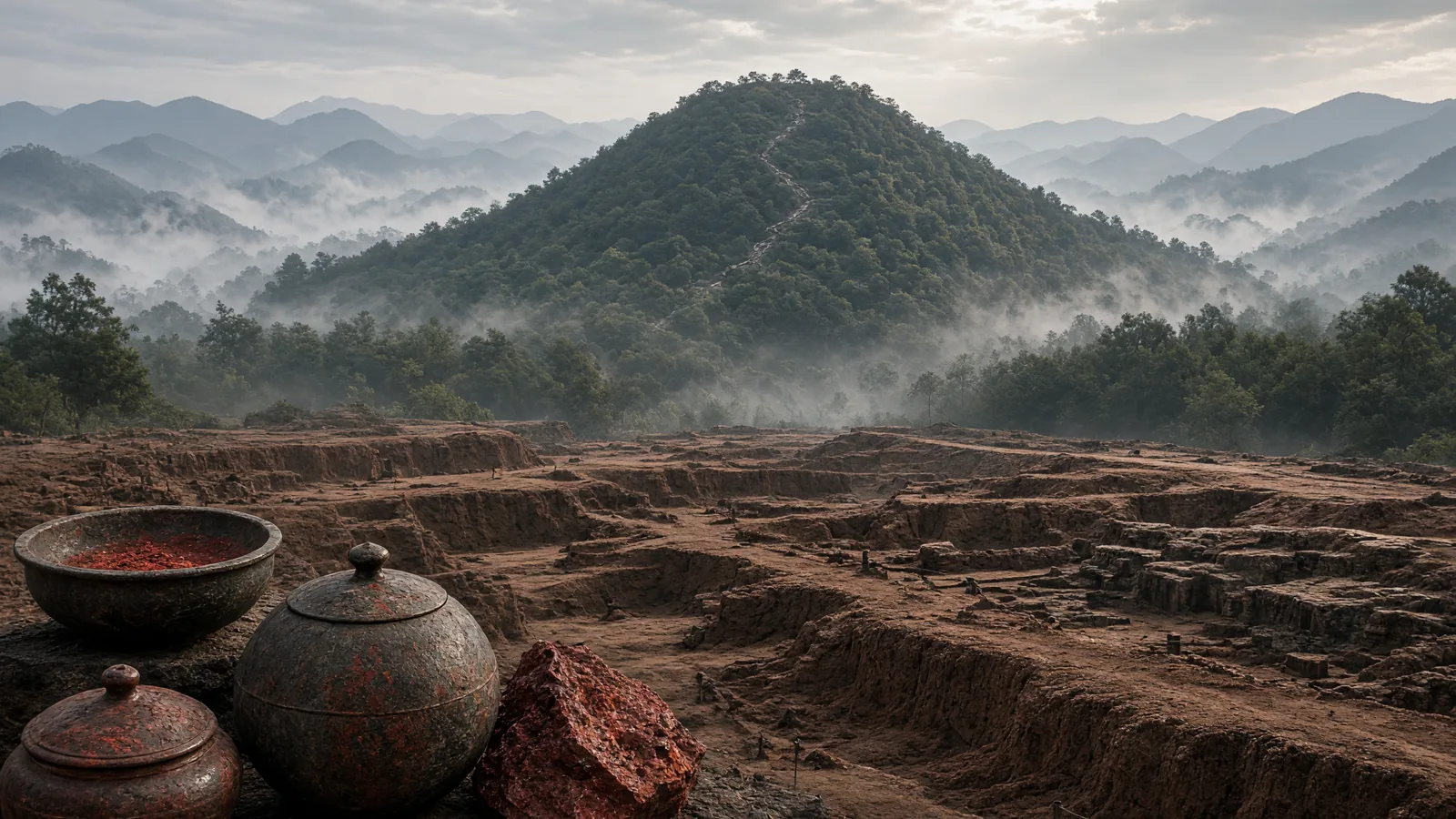
Online claims revive mercury mystery around tomb of first Chinese emperor
Claims circulating on Chinese social media have drawn fresh attention to three ancient sites in Xunyang, where archaeologists found evidence of cinnabar mining, processing and transport during the pre-Qin and Qin-Han periods.
The claims suggested that archaeologists had identified the source of mercury believed to have been used in the mausoleum of Qin Shi Huang, China’s first emperor, who unified the country more than 2,000 years ago.
Related hashtags trended on social media late last month, reviving interest in ancient cinnabar sites in northwestern China’s Shaanxi province.
Evidence from three Xunyang sites
The discussion centred on three locations in Xunyang that were examined by archaeologists last year.
Findings at the sites included evidence linked to the mining, processing and transport of cinnabar.
Cinnabar is at the centre of the online claims because the material is connected to mercury, the metal described in historical accounts of Qin Shi Huang’s tomb.
However, the source material describes the identification of the mercury source as an online claim, while separately confirming that the Xunyang sites produced evidence of cinnabar-related activity.
Mausoleum remains unopened
The underground burial complex stands at the northern foot of Lishan Mountain and has never been opened.
That inaccessibility has helped sustain interest in accounts of what may lie beneath the mausoleum.
One of the longest-standing accounts comes from Sima Qian, an early Han dynasty historian whose period is identified as 206BC-AD220.
In the Shiji, or Records of the Grand Historian, Sima Qian described a vast subterranean realm whose design and ambition mirrored the heavens above and the Earth below.
He wrote that mercury was used to recreate the “rivers and seas” inside the tomb.
His account also described a mechanism intended to keep the metal flowing, giving the mercury mystery its enduring place in discussions about the unopened mausoleum.
Source: South China Morning Post
Frequently asked questions
What sparked renewed interest in Qin Shi Huang’s tomb?
Claims on Chinese social media suggested that archaeologists had identified the source of mercury believed to have been used in the mausoleum.
What did archaeologists find at the three Xunyang sites?
They found evidence of cinnabar mining, processing and transport during the pre-Qin and Qin-Han periods.
Why is cinnabar linked to the mercury mystery?
Cinnabar is connected to mercury, which historical accounts describe as being used inside Qin Shi Huang’s tomb.
Has Qin Shi Huang’s mausoleum been opened?
No. The underground burial complex at the northern foot of Lishan Mountain has never been opened.
What did Sima Qian write about mercury in the tomb?
He wrote that mercury was used to recreate rivers and seas inside the tomb and described a mechanism intended to keep it flowing.
You may also like
 International
Ancient Chinese Parents Named Babies ‘Dog’ and ‘Pig’ to Protect Them
 International
Ancient Chinese Royal Families Washed Elephants in Prayers for Good Fortune
 International
First physical evidence of nose amputation found in ancient Chinese skeleton
 Weather
Heavy rain hits Tirupati as low-pressure area forms off Tamil Nadu coast
Most read
- 1
Air China Adds Extra Flight for Passengers Stranded in Fuel-Starved Cuba
- 2
Western disturbance to bring rain, hail and strong winds across north India
- 3
Yogi Adityanath Directs No Occupied Houses Be Demolished for Achhalda Bridge
- 4
Gwalior Temple Truck Crash Kills 12, Injures 28-29 Devotees During Navratri
- 5
Schools Shut in Five Tamil Nadu Districts, Including Chennai, Amid Heavy Rain
Comments
No comments yet. Be the first to comment.