
AI Tools Revolutionize Forest Restoration, Says IFS Officer Pushpendra Rana
IFS officer Pushpendra Rana discusses AI's role in forest restoration, highlighting tools and challenges in environmental conservation.

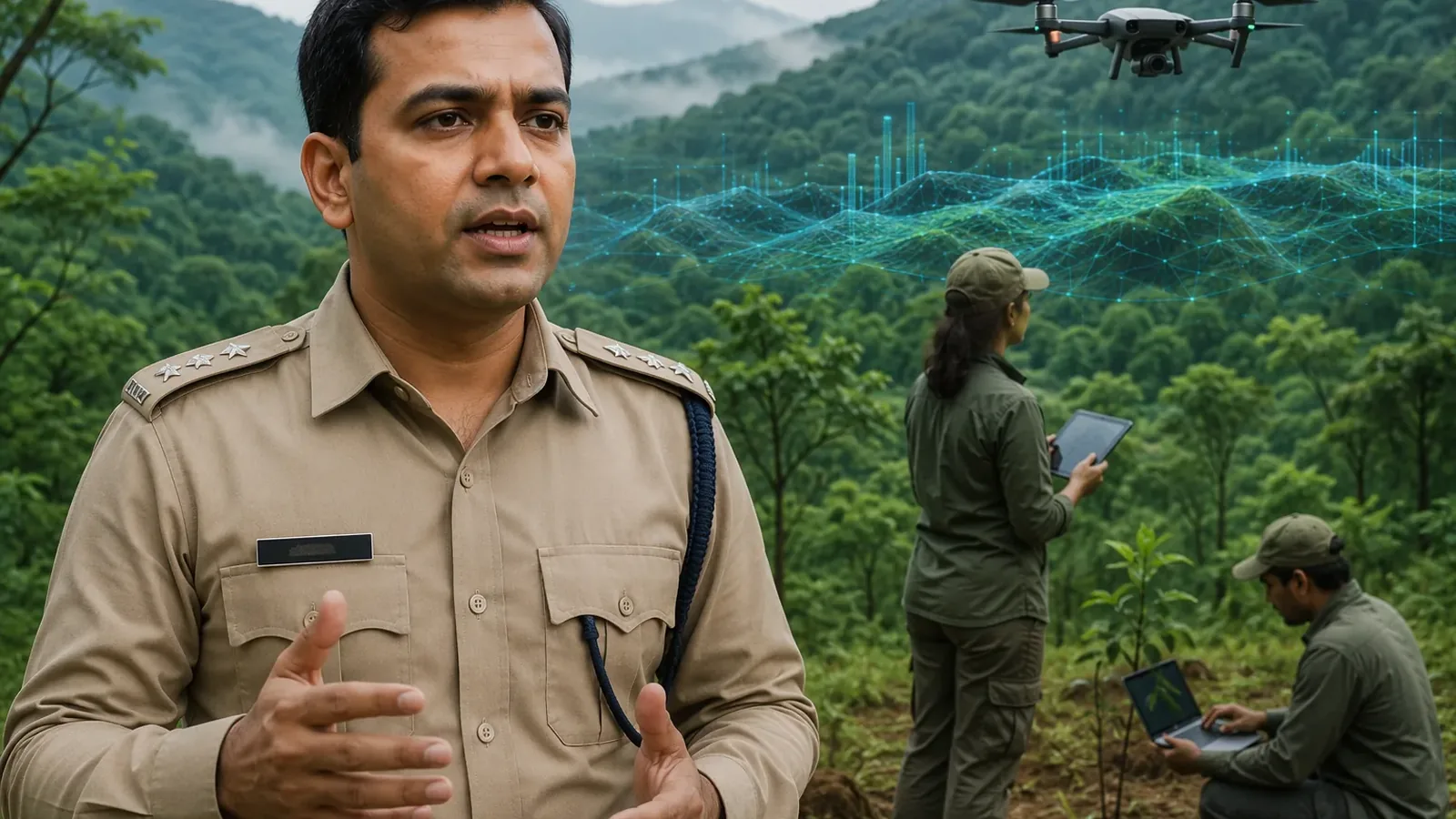
Artificial intelligence (AI) and machine learning hold immense potential for advancing forest restoration and governance, but their application must be carefully tailored to local ecological and social contexts, according to Indian Forest Service (IFS) officer Dr. Pushpendra Rana. In an interview with The Indian Express, Dr. Rana outlined both the opportunities and limitations of using technology in environmental conservation, drawing from his work in Himachal Pradesh.
Leveraging AI for Smarter Forest Restoration
Dr. Rana has developed innovative tools such as WhereToPlant and WhatToPlant, Telegram-based chatbots designed to assist forest rangers and farmers in identifying the most suitable locations and tree species for ecological restoration. These tools integrate machine learning models with data on climate, soil, terrain, vegetation, and other factors to make informed recommendations.
For example, WhereToPlant was used during the 2025 plantation season in Himachal Pradesh to guide site selection for over 500 hectares of plantations across 250 locations. The system’s success lies in its user-friendly interface, which eliminates the need for specialized GIS expertise and aligns with the workflows of field officers.
The forthcoming WhatToPlant module will enhance this system by recommending native tree species best suited to specific locations. This feature is powered by a database of over 226,000 geo-referenced field observations and environmental data, enabling habitat suitability predictions for 98 native tree species across Himachal Pradesh.
Challenges in Applying AI to Ecosystem Restoration
Despite the promise of these technologies, Dr. Rana emphasized the challenges inherent in using AI for ecosystem management. He noted that while AI can identify suitable habitats, it cannot account for factors like grazing, invasive species, or community involvement, which significantly influence restoration success. Moreover, models trained in one ecological zone often cannot be directly applied to another due to variations in environmental conditions.
Dr. Rana also highlighted the importance of designing tools that address practical, on-ground challenges faced by field staff. He stressed that AI should complement, not replace, local knowledge. Recommendations must be explainable and adaptable, allowing communities and field officers to modify or reject them based on ground realities. For instance, a site deemed suitable by AI might not account for issues like seasonal waterlogging or cultural uses of the land. Such feedback should be incorporated into the system for continuous improvement.
A Data-Driven Approach to Environmental Governance
Dr. Rana’s work exemplifies a shift toward evidence-based environmental governance. He noted that many environmental programmes focus on metrics like the number of seedlings planted or funds spent, often neglecting whether these efforts yield lasting ecological and social benefits. His initiatives aim to bridge this gap by integrating science, technology, and local expertise to create more accountable and effective restoration practices.
Broader Implications for Conservation Technology
Dr. Rana acknowledged that while AI and machine learning are transforming conservation, their success depends on robust data, institutional support, and long-term adoption. He cited examples of successful tech interventions in India, such as the Forest Survey of India’s satellite-based forest fire alert system and advances in cyclone forecasting. However, he also cautioned against over-reliance on technology that prioritizes administrative metrics over ecological outcomes or lacks follow-up mechanisms, such as drone-based tree planting.
Ultimately, Dr. Rana advocates for a balanced approach where technology supports better ecological decisions and empowers local communities, rather than merely increasing administrative efficiency. His work underscores the need for adaptive learning systems that integrate machine intelligence with human expertise to address the complex challenges of forest restoration.
Source: Indian Express
Frequently asked questions
What are WhereToPlant and WhatToPlant?
WhereToPlant and WhatToPlant are Telegram-based chatbots developed by IFS Officer Dr. Pushpendra Rana to assist forest rangers and farmers. WhereToPlant identifies suitable locations for tree plantations using machine learning and environmental data, while WhatToPlant recommends native tree species best suited to specific locations using a database of over 226,000 geo-referenced field observations.
How was WhereToPlant used in Himachal Pradesh?
During the 2025 plantation season, WhereToPlant guided site selection for over 500 hectares of plantations across 250 locations in Himachal Pradesh. The system's user-friendly interface allows field officers to use it without specialized GIS expertise.
What are the main challenges in using AI for forest restoration?
Key challenges include AI's inability to account for factors like grazing, invasive species, and community involvement that influence restoration success. Additionally, models trained in one ecological zone often cannot be applied to another due to environmental variations. AI also cannot account for practical on-ground issues like seasonal waterlogging or cultural land uses.
Should AI replace local knowledge in forest restoration?
No. According to Dr. Rana, AI should complement, not replace, local knowledge. Recommendations must be explainable and adaptable, allowing communities and field officers to modify or reject them based on ground realities. Feedback should be incorporated into the system for continuous improvement.
You may also like



Most read
- 1
Air China Adds Extra Flight for Passengers Stranded in Fuel-Starved Cuba
- 2
Western disturbance to bring rain, hail and strong winds across north India
- 3
Yogi Adityanath Directs No Occupied Houses Be Demolished for Achhalda Bridge
- 4
Gwalior Temple Truck Crash Kills 12, Injures 28-29 Devotees During Navratri
- 5
Schools Shut in Five Tamil Nadu Districts, Including Chennai, Amid Heavy Rain
Comments
No comments yet. Be the first to comment.