
Ahmedabad’s Zero-Proof Dining Scene Goes Upscale With Destination Restaurants
Ahmedabad is emerging as a high-end dry gastronomy destination, with design-led restaurants like Sora focusing on technique and theatrical service.
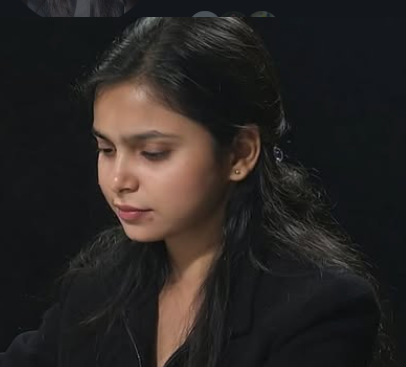
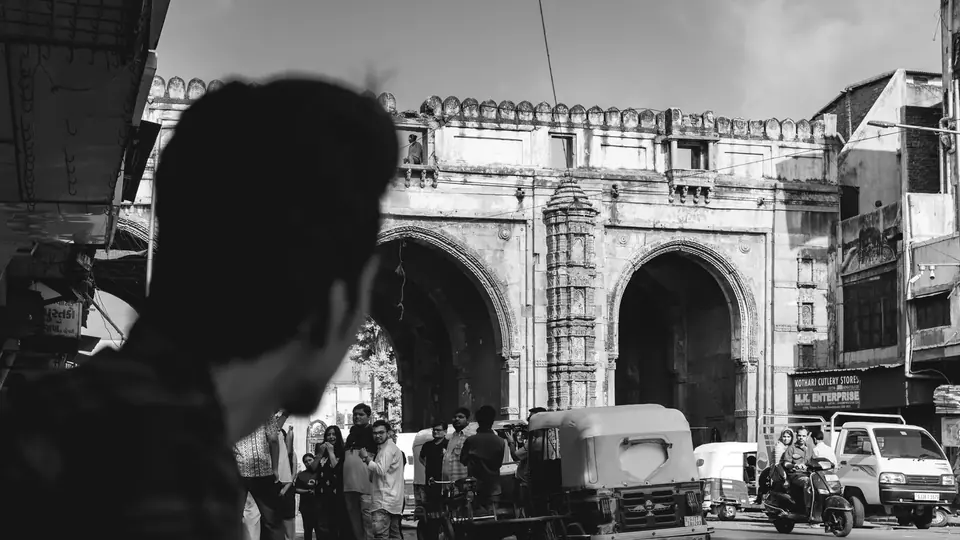
Ahmedabad’s zero-proof dining boom is moving upscale, led by large-format restaurants built around design, technique and theatrical service
Ahmedabad is increasingly being positioned as a weekend destination for high-end, zero-proof gastronomy rather than merely a stopover en route to Udaipur or Kutch, with restaurants such as Sora signalling how far the city’s dining ambitions have moved beyond familiar formats.
The shift is striking in a city where the “spirit” has always been strictly zero-proof, because restaurateurs are turning the absence of a bar into a reason to invest harder in food, presentation and experience.
Sora, an Asian-Peruvian restaurant spread across 11,000 sq ft, captures that ambition through an Art Deco-inflected space that feels closer in scale and polish to a Dubai-style destination than a neighbourhood restaurant.
The restaurant is not described as the beginning of the change, but as a sign that Ahmedabad’s food scene has entered a new phase of immersive, high-concept dining.
Beyond the thali
Ahmedabad has long been celebrated for its iconic street food and its belly-bursting thali, but the city is now evolving into what the source describes as an innovative dry gastronomy hub.
That evolution has pushed restaurants beyond the older “multi-cuisine” comfort zone and toward micro-specialisation, with a stronger appreciation for provenance and technique.
The dry-state context matters because restaurants cannot lean on alcohol revenue in the way many dining businesses elsewhere do, forcing a sharper focus on food quality and the theatre of service.
At Sora, that theatre is built into the food itself through Nikkei cuisine, a fusion of Japanese techniques and Peruvian ingredients.
Its Yuzu Panca Soup is brewed at the table using a siphon, a two-glass chamber device also used by baristas at speciality coffee bars.
In that preparation, vegetable stock rises to meet marinated vegetables before being filtered back down into a crystal-clear broth.
The soup is finished with yuzu, resulting in a clean, spice-flecked dish that is described as thoughtful rather than merely performative.
A few blocks away on Billionaire Street, Cacaoté operates on an even larger canvas as a 15,000 sq ft chocolate brasserie.
The space is likened to Ahmedabad’s own Willy Wonka Chocolate Factory, reflecting the kind of immersive scale now being associated with the city’s premium food businesses.
Cacaoté works with cacao sourced from Central America, South America and Africa, which is roasted and conched in France before being turned into bonbons, cakes, petite gateaux and chocolate tablets at the Ahmedabad patisserie.
Other specialised formats have also found an audience in the city, including Bottega, which serves Màla cuisine, and Burma Burma, which has introduced the nuances of Kayan and Shan cuisines to Ahmedabad.
The latest sensation in this high-concept segment is Komo By Kaffa, a sprawling 23,000 sq ft café with vaulted ceilings, sweeping pillars and mood lighting.
Its scale and polish are noted as qualities not commonly associated with neighbourhood cafés, underlining how the city’s expectations of casual spaces are also changing.
Why big restaurants work in Ahmedabad
The move toward massive, high-design spaces is linked to a specific business model rather than simply to aesthetics.
“The biggest draw for restaurateurs here is the luxury of space,” says Sujit Mehta, co-founder, We Serve, a restaurant consultancy firm based in Ahmedabad.
According to Sujit, an 18,000-45,000 sq ft footprint would be commercially unsustainable in Mumbai or Bengaluru, but in Ahmedabad it can support a multi-pronged revenue model.
That model can combine a restaurant, banqueting hall and catering unit under one roof.
“The dynamics work because each segment has a different season,” Sujit explains.
“When the restaurant is slow, the catering and banqueting pick up the slack,” he says.
The setup of such high-spec spaces requires significant investment, typically ranging from ₹5-7 crore.
Even with that investment, Sujit says most restaurateurs see a full return on investment within 1.5-2 years.
He links that speed to an average spend of ₹1,200, 1,500 per person and the security of nine-year land leases.
Those leases, he adds, shield owners from the volatility of frequent renewals.
The combination of space, spending levels and lease security gives Ahmedabad’s large-format restaurants a structural advantage that helps explain why such expansive projects are being attempted in the city.
A taste for technique
The city’s dining growth is also being driven by changing domestic habits, not only by real estate and restaurant economics.
“In the aftermath of the pandemic, we saw a surge in home cooking,” says Mihir Shah, owner of Bottega.
He says the easy availability of exotic ingredients, from aged cheeses and mushrooms to ‘00’ flour, nori sheets and even cactus, allowed people to engage with global cuisines at home.
That exposure changed what diners expected when they went out to eat.
“Restaurants had no choice but to adapt to these changing tastes to keep pace with their guests,” Mihir adds.
The source also notes that Gujaratis love to travel and seek out new culinary experiences, and now expect a similar level of exposure and sophistication when they return home.
Ankit Gupta, co-founder of the Burma Burma chain, says specialised dining concepts were rare when they opened two years ago.
“Today, we are seeing an influx of niche formats, from Korean eateries to dedicated dessert cafés,” he says.
He also points to new dining hubs such as Sarkhej, Gandhinagar Highway and Prahlad Nagar as factors that have fuelled the change.
This receptivity has turned Ahmedabad into a strategic launchpad for Burma Burma, with Ankit often testing new menus in the city before a national rollout.
Food consultant and cookbook author Kamini Patel identifies social media aesthetics and changing domestic habits as key drivers of the shift.
As family units shrink and interest in home cooking declines, dining out has moved from an occasional luxury to a lifestyle choice.
“The audience is ready to spend on quality,” Kamini explains.
She notes that the city’s youth are the primary engine behind the change.
This younger demographic is described as having higher disposable incomes and a preference for elevated cuisine.
As a result, younger diners are consistently opting for premium dining experiences over traditional meals.
Mocktails 2.0
In a state without alcohol, zero-proof drinks are becoming a major part of the new dining experience.
Mixologists are moving away from sugary punches and toward sophisticated botanicals, smoked syrups and clarified juices to build complex mocktails.
These drinks are served with theatrical techniques associated with high-end cocktail service, including dry ice, artisanal ice blocks and house-made bitters.
At Sora, the Thai dessert mango sticky rice is reimagined as a drink in a glass.
The drink begins with a base of mango and pandan clarified with coconut milk.
It is then topped with warm rice foam from an iSi siphon.
The result is described as a contrast of cold and clear meeting warm and creamy.
Sora also serves the popular Peruvian drink Chicha Morada sangria style in a wine glass, behind a dry-ice cloud.
“Making non-alcoholic drinks is far more difficult than people realise,” says Sanyog Nikharge, head mixologist at Sora.
“I personally enjoy a spirit-forward drink, so I wanted to create the same complexity, acidity and mouthfeel minus the ethanol,” he says.
For Sanyog, the aim is to give a zero-proof creation the same respect as a top-shelf pour.
The presentation is intentional and designed to mirror the ritual of traditional drinking.
One of his creations, Shrooms, interprets the Old Fashioned without whiskey.
It swaps the burn of whiskey for apple and shiitake mushroom reduction.
The drink’s meaty umami bite is balanced with soy and finished with the sharpness of fermented Umeboshi, or pickled Japanese plum.
At Burma Burma, the source notes that the only thing missing is the hangover, while the drama and burn are served as standard.
The bar uses culinary rigour through agar-agar clarified gins, sous-vide herb extractions, edible leathers and activated charcoal.
Paired with a dice-based drinking game, the experience is described as a playful reminder that zero-proof need not mean zero character.
Design in a city of architects
Ahmedabad’s identity as a city of architects is also shaping the look of its new restaurants.
Some of the new dining spaces are housed in stunning brutalist structures, restored havelis or minimalist interiors.
This makes ambience a central part of the experience, not merely a backdrop to the menu.
The dining aesthetic, once rooted in traditional settings, is moving toward a modern and often futuristic sensibility.
Cacaoté is an example of this design-led approach.
Designed by Australian firm Storm Worldwide with interiors by London’s LEQB, the restaurant is described as a literal immersion into the world of cacao.
Its dramatic ceiling mimics the flow of molten chocolate.
Its display units echo the curves of cacao pods.
Sora takes a different direction with Art Deco references.
Tufted-leather booths, fluted pillars and gold-mesh screens serve as translucent dividers without closing the space off.
The lighting adds to the theatrical effect, with clusters of pendants resembling clouds hanging from thin cables.
The result is a space designed for the theatre of dining.
Sujit notes a growing preference for open-air settings and outdoor dining.
Newer projects are prioritising expansive, airy layouts rather than the enclosed, air-conditioned boxes of the past.
These layouts blur the line between the interior and the street outside.
Sujit is currently working with design heavyweights including Mumbai-based Sumessh Menon and Delhi’s Tanya Chutani of Pantone Collective.
They are introducing a more global, plush visual language to local dining.
What could come next
The anticipation surrounding the 2030 Commonwealth Games and a potential 2036 Olympic bid is already driving a significant wave of infrastructure and hospitality development.
In the more immediate future, Ankit predicts that the growth of GIFT City and the arrival of the Bullet Train will push the city’s dining scene to match the scale of Mumbai and Bengaluru.
“The city is ready for more single-cuisine restaurants,” Sujit says.
“The potential here is still largely unrealised,” he adds.
Even as Ahmedabad experiments with Nikkei cuisine, Màla cuisine, Kayan and Shan flavours, chocolate brasseries and advanced zero-proof drinks, the Gujarati thali remains the city’s culinary soul.
Ahmedabad’s thali anchors
Agashiye at The House of MG is listed among the top thali joints in Ahmedabad, with a price of ₹1695.
Vishalla, Opp. APMC Market, is listed with a price of ₹848.
Pakwan on Sarkhej - Gandhinagar Highway is listed with a price of ₹400.
Raj Thaal in Bopal is listed with a price of ₹450.
Rajwadu at Malav Talav is listed with a price of ₹1050.
Gordhan Thal on Sarkhej - Gandhinagar Hwy is listed with a price of ₹425.
Gopi Dining Hall at Prahlad Nagar and Elis Bridge is listed with a price of ₹425.
Chandravilas on Gandhi Rd, Old City, is listed with a price of ₹350.
Ananda on Sindhu Bhavan Road is listed with a price of ₹1155.
The coexistence of these thali institutions with large-format, high-design restaurants shows the breadth of Ahmedabad’s current dining landscape, from its established culinary soul to its newer experiments in specialised, zero-proof gastronomy.
Source: The Hindu
Frequently asked questions
What is driving Ahmedabad’s upscale zero-proof dining boom?
Restaurants in Ahmedabad are using the absence of alcohol as a reason to focus more heavily on food quality, presentation, design and theatrical service.
How does Sora reflect Ahmedabad’s new dining ambitions?
Sora is an 11,000 sq ft Asian-Peruvian restaurant with an Art Deco-inspired design and immersive service, signalling a move toward high-concept destination dining.
What kind of cuisine does Sora serve?
Sora serves Nikkei cuisine, which combines Japanese techniques with Peruvian ingredients.
What makes Cacaoté notable in Ahmedabad’s dining scene?
Cacaoté is a 15,000 sq ft chocolate brasserie that sources cacao from Central America, South America and Africa, with chocolate processed in France and finished into desserts and confections in Ahmedabad.
Which other specialised restaurants are mentioned in Ahmedabad?
The article mentions Bottega, which serves Màla cuisine, and Burma Burma, which has introduced Kayan and Shan cuisines to Ahmedabad.
You may also like
 Kerala
Kozhikode restaurants raise food prices without displaying new rates, sparking customer complaints
 Tamil Nadu
Chennai celebrates its 387th birthday with food, music, and community at Made of Chennai festival
 Health
Pratapgarh food safety raids net six samples for adulteration testing
 Health
Bandra club's FSSAI licence suspended over banned analogue paneer discovery
Most read
- 1
Former minister Lakhan Singh Rajput to inaugurate temple bhandara at Shri Chakreshwar Mahadev
- 2
Firozabad BSA finds four government schools locked during inspection
- 3
Tamil Nadu dengue cases fall for third consecutive year to 17,049
- 4
Dibiyapur's Chakreshwar Mahadev Temple Holds Budhwa Mangal Prasad Distribution
- 5
Social workers stage silent protest at Fufund railway station for train halts
Comments
No comments yet. Be the first to comment.