
Agricultural Colleges Introduce Sericulture Courses for Sustainable Farming
Discover how sericulture courses empower students in sustainable agri-entrepreneurship, enhancing rural economies and addressing water scarcity.

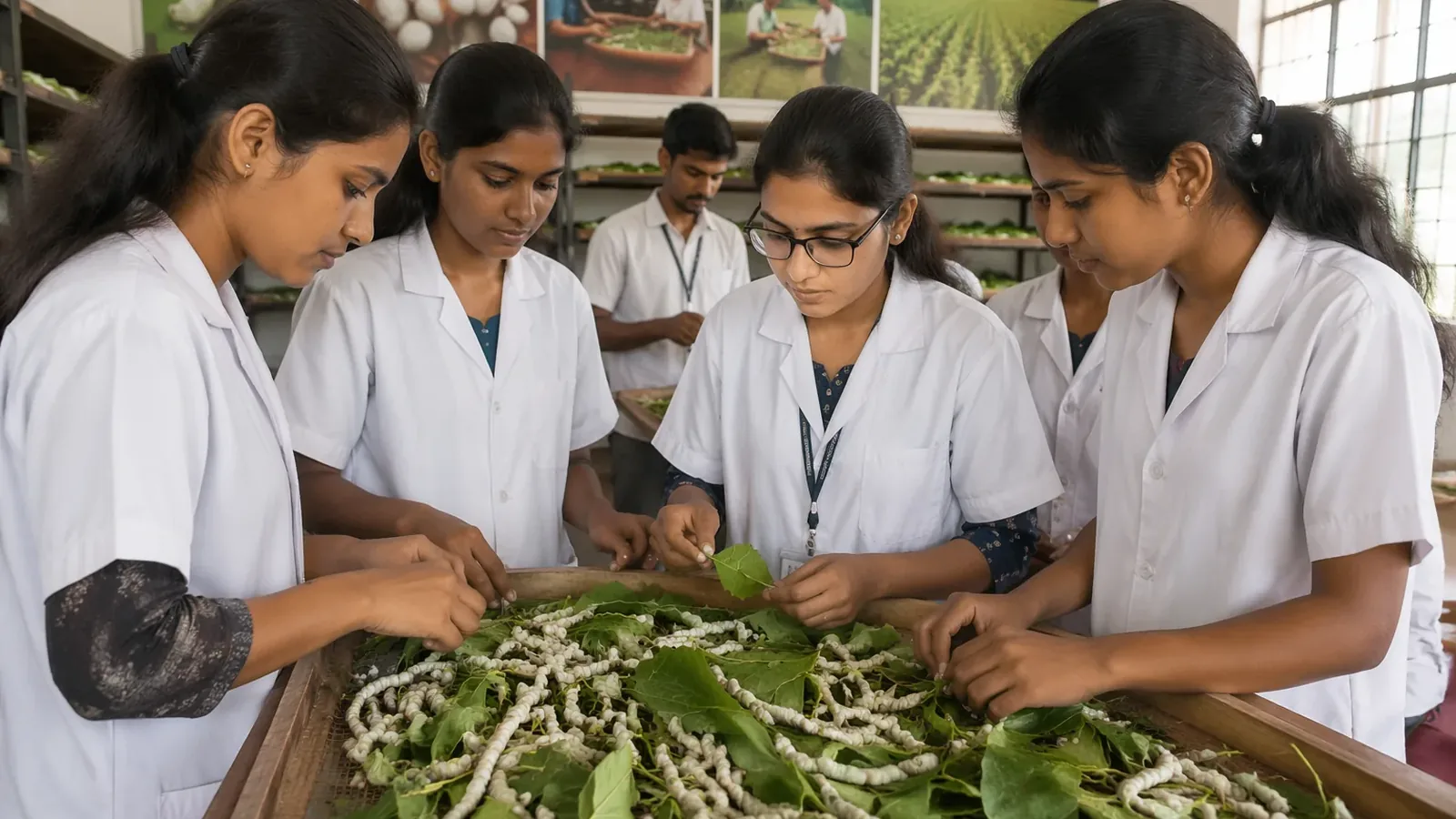
Sericulture Courses Prepare Students for Sustainable Agricultural Entrepreneurship
Sericulture, the practice of breeding silkworms for raw silk production, is gaining traction as a sustainable income-generating option, particularly in farming regions grappling with water scarcity. Recognizing its potential, several agricultural colleges have introduced courses on sericulture and moriculture, the cultivation of mulberry leaves essential for feeding silkworms, to encourage agri-business ventures among rural youth.
In Tamil Nadu, sericulture has proven to be a valuable supplement to paddy-based farming systems, especially in the Cauvery Delta region, where farmers face challenges such as water shortages, climate change, rising input costs, and limited economic returns. According to Rajkumar, principal scientist at the M.S. Swaminathan Research Foundation in Pudukottai, sericulture offers a cost-effective solution. An initial investment of less than ₹15,000 is sufficient to cultivate mulberry and rear silkworms on one acre of land, with the perennial crop supporting silkworm rearing for up to 20 years. Mulberry plants, once six months old, can produce leaves of the required quality for silkworm rearing.
To tap into its economic potential, agricultural institutions are increasingly incorporating sericulture into their curricula. For instance, Dhanalakshmi Srinivasan Agriculture College in Perambalur offers a hands-on course in commercial cocoon production as part of its B.Sc. Agriculture programme. Students cultivate mulberry gardens and rear silkworms using eggs sourced from certified chawki centres. “This practical exposure excites students as they apply textbook knowledge to real-world scenarios,” said K. Haripriya, assistant professor in the Department of Agricultural Entomology. She added that sericulture enables students to generate income and create employment opportunities even during their college years.
At Palar Agricultural College in Vellore District, sericulture is taught as a business-oriented subject. The college has set up a mini-unit where students gain practical experience in cocoon rearing and silk extraction. Similarly, Tamil Nadu Agricultural University (TNAU) offers degree and diploma programmes in sericulture, equipping students with both scientific knowledge and entrepreneurial skills.
Rajkumar emphasized that sericulture-focused courses address rural unemployment by fostering entrepreneurship. Graduates are equipped to engage in various activities, including mulberry cultivation, silkworm rearing, cocoon harvesting, silk reeling, and weaving, thus contributing to rural development and self-reliance.
Frequently asked questions
What is sericulture and why are agricultural colleges teaching it?
Sericulture is the practice of breeding silkworms for raw silk production. Agricultural colleges are introducing sericulture courses because it offers a sustainable, cost-effective income-generating option for farmers, particularly in regions facing water scarcity and climate challenges. It also addresses rural unemployment by fostering entrepreneurship among students.
How much investment is needed to start sericulture farming?
An initial investment of less than ₹15,000 is sufficient to cultivate mulberry and rear silkworms on one acre of land. Mulberry is a perennial crop that can support silkworm rearing for up to 20 years, and plants become productive for silkworm feeding after six months.
What practical training do students receive in sericulture courses?
Students gain hands-on experience cultivating mulberry gardens, rearing silkworms using certified eggs, cocoon production, and silk extraction. This practical exposure allows them to apply textbook knowledge to real-world scenarios and generate income even during their college years.
Which agricultural institutions in Tamil Nadu offer sericulture programmes?
Dhanalakshmi Srinivasan Agriculture College in Perambalur offers a hands-on course in commercial cocoon production as part of its B.Sc. Agriculture programme. Palar Agricultural College in Vellore District teaches sericulture as a business-oriented subject with a mini-unit for practical experience. Tamil Nadu Agricultural University (TNAU) offers degree and diploma programmes in sericulture.
You may also like
 Education
Kerala Agricultural University Launches ₹2 Crore Grant for Agri Startups
 Technology
AI can elevate ordinary workers to exceptional levels, says Bharat Biotech chief
 Education
Garden college to come up on 22 hectares in Raibareli district
 Agriculture
Chandrababu Naidu inaugurates Veligonda irrigation project after 28-year wait
Most read
- 1
Air China Adds Extra Flight for Passengers Stranded in Fuel-Starved Cuba
- 2
Western disturbance to bring rain, hail and strong winds across north India
- 3
Yogi Adityanath Directs No Occupied Houses Be Demolished for Achhalda Bridge
- 4
Gwalior Temple Truck Crash Kills 12, Injures 28-29 Devotees During Navratri
- 5
Schools Shut in Five Tamil Nadu Districts, Including Chennai, Amid Heavy Rain
Comments
No comments yet. Be the first to comment.