
8.5-km stretch along JNTU-Miyapur-Raidurg to undergo end-to-end m
8.5-km stretch along JNTU-Miyapur-Raidurg to undergo end-to-end mobility assessment Officials in Hyderabad will carry out an end-to-end mobility assessm…

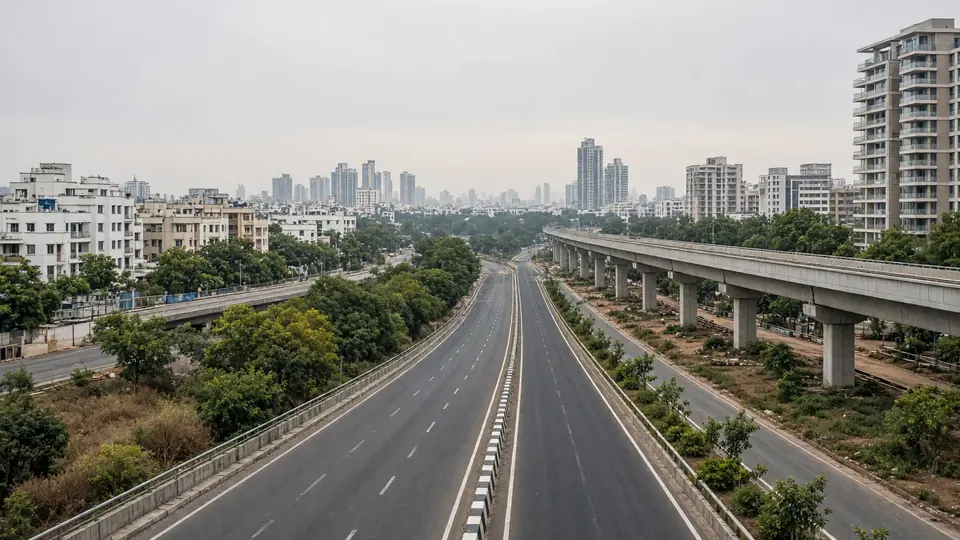
Officials in Hyderabad will carry out an end-to-end mobility assessment of an approximately 8.5-km stretch along the JNTU-Miyapur-Raidurg Metro corridor, covering pedestrian access, feeder transport, traffic bottlenecks and safety around Metro stations.
The proposed Traffic Mobility and Last-Mile Connectivity Study was discussed at a meeting held at the Cyberabad Municipal Corporation on Wednesday under the chairmanship of Special Chief Secretary Jayesh Ranjan.
Focus on walking access and Metro connectivity
The study will examine the corridor end-to-end, with particular emphasis on pedestrian movement, public transport connectivity, traffic management and safe access to Metro stations and surrounding neighbourhoods.
Officials will identify gaps in footpath connectivity, pedestrian crossings, encroachments and unsafe sections along the approximately 8.5-km corridor.
The assessment will also look at the measures required to provide continuous and safer pedestrian access along the stretch.
Officials are expected to review missing footpaths and unsafe pedestrian crossings as part of the wider assessment of mobility gaps on the corridor.
The corridor review will also include traffic bottlenecks, feeder services and access to Metro stations.
Feeder autos, pick-up bays and traffic regulation
Auto-rickshaw and feeder connectivity will form a separate part of the assessment, the Cyberabad Municipal Corporation said.
Officials will identify suitable pick-up and drop-off bays as well as designated feeder auto stands at Metro stations and major junctions.
The study will examine traffic congestion points and accident-prone locations along the stretch.
It will also review pedestrian crossings, signage, barricading and traffic regulation requirements.
The proposed study will further look at integrating walking and cycling facilities with feeder autos and e-autos.
That integration will be examined in relation to schools, offices, residential areas and commercial establishments.
The stated objective is to strengthen the feeder network and improve last-mile connectivity to Metro stations.
School traffic to be reviewed
School-related traffic will be another component of the study.
Officials will assess the movement of school buses and vans on the corridor.
They will also examine congestion caused by vehicles used by parents during peak hours.
The possibility of introducing designated pick-up and drop-off zones away from the main carriageway will be explored.
Authorities will also examine school-child car-pooling as a possible measure to improve safety and reduce traffic congestion near schools.
Why the study matters
The mobility assessment presented at the meeting highlighted the growing dependence on private modes of transport in the city.
The presentation showed that Hyderabad added around 64 lakh daily trips between 2011 and 2024.
Of that increase, around 62 lakh daily trips were attributed to two-wheelers, private cars, autos and taxis.
The assessment also showed that 63% of GPS-recorded trips were within 5 km.
Those findings provide the context for a study focused on safer walking access, improved feeder links and better last-mile connectivity to Metro stations.
The proposed corridor assessment therefore brings together issues that are usually experienced separately by commuters, including footpath gaps, unsafe crossings, traffic congestion, feeder availability and access to public transport.
The review is centred on the JNTU-Miyapur-Raidurg Metro corridor and will look at both station access and movement in surrounding neighbourhoods.
Published - September 23, 2026 08:24 pm IST.
Source: The Hindu
Frequently asked questions
What stretch of road in Hyderabad is undergoing an end-to-end mobility assessment?
An approximately 8.5-km stretch along the JNTU-Miyapur-Raidurg Metro corridor is undergoing the assessment.
What are the main focus areas of the Traffic Mobility and Last-Mile Connectivity Study?
The study focuses on pedestrian movement, public transport connectivity, traffic management, and safe access to Metro stations and surrounding neighbourhoods.
How will auto-rickshaws and feeder connectivity be addressed in the study?
Officials will identify suitable pick-up and drop-off bays, designated feeder auto stands at Metro stations and major junctions, and integrate walking and cycling facilities with feeder and e-autos.
What school-related traffic issues will the study assess?
The study will assess the movement of school buses and vans, congestion caused by parents during peak hours, and explore designated pick-up and drop-off zones away from the main carriageway as well as school-child car-pooling.
You may also like
 Uttar Pradesh
Kanpur Waterlogged After 24-Hour Drizzle, Mayor Orders Pond Encroachment Probe
 National
Peng Liyuan Moved As Youth Choir Sings Jasmine Flower At Smithsonian
 National
Shravasti Power Cuts Enter Third Day, Residents Struggle For Water
 International
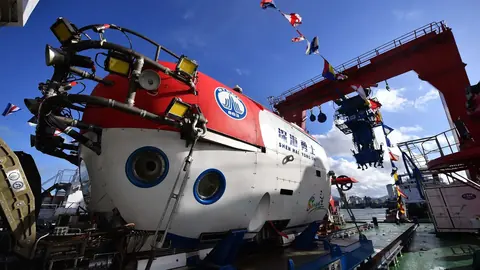
Chinese Submarine-Hunting Quantum Sensor Tracks Subway Train Beneath Street
Most read
- 1
Tesla audits Chinese suppliers to scale up Optimus robot production
- 2
Former minister Lakhan Singh Rajput to inaugurate temple bhandara at Shri Chakreshwar Mahadev
- 3
Firozabad BSA finds four government schools locked during inspection
- 4
Tamil Nadu dengue cases fall for third consecutive year to 17,049
- 5
Social workers stage silent protest at Fufund railway station for train halts
Comments
No comments yet. Be the first to comment.