
White Marks On Jaivilas Palace Wall Raise Questions Over Gwalior Elevated Road
The proposed elevated road in Gwalior has brought the city’s development plans face to face with its historic heritage.

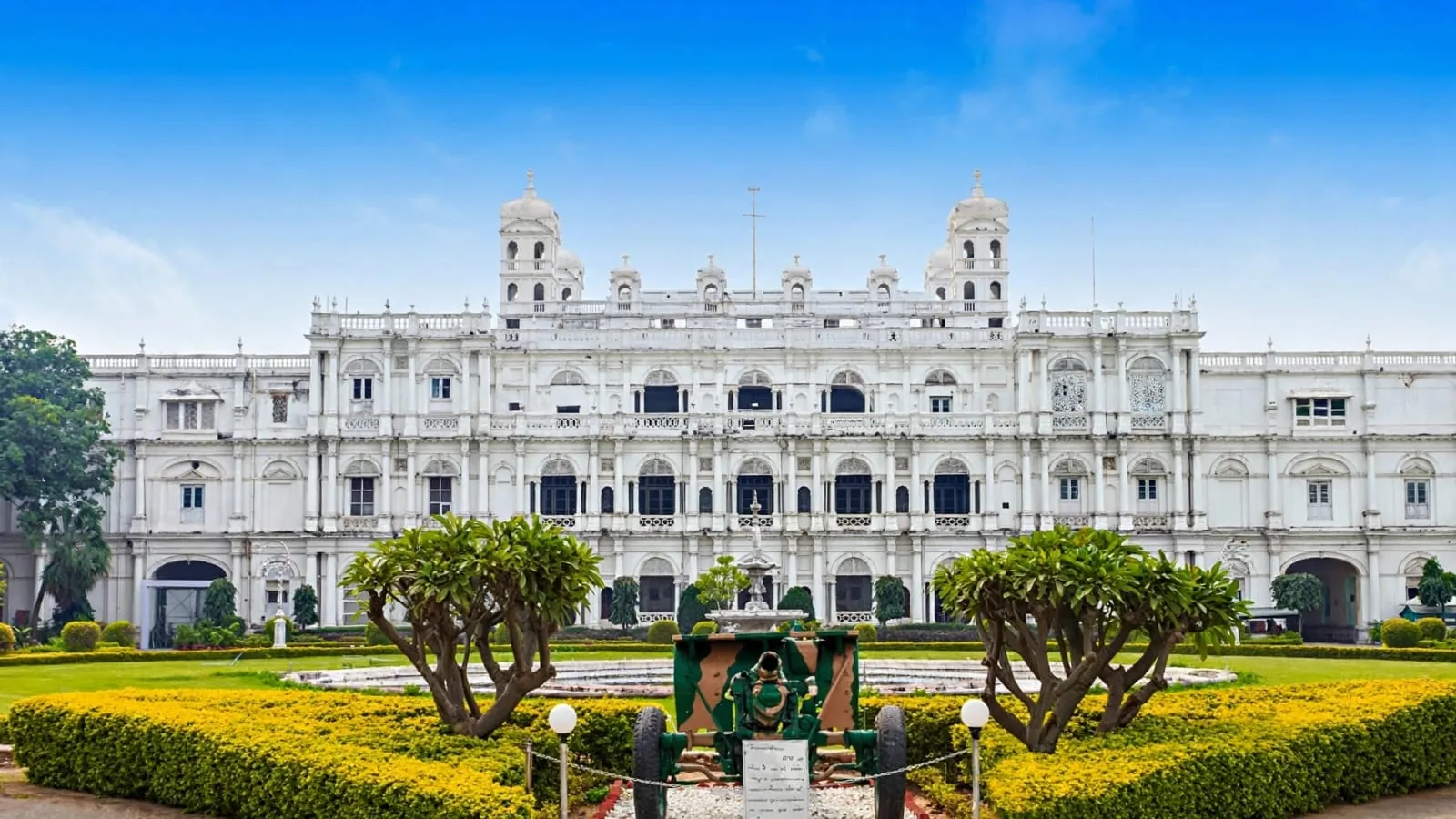
The proposed elevated road in Gwalior has brought the city’s development plans face to face with its historic heritage. White marks have been put up on the outer wall of the historic Jaivilas Palace during a survey of encroachments along the project route. This has raised the question of whether a section of the palace wall could be removed for the proposed loop of the elevated road.
The issue has caused concern because Jaivilas Palace is not only a private property. It is also an important part of Gwalior’s historical identity and the heritage of the Scindia dynasty. If the palace wall is affected during construction, the administration and the Scindia family could face a major question over how to balance the elevated road project with the protection of the historic property.
The elevated road is being built to provide relief from traffic jams in the city. However, its proposed route now appears to be creating a possible conflict with the palace’s outer boundary. The white marks placed up to the area inside the wall, just outside Jaivilas Palace, have led to increased discussion at the local level.
The Public Works Department Setu’s executive engineer, Jogendra Yadav, reached the area with his team to carry out measurements for the proposed loop of the elevated road. During this measurement exercise, white marks were placed up to the outer wall of Jaivilas Palace. After this, the possibility that the palace wall could come within the elevated road’s route became a subject of discussion.
Department officials have not confirmed any action by naming a particular person or property. However, they have clearly said that any construction that becomes an obstacle to the elevated road will face action according to the rules. This statement has added to the uncertainty surrounding the palace wall, even though the department has not specifically said that action will be taken against Jaivilas Palace.
The biggest challenge for the elevated road is the encroachments that have existed for years along the Swarnrekha River. At the preliminary stage, more than 360 temporary and permanent constructions are being described as falling in the project’s path. Several of these constructions have allegedly been built by encroaching on land along the river.
The administration is preparing to remove these constructions. Tehsildar Manish Jain said that the process of issuing notices to encroachers is under way. The concerned people will be given an opportunity to be heard, after which action to remove the encroachments will be taken according to the rules.
The administration has also clarified that the action will depend on the nature of the land and the legal status of the construction. If private land comes in the path of the elevated road, compensation will be given according to the process of land acquisition and acquisition-related rules. On the other hand, if a construction is found to be on government land or to be an encroachment, the removal process will be followed.
Jogendra Yadav, executive engineer of the Public Works Department Setu, has also said that notices are being issued to remove constructions that are obstructing the elevated road. The district administration will move ahead with the process of land acquisition and acquisition as well. The department’s position is that the rules will determine whether a construction is removed or whether compensation is provided.
This has led to the biggest question surrounding the proposed loop: what will happen if it actually affects the wall of Jaivilas Palace? Jogendra Yadav, without naming any property, said that any construction coming in the way of the elevated road would face action for removal according to the rules. If the construction is on private land, compensation will be given according to the rules. If it is found to be an encroachment, action will be taken to remove it.
In other words, the wall of the palace could also come under the same rules as any other construction standing in the project’s path, if the proposed alignment affects it. The department has not made a separate statement on the palace wall, but the white marks have made the possible impact a matter of public attention.
The marks reaching up to the Jaivilas Palace wall have also increased activity in political and administrative circles. The question now is whether Union Minister Jyotiraditya Scindia will allow any part of his historic heritage to be affected for the elevated road.
On one side is the ambitious project intended to free the city from traffic jams. On the other is the historic heritage linked to Gwalior’s identity and the Scindia dynasty. The possible clash has therefore placed the administration, the Public Works Department and the Scindia family before a sensitive issue.
In the coming period, attention will remain on how the administration, the Public Works Department and the Scindia family respond to the situation and find a way forward. Whether the hundreds of encroachments along the elevated road’s route are removed will be decided through administrative action.
But the white marks reaching the wall of Jaivilas Palace have made the central question unavoidable: if the proposed loop truly affects the palace boundary, will the road of development pass through the wall of Gwalior’s heritage?
Frequently asked questions
Why have white marks been placed on the outer wall of Jaivilas Palace?
The marks were placed during measurements for the proposed loop of Gwalior’s elevated road and an encroachment survey.
Could part of the Jaivilas Palace wall be removed for the elevated road?
The possibility has been raised because the proposed route appears to approach the palace’s outer boundary, but officials have not confirmed that the wall will be removed.
Why is the issue significant?
Jaivilas Palace is an important part of Gwalior’s historical identity and the heritage of the Scindia dynasty.
What is the main challenge facing the elevated road project?
More than 360 temporary and permanent constructions along the Swarnrekha River are described as being in the project’s path.
You may also like
 Education
GRMC Junior Doctors Strike Over Alleged Assault On Dean, OPD Services Hit
 Accident
Gwalior Temple Road Accident Triggers Magisterial Inquiry, Report Due In 7 Days
 National
Weapons of 745 Sadhus Who Sacrificed Their Lives Worshipped in Gwalior
 Politics
Jyotiraditya Scindia Follows 200-Year-Old Dussehra Tradition in Gwalior
Most read
- 1
Air China Adds Extra Flight for Passengers Stranded in Fuel-Starved Cuba
- 2
Western disturbance to bring rain, hail and strong winds across north India
- 3
Yogi Adityanath Directs No Occupied Houses Be Demolished for Achhalda Bridge
- 4
Gwalior Temple Truck Crash Kills 12, Injures 28-29 Devotees During Navratri
- 5
Schools Shut in Five Tamil Nadu Districts, Including Chennai, Amid Heavy Rain
Comments
No comments yet. Be the first to comment.