
US sanctions four Indian firms for allegedly facilitating Iran oil imports
US State Department sanctions four Indian companies and three nationals for allegedly facilitating Iranian petroleum product imports worth millions.

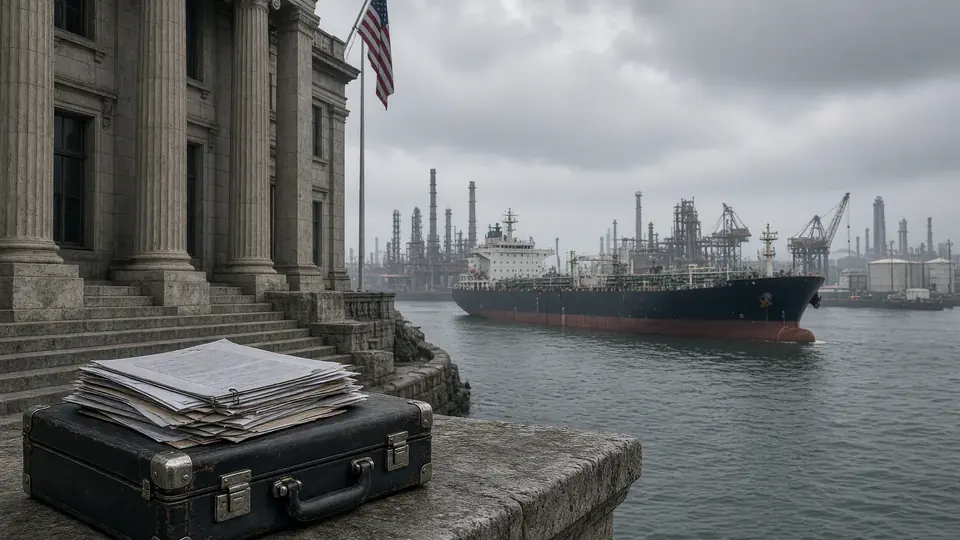
US Sanctions Hit Indian Firms as Washington Chooses Economic Pressure Over Military Action Against Iran
Washington has sanctioned four Indian companies and three Indian nationals as part of a sweeping new campaign targeting Iran's petroleum revenue streams, even as experts question whether decades of similar punishments can achieve what military strikes have not.
The US State Department designated Portease Partners LLP, Sadashiva Overseas Ltd, PP Softtech Pvt Ltd, and Prakrutees Infra Impex India Pvt Ltd under "Operation Economic Outcast," alongside Indian nationals Harish Ramchandra Rangi, Indrismiya Ashrafmiya Shekh, both designated partners of Portease, and Prashant Garg of PP Softtech. The four entities were among 60 individuals, entities, and vessels sanctioned concurrently by the US Treasury Department on Monday.
What the Indian Companies Are Accused Of
Portease Partners, operating as a customs broker, allegedly facilitated imports of Iranian petrochemical products into India, according to the State Department. Sadashiva Overseas faces accusations of importing Iranian petroleum products worth approximately $69 million from multiple companies, while PP Softtech and Prakrutees Infra each allegedly imported Iranian petroleum products valued at about $25 million.
The State Department said the individuals and entities were sanctioned because they knowingly engaged "in a significant transaction for the purchase, acquisition, sale, transport, or marketing of petrochemical products from Iran".
Economic Warfare Replaces Military Threats
The sanctions package coincided with a notable shift in US strategy. Oil prices fell Wednesday as markets interpreted the economic approach as reducing the risk of military conflict that could disrupt Gulf supply. International benchmark Brent crude futures for October delivery declined 2.62% to $86.26 a barrel, while US West Texas Intermediate futures dropped 2.56% to $80.25 per barrel.
"U.S. sanctions on Iran were less severe than anticipated," said Dan Coatsworth, head of markets at AJ Bell, noting that lower oil prices helped markets regain stability as government bond yields eased from recent highs. The United States earlier this week threatened to punish countries continuing to do business with Iran but said it would not impose penalties immediately.
The Limits of Economic Isolation
Yet the strategy faces significant skepticism. Iran's status as an economic outcast spans literally decades, with countless US sanctions already targeting its banking system, shipping companies, oil industry, and military. "There are diminishing returns. This country has been an economic pariah for 50 years now and the regime is still there," said Aya Ibrahim, visiting fellow at Georgetown University's McCourt School of Public Policy and a former State Department official in the Biden administration.
Iran was already cut off from much of the global financial system, with inflation staggeringly high and basic necessities long in short supply. Operation Economic Outcast includes forcing every branch of Iran's Bank Melli to be closed, but US officials stopped short of targeting Chinese banks allegedly enabling Tehran, the largest remaining lever available.
When asked why Treasury did not take immediate action against Chinese banks, Treasury Secretary Scott Bessent responded candidly: "Why would I want to blow up the global financial system?". His answer indicates concern that secondary sanctions on Chinese banks would cross a red line, particularly given China's virtual monopoly on rare earth elements critical to manufacturing cars, jet engines, smartphones, and MRI machines.
"Major parts of our economy do not work without rare earth minerals from China, including autos, aerospace and semiconductors," said Ed Mills, Washington policy analyst at Raymond James. A looming rare earth shortage last year threatened Covid-like supply disruptions, and "we learned very quickly we cannot afford that lever being pulled," Ibrahim noted.
Meanwhile, diplomatic signals suggest Washington sees reduced near-term escalation risk. The US is beginning to send personnel back to some Middle East diplomatic missions that were evacuated or downsized amid tensions with Iran, though some embassies will initially operate below full capacity.
Frequently asked questions
Which Indian companies were sanctioned by the US?
The US sanctioned four Indian companies: Portease Partners LLP, Sadashiva Overseas Ltd, PP Softtech Pvt Ltd, and Prakrutees Infra Impex India Pvt Ltd. Three Indian nationals were also designated: Harish Ramchandra Rangi, Indrismiya Ashrafmiya Shekh, and Prashant Garg.
What were these companies accused of?
The companies were accused of facilitating imports of Iranian petroleum and petrochemical products into India. Sadashiva Overseas allegedly imported approximately $69 million worth of Iranian petroleum products, while PP Softtech and Prakrutees Infra each imported about $25 million worth.
How did oil markets react to these sanctions?
Oil prices fell following the sanctions announcement, with markets interpreting the economic approach as reducing the risk of military conflict. Brent crude futures declined 2.62% to $86.26 a barrel, while US West Texas Intermediate futures dropped 2.56% to $80.25 per barrel.
Are sanctions an effective strategy against Iran?
Experts question their long-term effectiveness. According to analysts, Iran has been an economic outcast for decades with countless sanctions already targeting its banking, shipping, oil, and military sectors, yet the regime remains in place, suggesting diminishing returns from economic isolation.
You may also like


Most read
- 1
Tesla audits Chinese suppliers to scale up Optimus robot production
- 2
Former minister Lakhan Singh Rajput to inaugurate temple bhandara at Shri Chakreshwar Mahadev
- 3
Firozabad BSA finds four government schools locked during inspection
- 4
Tamil Nadu dengue cases fall for third consecutive year to 17,049
- 5
Social workers stage silent protest at Fufund railway station for train halts
Comments
No comments yet. Be the first to comment.