
Understanding the Key Differences Between Meteors and Meteorites
Discover the crucial differences between meteors and meteorites, from their appearances to their locations. Learn about shooting stars and space rocks.

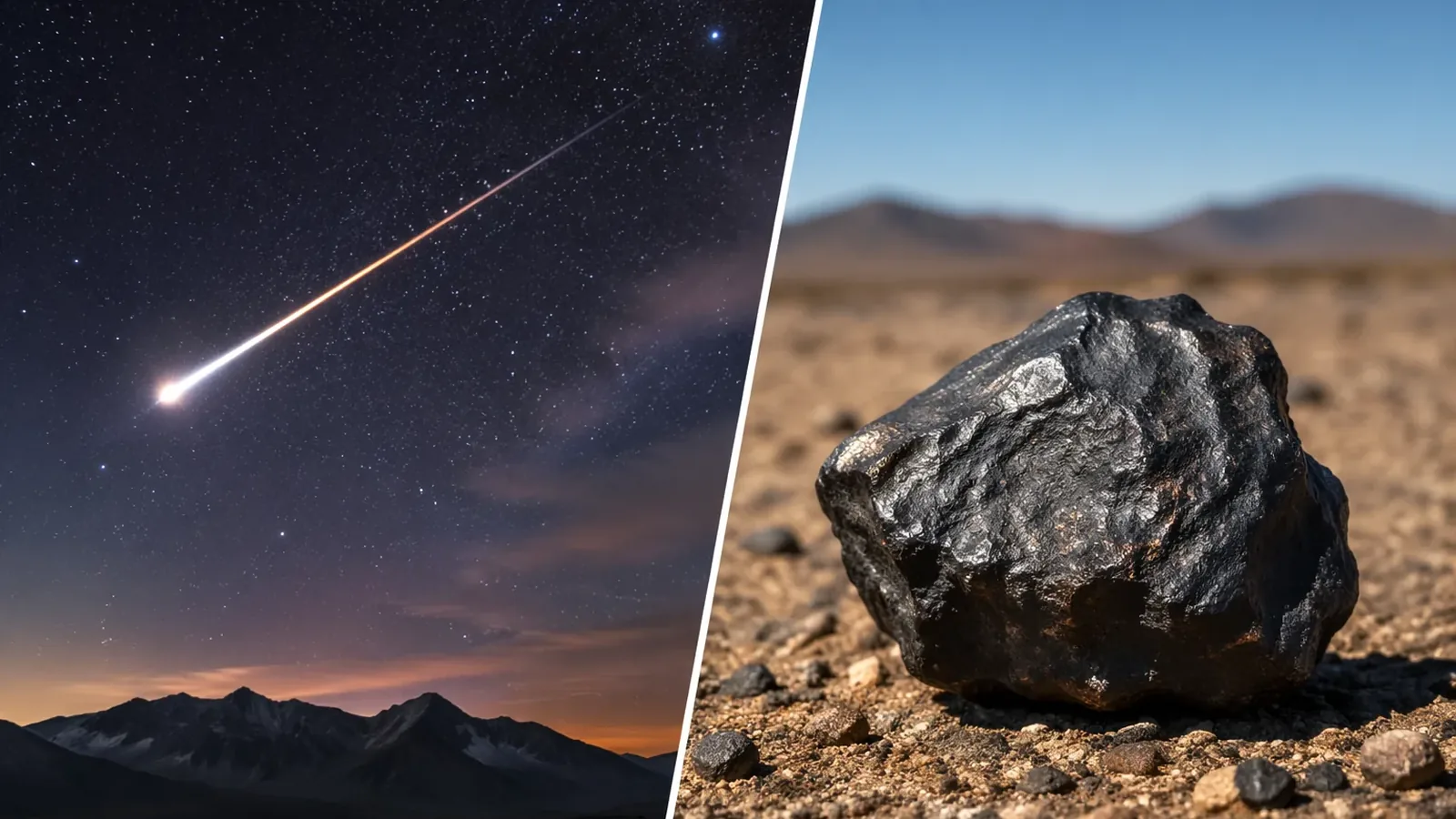
Meteor vs Meteorite Explained: The Crucial Difference Between a Shooting Star and a Space Rock
The terms "meteor" and "meteorite" are often used interchangeably, especially when describing a streak of light crossing the night sky. However, the distinction between the two is straightforward and depends on the stage of a cosmic fragment's journey through Earth's atmosphere. Both terms refer to the same piece of space debris but at different points in its interaction with Earth.
What Is a Meteor?
A meteor is not the physical object itself but rather the glowing phenomenon created when a fragment of space material, such as debris from comets or asteroids, enters Earth's atmosphere at high speed. As it rushes through the atmosphere, the surrounding air heats up intensely, producing the visible streak of light commonly referred to as a "shooting star." This process occurs many kilometers above Earth's surface, and the display is often brief, lasting only a second or two.
What Is a Meteorite?
A meteorite is the surviving fragment of the original space object that makes it all the way to Earth's surface. Unlike the fleeting glow of a meteor, meteorites are tangible pieces of rock or metal that can be recovered and studied. These fragments often have dark outer surfaces, a result of the intense heating they undergo during their descent. Once they land, meteorites can remain on the ground for thousands or even millions of years, offering scientists a chance to examine them directly.
Key Differences Between Meteor and Meteorite
- Location: Meteors exist only within the atmosphere, creating temporary visual phenomena high above Earth's surface. Meteorites, on the other hand, are found on the ground, often in deserts, forests, ice fields, or even populated areas.
- Appearance: Meteors are recognized as bright streaks or flashes in the sky, sometimes leaving glowing trails. Meteorites, in contrast, look far less dramatic and often resemble ordinary stones, albeit with darkened surfaces caused by atmospheric heating.
- Visibility: Meteors are visible for only a short time due to the rapid heating and ablation of the incoming material. Meteorites, once landed, remain visible indefinitely, allowing scientists and collectors to search for them long after the original event.
- Formation Stage: The meteor stage occurs during atmospheric entry, marking an active interaction between debris and atmospheric gases. The meteorite stage begins only after the fragment completes its descent and lands on Earth.
- Survival Rate: Most incoming space debris burns up in the atmosphere and never becomes a meteorite. NASA estimates that tens of tonnes of meteoritic material enter Earth's atmosphere daily, but only a small fraction survives the descent. Factors like size, composition, speed, and entry angle determine whether a fragment becomes a meteorite.
Scientific Importance
Meteors and meteorites offer unique insights into the cosmos. Meteor observations, often conducted using cameras and monitoring networks, help scientists study the movement of small objects entering Earth's atmosphere. Annual meteor showers, which occur when Earth passes through trails of comet debris, provide valuable data about these streams of material.
Meteorites, however, serve as physical samples from beyond Earth. By analyzing their minerals, chemical composition, and age, researchers can uncover information about planetary formation, ancient collisions, and conditions in the Solar System billions of years ago.
Meteor Showers: A Spectacle of Meteors
Meteor showers, such as those seen during Earth's passage through comet debris trails, often add to the confusion between meteors and meteorites. These events create dazzling displays of numerous meteors radiating from a single area of the sky. Despite the increased activity, very little of this material reaches the ground, making meteor showers primarily a spectacle of meteors rather than a source of meteorites.
Conclusion
In summary, the distinction between meteors and meteorites lies in their location and stage of existence. A meteor is the glowing phenomenon seen in the atmosphere, while a meteorite is the surviving fragment that lands on Earth. The next time you spot a shooting star, remember that it’s a meteor, and only if part of it survives the journey to the ground does it become a meteorite.
Frequently asked questions
What is a meteor?
A meteor is the glowing phenomenon created when a fragment of space material enters Earth's atmosphere at high speed, producing a visible streak of light commonly referred to as a 'shooting star.'
What is a meteorite?
A meteorite is the surviving fragment of a space object that makes it all the way to Earth's surface, which can be recovered and studied.
What are the key differences between a meteor and a meteorite?
Meteors exist only in the atmosphere and are visible as bright streaks, while meteorites are found on the ground and resemble ordinary stones.
How long do meteors last compared to meteorites?
Meteors are visible for only a short time, typically lasting a second or two, while meteorites remain visible indefinitely once they land.
What determines whether a fragment becomes a meteorite?
Factors such as size, composition, speed, and entry angle determine whether a fragment of space debris survives its descent and becomes a meteorite.
You may also like
 National
Hong Kong's first astronaut teaches space science live from orbit to students
 National
Study of supernova SN 2023zcu aids cosmic distance measurement
 Education
Raja Mahendra Pratap Singh University Holds Discussion Meeting To Honour APJ Abdul Kalam
 International
More Chinese Scientists, Students Head to Malaysia for Research and Collaboration
Most read
- 1
Air China Adds Extra Flight for Passengers Stranded in Fuel-Starved Cuba
- 2
Western disturbance to bring rain, hail and strong winds across north India
- 3
Yogi Adityanath Directs No Occupied Houses Be Demolished for Achhalda Bridge
- 4
Gwalior Temple Truck Crash Kills 12, Injures 28-29 Devotees During Navratri
- 5
Schools Shut in Five Tamil Nadu Districts, Including Chennai, Amid Heavy Rain
Comments
No comments yet. Be the first to comment.