
Truck Crash Near Shitala Mata Temple Kills 15 Devotees, CM To Visit Families
A truck turned into a vehicle of death on the road to faith as devotees heading to the Shitala Mata Temple were crushed in a devastating accident.

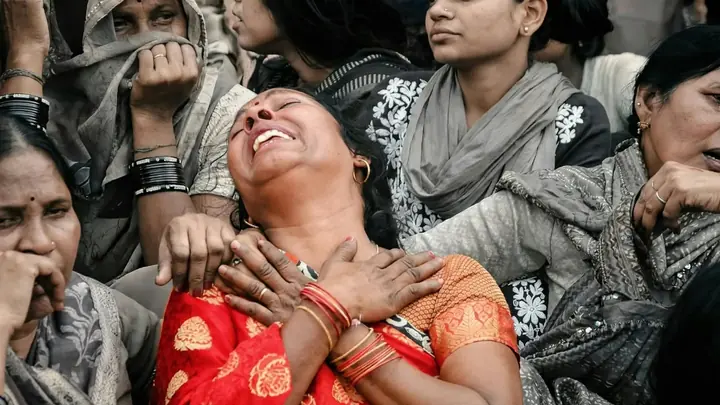
A truck turned into a vehicle of death on the road to faith as devotees heading to the Shitala Mata Temple were crushed in a devastating accident. The tragedy has now raised serious questions about the security arrangements and the functioning of the administration. Chief Minister Dr. Mohan Yadav will meet the affected families in Gwalior today, visit the injured and review the situation. But even as condolences and assistance are being discussed, the most important question remains unanswered: if the entry of heavy vehicles on the temple route was restricted, how did the truck reach the spot?
The incident took place during the intervening night between Saturday and Sunday. A heavy truck reportedly lost control on a slope and moved through the devotees before reaching the entrance gate of the temple. The accident left 15 people dead and many others injured. Families that were expected to celebrate the happiness of Navratri are now facing grief.
The deaths have brought the arrangements around the temple route under scrutiny. The accident was not limited to the movement of one uncontrolled truck. It has also raised questions about the restrictions imposed on heavy vehicles, the deployment of police personnel, the functioning of barricades and check points, and the preparedness for the crowd expected during the temple gathering.
After the accident, the Chief Minister took the alleged negligence seriously. He directed that the city SP, or CSP, be removed from the post. He also ordered the suspension of 8 police personnel, including three station in-charges, one traffic inspector, one head constable and three constables. A detailed investigation has also been ordered.
The initial action has therefore brought the role of the police arrangements under the scanner. However, the matter does not end with suspensions. The investigation will have to establish whether the responsibility of stopping heavy vehicles on the restricted route was properly carried out. It will also have to examine whether the personnel posted at the barricades and checking points were present and performing their duty.
Another question concerns whether the security arrangements were adequate for the number of devotees who had gathered for the event. The answers to these questions are important because the restrictions on the route were already known. If heavy vehicles were not supposed to enter the temple road, the investigation must explain how the truck crossed the points where it could have been stopped.
Information attributed to local residents indicates that an attempt was made to stop the truck even before the accident. It is alleged that a rural resident raised his hand and tried to signal the vehicle to stop, but the truck continued moving forward. Questions have also been raised about the presence of police personnel at the stop point and the barricade.
If the investigation confirms that monitoring failed at the designated locations, and that action was not taken even when there was an opportunity to stop the truck, the incident will not remain only a case of driver error. It will also become necessary to determine at which level the responsibilities of duty, supervision and traffic control failed.
The condition of the temple route and the roads around it has also become part of the questions being raised after the accident. Local residents claim that complaints had been made earlier about the problems with the route and the arrangements there. After the accident, activities to improve the road and spread morum in the affected area have raised further questions among people.
If the condition of the route was already poor, why was the road not repaired before the accident? If improvements were needed in the road and traffic arrangements during the movement of devotees, why were steps not taken in time? The source of these complaints, as well as the administrative records connected with the road work, will need to be examined independently.
People do not want to see an administration rushing into action only after an accident. They want a system that performs its responsibilities before an accident takes place. The questions about the road, the barricades and the traffic arrangements are therefore connected to the larger question of whether the preparations matched the situation at the temple.
The transport department’s investigation into the truck has also come under scrutiny. According to the available information, a team from the RTO examined the truck’s fitness, permit and insurance-related documents. However, it could not establish the definite technical reason for the accident. Concern has also been raised about the availability of technical experts in the department.
The fact that the documents were valid does not prove that the vehicle’s mechanical condition was completely sound at the time of the accident. The truck’s braking system, other technical components and the evidence connected with the accident will require expert examination. Only such an investigation can help confirm the possible cause.
At this stage, it would be premature to declare technical failure, loss of control on the slope or any other circumstance as the final cause. The transport records may show that the documents were valid, but they do not by themselves answer what happened to the truck’s mechanical systems while it was moving on the slope.
Questions have also been raised about the ambulance services and the relief operation after the accident. Some affected families have alleged delays in rescue and relief. Relatives said that it took time to remove the injured people and those trapped under the truck, and that they had to wait for help.
These allegations will have to be examined through a clear timeline. The investigation should establish when the information about the accident was received, when the ambulances arrived, when the rescue teams were deployed and how much time it took to take the injured to the hospital. The availability of resources at the spot will also need to be reviewed.
In any major accident, the initial minutes are extremely important for saving lives. That is why the timing and sequence of the relief operation must form an important part of the investigation. The question is not only whether help eventually reached the spot, but also whether the response was timely and whether the available arrangements were sufficient for the situation.
During his visit to Gwalior, Chief Minister Dr. Mohan Yadav is expected to meet the affected families and review the condition of those receiving treatment. The government has also made announcements regarding financial assistance for the families of the deceased and treatment for the injured.
For families in mourning, however, financial assistance cannot answer every question. They also want to know how their loved ones became victims while travelling on a route that was supposed to be protected. They want to know who failed to stop the truck from entering the restricted area and where the monitoring system became weak.
They will also want to know whether, after the investigation is completed, responsibility will remain limited to personnel at the lower level or whether the role of every concerned level will be examined. The action already taken includes the removal of the CSP and the suspension of 8 police personnel, but the complete account of the failure in the system is still awaited.
The Shitala Mata Temple tragedy cannot be allowed to become only the story of one truck that went out of control. It is also a test of crowd management, restrictions on heavy vehicles, barricading, police deployment and emergency services at temples, fairs and large religious gatherings.
The real purpose of the investigation should not be limited to finding out how the truck became uncontrolled. It must also determine how the truck reached a restricted route and why the arrangements meant to stop it did not work. Every lapse will need to be examined fairly, and responsibility will have to be fixed on the basis of evidence.
The Chief Minister will visit the victims, the families will be met, officers will prepare a report and the action taken will be reviewed. But justice for the victims will come only when the investigation is impartial, every failure is examined and responsibility is fixed according to the evidence. The final question before the administration is the one being asked by grieving families: if the administration had woken up earlier, could their loved ones have been saved?
Frequently asked questions
How many people died in the truck crash near Shitala Mata Temple?
The accident left 15 people dead and many others injured.
When did the accident occur?
The incident took place during the intervening night between Saturday and Sunday.
What will Chief Minister Dr. Mohan Yadav do after the crash?
He will meet affected families in Gwalior, visit the injured and review the situation.
What action was taken against police personnel?
The city SP or CSP was removed, and eight police personnel were suspended, including three station in-charges, a traffic inspector, a head constable and three constables.
What is the investigation expected to examine?
It will examine how the truck entered the restricted temple route and whether police personnel at barricades and checking points were present and performing their duties.
You may also like
 Religious
Grand Dussehra Bhandara Draws Hundreds of Devotees in Shravasti
 National
Maa Durga Idols Immersed Across Hathras Amid Devotion, Police Vigil
 Politics
Madhya Pradesh CM Mohan Yadav Worships AK-47, Traditional Weapons at Vijayadashami Event
 Politics
Madhya Pradesh CM Mohan Yadav Joins Dussehra Arms Worship in Indore
Most read
- 1
Air China Adds Extra Flight for Passengers Stranded in Fuel-Starved Cuba
- 2
Western disturbance to bring rain, hail and strong winds across north India
- 3
Yogi Adityanath Directs No Occupied Houses Be Demolished for Achhalda Bridge
- 4
Gwalior Temple Truck Crash Kills 12, Injures 28-29 Devotees During Navratri
- 5
Heavy Rain Waterlogs Bengaluru, Snarls Traffic; Ride-Hailing Fares Surge
Comments
No comments yet. Be the first to comment.