
Supreme Court on Vande Mataram and Conscientious Objectors
Supreme Court notes state cannot penalize conscientious objectors over Vande Mataram, amid a legal challenge against mandatory rendition rules.
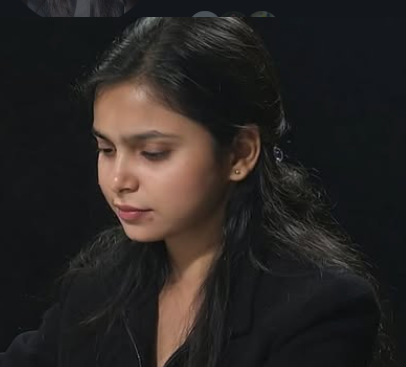

The Supreme Court has observed that the state may decide what the National Song is, but cannot penalise conscientious objectors, as a challenge by T.M. Krishna questions government directions that require the official rendition of all six stanzas of Vande Mataram.
Dispute over the official version
The issue arises from Ministry of Home Affairs directions and circulars issued in 2026, and from Parliament’s passage of the Prevention of Insults to National Honour (Amendment) Act, 2026 with little debate.
The amendment extends Section 3 of the 1971 Act, which punishes anyone who intentionally prevents the singing of the National Anthem or disturbs an assembly engaged in such singing, to the National Song.
By itself, the amendment does not compel anyone to sing, and it does not define the National Song or specify its stanzas.
The petition by T.M. Krishna has argued that compulsion emerges when the amendment is read with the MHA orders, which prescribe an official version of all six stanzas, mandate mass singing at public functions, and place the song before the anthem.
The Court has observed that the state may decide what the National Song is, but cannot penalise conscientious objectors, in line with the Bijoe Emmanuel judgment of 1986.
That earlier judgment held that no law obliges anyone to sing the Anthem, that standing in respectful silence is no offence, and that executive instructions without statutory backing cannot curtail fundamental rights.
The 1937 compromise
The controversy is rooted in an older accommodation made during the freedom movement over how Vande Mataram should be sung at national gatherings.
In 1937, the Congress Working Committee resolved that only the first two stanzas of Bankim Chatterjee’s Vande Mataram should be sung at national gatherings, because the later stanzas invoke the motherland as Hindu deities.
That decision reflected an understanding that patriotism is not only reverence for a territory or a flag, but also solidarity with fellow citizens in a nation-state.
The idea of a nation, in this understanding, is a bond that transcends family, community and faith, uniting citizens through common values and the pursuit of prosperity.
National symbols and anthems exist to strengthen that bond among citizens.
When such symbols are changed or modified to compel citizens to accept a majoritarian version, their purpose is defeated.
The freedom-fighting generation understood this problem, and the 1937 decision on Vande Mataram was shaped by that understanding.
Rajendra Prasad’s assurance
When Jana Gana Mana was adopted as the National Anthem on January 24, 1950, India’s first President Rajendra Prasad said that Vande Mataram would be “honoured equally”.
Rajendra Prasad made that statement even though there is no mention of a “national song” in the Constitution.
Since then, the two-stanza version has enabled citizens of all faiths to participate in a song associated with the freedom struggle.
The song was also popularised by artistes such as Lata Mangeshkar and A.R. Rahman.
The two-stanza practice therefore became an inclusive compact around a song with deep political and cultural resonance.
Government push and constitutional limits
In the last year or so, the BJP-led Union government has sought to unsettle this compact.
Since the song’s 150th anniversary in 2025, the government has pushed for all six stanzas to be recited.
The MHA’s 2026 directions and circulars, along with the 2026 amendment passed by Parliament, are described as being in line with the BJP’s habit of imposing uniformity and majoritarian preference on all citizens.
The legal question now turns on whether executive instructions and penal provisions can be used in a way that converts a national symbol into a compulsory act of expression.
Under Bijoe Emmanuel, respectful silence cannot be treated as an offence, and executive instructions without statutory backing cannot restrict fundamental rights.
For that reason, the Court has been urged to apply Bijoe Emmanuel in full, set aside the MHA’s orders, and make clear that silence cannot be read as “disturbance”.
Such a ruling would return the dispute to the vision of the freedom generation and do justice to the idea of unity in diversity.
Source: The Hindu
Frequently asked questions
What did the Supreme Court observe about Vande Mataram and conscientious objectors?
The Supreme Court observed that the state may decide what the National Song is, but it cannot penalise conscientious objectors.
What is T.M. Krishna challenging?
T.M. Krishna is challenging government directions that, when read with the 2026 amendment, require the official rendition of all six stanzas of Vande Mataram, mandate mass singing at public functions, and place the song before the anthem.
What did the 2026 amendment to the Prevention of Insults to National Honour Act do?
The amendment extended Section 3 of the 1971 Act, which punishes intentionally preventing or disturbing the singing of the National Anthem, to the National Song.
What did the 1986 Bijoe Emmanuel judgment say?
The Bijoe Emmanuel judgment held that no law obliges anyone to sing the Anthem, that standing in respectful silence is not an offence, and that executive instructions without statutory backing cannot curtail fundamental rights.
Why was only the first two stanzas of Vande Mataram adopted for national gatherings in 1937?
In 1937, the Congress Working Committee resolved that only the first two stanzas should be sung because the later stanzas invoke the motherland as Hindu deities.
You may also like
 Politics
Congress resolution to sing only two stanzas of Vande Mataram sparks BJP backlash
 Politics
Supreme Court agrees to hear petition on uniform election manifesto format
 National
J&K clears kayaking coach Bilquis Mir to lead Indian team at Asian Games 2026
 National
Supreme Court directs government to extend tribunal member tenures to fill leadership gaps
Most read
- 1
Tesla audits Chinese suppliers to scale up Optimus robot production
- 2
Former minister Lakhan Singh Rajput to inaugurate temple bhandara at Shri Chakreshwar Mahadev
- 3
Firozabad BSA finds four government schools locked during inspection
- 4
Tamil Nadu dengue cases fall for third consecutive year to 17,049
- 5
Social workers stage silent protest at Fufund railway station for train halts
Comments
No comments yet. Be the first to comment.