
Supreme Court directs government to extend tribunal member tenures to fill leadership gaps
Supreme Court asks government to grant temporary extensions for retiring tribunal members to prevent quasi-judicial bodies from becoming non-functional.

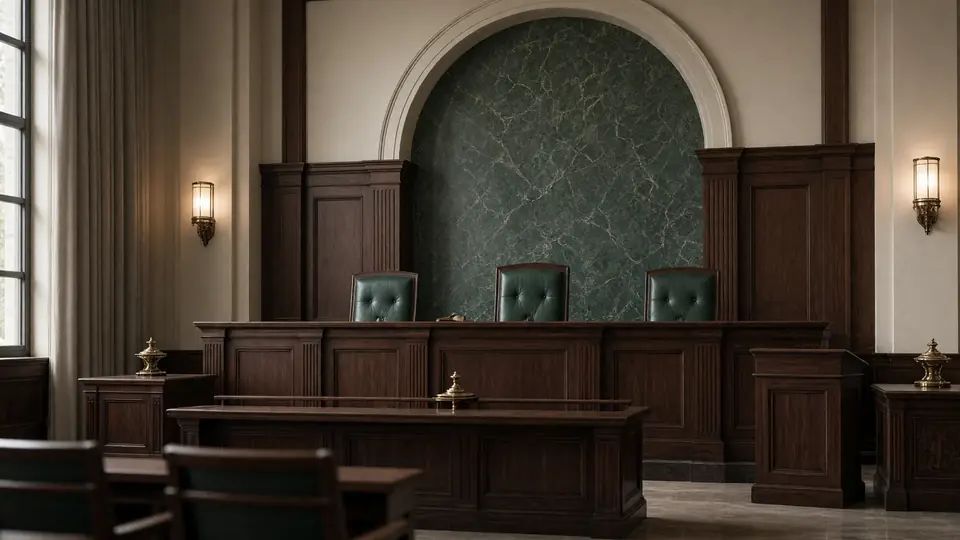
The Supreme Court has directed the Central government to explore temporary extensions for tribunal members approaching retirement, proposing stop-gap arrangements of a month or longer until permanent appointments can be finalized. The intervention aims to prevent quasi-judicial bodies from becoming non-functional due to leadership vacancies.
A Bench comprising Chief Justice Surya Kant and Justices Joymalya Bagchi and V Mohana heard submissions concerning vacancies across multiple tribunals, including the Debt Recovery Appellate Tribunal (DRAT), where several members are scheduled to retire shortly.
Centre argues appointment process underway
Attorney General R. Venkataramani, representing the Centre, urged the court not to entertain interim applications for ad hoc extensions, stating that the process for fresh appointments has already been initiated. "Now that everything is set in motion. These IAs (interim applications) may not be entertained any longer. A month or two should not make a difference," the Attorney General told the Bench.
The law officer emphasized that the new Tribunal Reforms Act has come into force and provides a clear framework for the appointment process.
Court seeks definite timeline commitment
Chief Justice Kant pressed the government for a concrete assurance, asking, "Can you make a decision at your end that you will increase ad hoc arrangement for a month or so". He added, "You need to give us a definite response that the posts will be filled. The moment we dispose of these petitions, and a fresh appointment is not made, another round will start".
Expressing concern over the continuity of tribunal functioning, the CJI stated, "We don't want tribunals to become defunct. Current arrangement may continue on ad hoc". The matter was subsequently listed for further hearing on Wednesday (September 16, 2026).
Progress under new tribunal law
The Centre had earlier informed the Bench that 248 members of different tribunals have been found eligible for extension under the Tribunal Reforms Act, 2026, and their services were being extended. The Attorney General reiterated this position, specifying that the extensions fall under Section 24 of the new law.
The government clarified that eligible tribunal members would continue in office until they completed the five-year tenure prescribed under the new law or attained the applicable maximum age limit. The Bench recorded this understanding in its observations.
Green tribunal faces immediate vacancy crisis
The court also took note of specific submissions highlighting that three members of the National Green Tribunal, two judicial and one technical, are demitting office, which would have an adverse impact on the functioning of the green tribunal. As an interim measure, the Bench extended the tenure of these three NGT members until appointments are made to their posts.
Regarding other tribunals, the Bench directed the Centre to expedite the appointment process in accordance with the 2026 Act without any delay.
Earlier extensions to prevent disruption
The current proceedings arise from an earlier order passed on May 19, when the Supreme Court had extended until September 8 the tenure of tribunal chairpersons, presidents and members whose terms were due to expire before that date. That extension was granted specifically to ensure that the functioning of tribunals was not disrupted.
The September 8 deadline prompted the Centre to update the court on the status of extensions under the new legislative framework and the identification of 248 eligible members.
Source: The Hindu
Frequently asked questions
Why did the Supreme Court intervene in tribunal appointments?
The Supreme Court intervened to prevent quasi-judicial tribunals from becoming non-functional due to leadership vacancies. The court was concerned about tribunal members approaching retirement, particularly at the Debt Recovery Appellate Tribunal (DRAT) and National Green Tribunal (NGT), which could leave these bodies unable to operate.
What temporary solution did the Supreme Court propose?
The Supreme Court directed the government to explore temporary extensions for tribunal members approaching retirement, proposing stop-gap arrangements of a month or longer until permanent appointments can be finalized. As an interim measure, the court extended the tenure of three National Green Tribunal members until new appointments are made.
What is the government's position on new tribunal appointments?
The Attorney General stated that the appointment process for fresh tribunal members has already been initiated under the new Tribunal Reforms Act, 2026. The government clarified that 248 tribunal members have been found eligible for extension under Section 24 of the new law and will continue in office until completing their five-year tenure or reaching the applicable maximum age limit.
What did the Chief Justice demand from the government?
Chief Justice Surya Kant pressed the government for a concrete assurance and a definite timeline for filling tribunal vacancies. He stated that the court needs confirmation that posts will be filled promptly, warning that failure to do so would trigger additional litigation.
You may also like
 Entertainment
Supreme Court on Vande Mataram and Conscientious Objectors
 Politics
Supreme Court agrees to hear petition on uniform election manifesto format
 National
J&K clears kayaking coach Bilquis Mir to lead Indian team at Asian Games 2026
 International
US Supreme Court rejects Trump's bid to restrict mail-in voting for midterms
Most read
- 1
Tesla audits Chinese suppliers to scale up Optimus robot production
- 2
Former minister Lakhan Singh Rajput to inaugurate temple bhandara at Shri Chakreshwar Mahadev
- 3
Firozabad BSA finds four government schools locked during inspection
- 4
Tamil Nadu dengue cases fall for third consecutive year to 17,049
- 5
Social workers stage silent protest at Fufund railway station for train halts
Comments
No comments yet. Be the first to comment.