
Study Finds Most Farm Workers Moving To Cities Landed In Low-Productivity Informal Jobs
A study finds 63-75% of workers leaving agriculture entered informal urban sectors with productivity little different from farming.

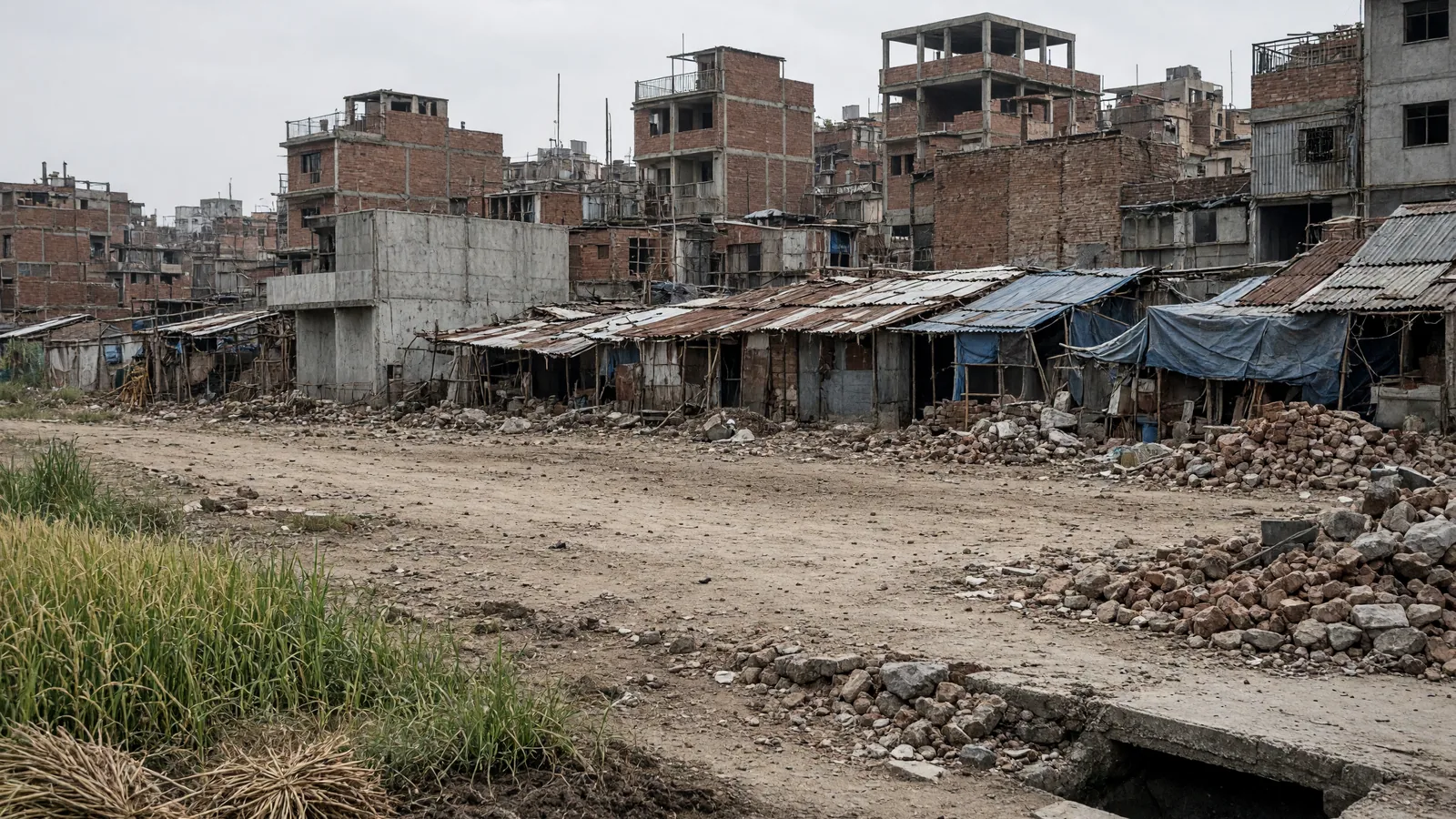
Most of rural agricultural workers landed in non-productive, informal urban jobs in 25 years: study
Agricultural workers who moved to cities were largely pushed into informal activities such as transport and restaurants, with little substantial change either in the economy or in their lives, according to a study published in the Journal of Development Economics.
The study was jointly authored by economists Rajeer Jat and Bharat Ramaswami. It examined the productivity gap between the farm and non-farm sectors using Reserve Bank of India’s KLEMS (Capital, Labour, Energy, Materials and Services) data from 1999 till 2024.
Informal work offers little productivity gain
The study said between 63% and 75% of non-farm workers are employed in informal employment-dominated industries that are not more productive than agriculture.
It found that the productivity gap between agriculture and the informal non-farm sector was small or negligible after accounting for differences in labour share, human capital and hours worked.
“In fact, 63-75% of non-farm workers are in industries whose productivity is statistically indistinguishable from that of agriculture,” the study found.
The findings challenge the assumption that a worker leaving agriculture automatically moves into a more productive part of the economy. According to the study, movement out of farming often leads instead to work in informal sectors where productivity remains comparable to that of agriculture.
The study said the formal non-farm sector presents a sharp contrast. Its value-added per worker is two to three times higher than that of agriculture even after adjustments, it found.
“By contrast, the formal non-farm sector is substantially more productive: even after adjustments, its value-added per worker is two to three times higher than that of agriculture,” the study found.
Formal-informal divide drives productivity gap
The large aggregate agricultural productivity gap, or APG, is therefore driven primarily by the small but economically dominant formal segment of the non-farm economy, according to the study.
The paper said the real “structural dualism” in the Indian economy is between the high-productivity formal sector and the low-productivity informal sector, including agriculture.
This means the central divide is not simply between farm and non-farm work, the study argued. Labour mobility between agriculture and the informal sector appeared relatively unconstrained, with workers able to move freely between the two, it noted.
“Much of the uncorrected productivity gap between them arises because of greater hours of employment in the informal sector,” the study said.
It added that the seasonality of agricultural activity remains a reason for migration even when the corrected productivity gap between agriculture and informal work is low.
The study’s findings suggest that migration by itself does not ensure access to better-paid or more productive work. The gains associated with moving away from agriculture depend significantly on whether workers can enter the formal non-farm sector.
Education and healthcare seen as key policy measures
The authors suggested policy reforms that include expanding education and healthcare facilities. They said these measures could help people migrating from agricultural and rural economic sectors find vocations in productive sectors around cities.
Speaking to The Hindu, Jat said the non-agriculture sector is typically more productive and that labour is pulled out of agriculture and moved into non-agriculture so that working in a high productive environment raises the overall living standards of a country.
“That’s how development stories have been in many of the countries,” he said.
Jat added that a country should empower its labour force to move to more productive sectors such as Information Technology or finance sectors.
“We should move people more into those sectors instead of the restaurant sector or construction or any other non-agriculture activities which are not productive,” he said.
According to Jat, barriers to entry into formal sectors include a lack of formal education, which he described as a college degree, and a lack of English education. He said English education is a doorway to more productive sectors such as IT and financial services.
The study’s policy argument is therefore focused not only on moving workers out of agriculture, but also on enabling them to reach the more productive formal sectors around cities.
Source: The Hindu
Frequently asked questions
What did the study examine?
It examined the productivity gap between India’s farm and non-farm sectors using Reserve Bank of India KLEMS data from 1999 to 2024.
What kind of urban jobs did many agricultural workers enter?
Many moved into informal activities such as transport and restaurants.
How productive is informal non-farm work compared with agriculture?
For 63% to 75% of non-farm workers, productivity was statistically indistinguishable from that of agriculture after adjustments.
How does the formal non-farm sector compare with agriculture?
Its value-added per worker is two to three times higher than agriculture’s, even after adjustments.
Does migration alone ensure better work?
No. The study found that moving out of agriculture does not by itself ensure access to better-paid or more productive work.
You may also like
 Religious
Tirumala concludes five-day Vedic ritual seeking rainfall blessings for India
 Weather
Evening downpour brings relief to Shravasti after oppressive heat and humidity
 Agriculture
Rajasthan farmer grows crops and solar power on same land, earning eight times more
 Politics
India approves duty-free sugar imports to control soaring domestic prices
Most read
- 1
Air China Adds Extra Flight for Passengers Stranded in Fuel-Starved Cuba
- 2
Western disturbance to bring rain, hail and strong winds across north India
- 3
Yogi Adityanath Directs No Occupied Houses Be Demolished for Achhalda Bridge
- 4
Gwalior Temple Truck Crash Kills 12, Injures 28-29 Devotees During Navratri
- 5
Schools Shut in Five Tamil Nadu Districts, Including Chennai, Amid Heavy Rain
Comments
No comments yet. Be the first to comment.