
Sarnath officially named India's 45th UNESCO World Heritage Site
Sarnath, where Buddha delivered his first sermon, is now India's 45th UNESCO World Heritage Site, highlighting India's rich cultural heritage.

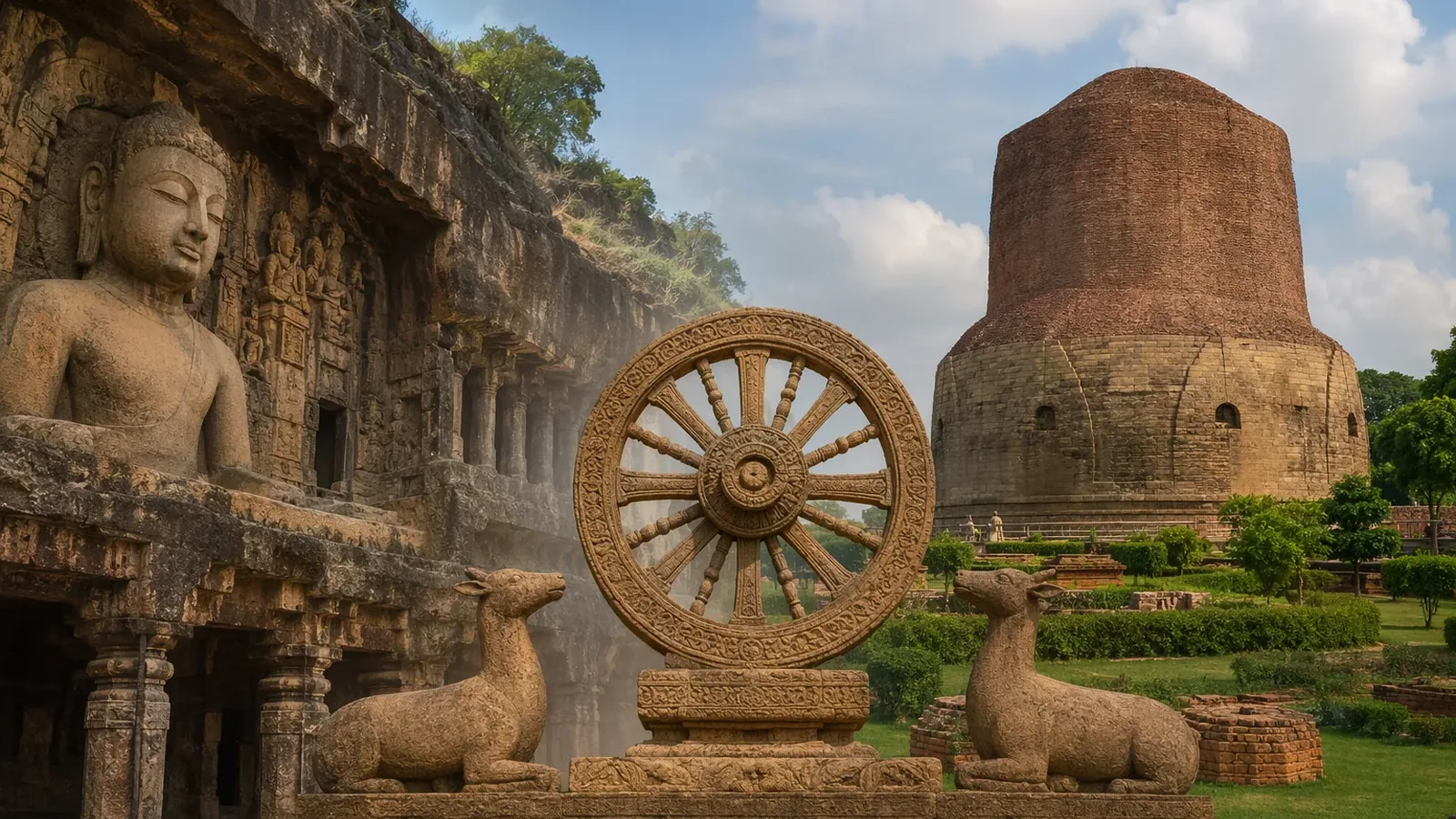
Sarnath, the sacred site where Gautama Buddha is believed to have delivered his first sermon after attaining enlightenment, has been officially inscribed as a UNESCO World Heritage Site. The recognition, granted during the 48th session of the World Heritage Committee earlier this month, marks a significant milestone in India’s heritage journey.
India’s Expanding Heritage Portfolio
With Sarnath’s inclusion, India now boasts 45 UNESCO World Heritage Sites, comprising 37 cultural, seven natural, and one mixed site. This places India sixth globally in terms of the number of heritage sites, a list that began in 1983 with the inscription of the Ajanta Caves, Ellora Caves, and Agra Fort. Over the years, India’s heritage portfolio has grown to encompass not just monumental architecture but also historic cities, cultural landscapes, biodiversity hotspots, and mountain railways.
The addition of Sarnath underscores the evolving understanding of heritage, moving beyond physical monuments to recognize sites of profound cultural and intellectual significance. It also highlights the enduring influence of Buddhism on global religious and philosophical traditions.
The Path to UNESCO Recognition
The process of securing UNESCO World Heritage status is rigorous and can span several years. A site must first be included on a country’s Tentative List, followed by a Preliminary Assessment to determine its eligibility. A detailed nomination dossier is then submitted and evaluated by UNESCO advisory bodies, including ICOMOS for cultural sites and IUCN for natural sites. The final decision rests with the 21-member World Heritage Committee, which assesses whether the site meets UNESCO’s criteria of Outstanding Universal Value (OUV), authenticity, and long-term protection.
India ratified the World Heritage Convention in 1977, and its first inscriptions in 1983 set the stage for a decades-long journey of preserving and showcasing its rich cultural and natural heritage.
Why UNESCO Status Matters
Being inscribed as a UNESCO World Heritage Site is one of the highest recognitions a cultural or natural site can achieve. It signifies that the site holds exceptional value for humanity, warranting preservation for future generations. This status often enhances conservation efforts, attracts international expertise, and boosts tourism, creating economic opportunities for local communities.
However, the designation also comes with challenges. Many heritage sites face threats such as overcrowding, pollution, and urban encroachment. UNESCO status imposes responsibilities on governments and local authorities to implement robust conservation and management plans to ensure the sites’ long-term protection.
A Legacy of Shared Heritage
Sarnath’s inclusion in the UNESCO list is more than just an acknowledgment of its historical importance; it is a reaffirmation of the World Heritage Convention’s core principle, that places of exceptional cultural and natural significance belong to all of humanity. From the ancient rock-cut caves of Ajanta and Ellora to the sacred grounds of Sarnath, India’s World Heritage journey reflects a commitment to preserving its diverse and shared heritage for generations to come.
Source: Indian Express
Frequently asked questions
What is Sarnath known for?
Sarnath is known as the sacred site where Gautama Buddha is believed to have delivered his first sermon after attaining enlightenment.
How many UNESCO World Heritage Sites does India have now?
With Sarnath’s inclusion, India now has 45 UNESCO World Heritage Sites.
What is the significance of being designated a UNESCO World Heritage Site?
Being inscribed as a UNESCO World Heritage Site signifies that the site holds exceptional value for humanity, warranting preservation for future generations.
What challenges do UNESCO World Heritage Sites face?
Many heritage sites face challenges such as overcrowding, pollution, and urban encroachment.
What is the process for a site to gain UNESCO World Heritage status?
The process includes being on a country's Tentative List, undergoing a Preliminary Assessment, submitting a nomination dossier, and evaluation by UNESCO advisory bodies before a final decision by the World Heritage Committee.
You may also like
 National
Sarnath Officially Designated as UNESCO World Heritage Site After 28 Years
 Business
Exploring India's Oldest Markets: A Journey Through Time
 National
India's Para Asian Games Blazers Feature 5,000-Year-Old Indus Valley Motifs
 National
Andhra Pradesh trust proposes UNESCO World Heritage status for Nallamala Sanctuary
Most read
- 1
Air China Adds Extra Flight for Passengers Stranded in Fuel-Starved Cuba
- 2
Western disturbance to bring rain, hail and strong winds across north India
- 3
Yogi Adityanath Directs No Occupied Houses Be Demolished for Achhalda Bridge
- 4
Gwalior Temple Truck Crash Kills 12, Injures 28-29 Devotees During Navratri
- 5
Heavy Rain Waterlogs Bengaluru, Snarls Traffic; Ride-Hailing Fares Surge
Comments
No comments yet. Be the first to comment.