
Manish Tewari calls for multi-party consensus to drive India's next development phase
Former Union Minister Manish Tewari calls for multi-party consensus to advance India's development, citing 1991 economic reforms as a successful model.
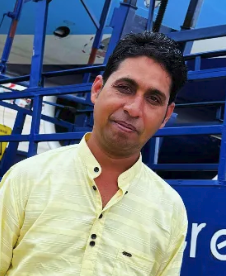

Article: India needs multi-partisan approach for next level of development, says Manish Tewari
Former Union Minister and Chandigarh MP Manish Tewari has called for a multi-partisan consensus similar to the 1991 economic reforms to propel India's next phase of development, warning that without such cooperation, progress will remain "not only a challenge but a mirage" in today's polarised political climate.
Call for consensus politics
Speaking as the keynote speaker at the Indian School of Business (ISB) Leadership Summit 2026 in Mohali, Mr. Tewari emphasized that the time had come to put money where the mouth was, and that this required multi-partisanship. "Without it, in these polarised times, the grand project of taking India to the next level of development will remain not only a challenge but a mirage," he said.
Drawing a parallel with India's transformative economic moment, the Chandigarh MP invoked the model set by then Prime Minister P. V. Narasimha Rao and his Finance Minister Manmohan Singh, who later became Prime Minister, when they forged a multi-party consensus on the country's economic trajectory in 1991.
Lessons from 1991 reforms
Mr. Tewari highlighted the lasting impact of that consensus, noting that it "has held the field between 1991 and 2026 across different administrations". He credited this continuity with unlocking "the creative spirits, or the animal spirits, of the Indian economy and allowed it to grow," resulting in benefits that went to "a very large number of people who we were able to lift to economic betterment".
Geopolitical challenges and technological lag
Reflecting on larger questions of statecraft, global power and India's place in an increasingly complex and changing international landscape, the former Union Minister observed that "between 2019 and 2026, the world has changed spectacularly". This transformation, he said, impelled him to write his latest book, titled The World Adrift.
Addressing the business students at the summit, Mr. Tewari stressed that they "cannot divorce yourself from the larger geopolitical construct which essentially characterises not only our daily work life but, more importantly, our very existence as a civilisation".
On India's position in emerging technologies, the MP expressed concern that "in the fourth industrial revolution technologies, we have not been able to really find our feet". He attributed this not to a lack of talent or capacity-building capability, but to inadequate capital deployment. "The reason is not that we don't have talent, not because we don't have the capacity to build capacity, but because we are not putting capital behind it," he said.
Source: The Hindu
Frequently asked questions
What does Manish Tewari say India needs for its next phase of development?
Manish Tewari calls for a multi-partisan consensus to propel India's next phase of development. He warns that without such cooperation, progress will remain 'not only a challenge but a mirage' in today's polarised political climate.
What historical example does Tewari cite for successful consensus-based reform?
Tewari references the 1991 economic reforms led by Prime Minister P. V. Narasimha Rao and Finance Minister Manmohan Singh, which forged a multi-party consensus on India's economic trajectory. This consensus has held across different administrations from 1991 to 2026.
How has the multi-party consensus from 1991 benefited India?
The 1991 consensus unlocked 'the creative spirits, or the animal spirits, of the Indian economy and allowed it to grow,' resulting in benefits that lifted a very large number of people to economic betterment.
What concern does Tewari raise about India's position in emerging technologies?
Tewari expresses concern that India has not found its feet in fourth industrial revolution technologies. He attributes this not to a lack of talent or capacity-building capability, but to inadequate capital deployment behind these technologies.
You may also like



Most read
- 1
Tesla audits Chinese suppliers to scale up Optimus robot production
- 2
Former minister Lakhan Singh Rajput to inaugurate temple bhandara at Shri Chakreshwar Mahadev
- 3
Firozabad BSA finds four government schools locked during inspection
- 4
Tamil Nadu dengue cases fall for third consecutive year to 17,049
- 5
Social workers stage silent protest at Fufund railway station for train halts
Comments
No comments yet. Be the first to comment.