
Madanapalle handloom weavers earn less than construction labourers despite skilled work
Handloom weavers in Madanapalle earn ₹200-250 daily for five-day sarees sold for ₹15,000+, trapped in debt cycles by middlemen controlling silk supply.
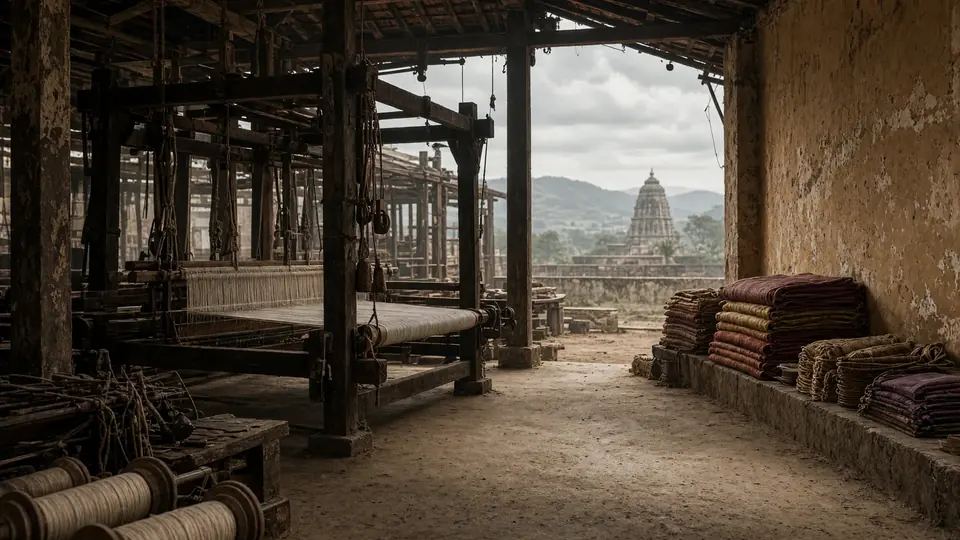
A professional handloom weaver in Madanapalle takes home just ₹1,000 to ₹1,500 for a silk saree that requires five full days of manual labour, roughly ₹200 to ₹250 per day, less than what unskilled workers earn at construction sites or the town's tomato loading yards.
The stark wage disparity underscores the economic crisis gripping one of Rayalaseema's historic weaving centres, where over 50,000 people depend on the silk industry for survival. While a single six-yard handloom saree fetches ₹15,000 to ₹25,000 in upmarket stores across Bengaluru, Hyderabad, or Chennai, weavers receive only ₹8,000 to ₹9,000 combined for materials and labour. Master weavers and middlemen control the system, supplying dyed silk yarn and metallic zari on credit and dictating piece rates, ensuring that actual take-home pay remains far below subsistence level.
Debt Traps and Exploitative Advances
The financial structure binds weavers through advance payments that function as long-term labour contracts. Kavitha, a 35-year-old weaver, borrowed ₹25,000 for a hospital emergency and found herself tied to a single trader's order book for three years. "Even though we have the skill, we are not free to take our work to another trader who might offer ₹100 more per saree. Our old debt acts like handcuffs. In many cases, women like me work merely to pay interest, not to build a future," she says.
External shocks compound the problem: high monsoon humidity snaps delicate threads and slows production without any wage adjustment, while fluctuations in raw silk prices at major mulberry trading centres directly depress what weavers earn.
Physical Toll and Health Crisis
Health surveys across South Indian handloom belts show that eight out of ten pit-loom weavers suffer from severe back, neck, shoulder, and knee ailments caused by sitting crouched in narrow spaces for hours without proper spinal support. "Constantly inhaling fine thread particles and micro-fibers damages our respiratory systems. Bronchitis and chronic coughs are common among our families," says Siva, a young weaver.
Ramachandra, 56, describes the strain on vision: "We spend hours aligning microscopic silk threads under a single hanging 40-watt bulb. It causes intense tension and headaches, which eventually lead to premature eyesight decline and gradual vision loss by our 60s". A revenue official in Madanapalle confirms that to numb constant joint pain, several weavers turn to alcohol or smoking after long shifts, consuming meagre earnings and triggering domestic conflict.
Power loom workers face different hazards. Rajasekhar, 46, says working near high-capacity motors without ear protection creates dangerous noise levels. "My ears ring for hours after my shift ends. I started a decade ago, and the ringing has eventually faded, not because it stopped, but because my hearing has dulled. Now, I find it hard to hear my family at home unless they speak at a raised volume," he says.
Market Competition and Regulatory Gaps
Around 200 power loom units now operate alongside nearly 7,500 active handloom units and over 8,000 weavers supported by 35 primary cooperative societies, according to official records under the One District One Product initiative. Machine-made imitations are ready in hours for production costs under ₹2,000, flooding regional wholesale markets. "While official Geographical Indication tags and the national Handloom Mark exist on paper to protect us, the reality on the ground is very different," says Rajendra, 38, who dropped out of a B.Tech programme to return to weaving.
R. Pawan Kumar Reddy, Assistant Director of the Handlooms & Textiles Department in Annamayya district, acknowledges the generational crisis. "There is a severe shortage of young weavers in the handloom sector," he says. The Central government prohibits power looms from manufacturing pure silk sarees without blending cotton or polyester, and inspection teams monitor workstations, though violations occur.
Reddy adds that some families turn to loan apps and private lenders, damaging credit scores and disqualifying them from government schemes like Mudra loans. "In one instance, a weaver approached us after falling into a ₹10-lakh debt trap accrued entirely for personal reasons. In such cases, we are helpless, yet these situations contribute to the misconception that government support is minimal," he states.
Youth Exit and Community Fraying
Mahesh, a 21-year-old computer applications student, says he does not entertain taking up the trade. "My father worked surrounded by silk dust and deafening noise, but I get to sit in a bright classroom. I respect our family's craft, but I see no viable future in work that demands so much physical sacrifice for so little financial security. I might consider the power loom sector someday, but not handlooms," he says.
The decline is unraveling social networks built over 150 years of Madanapalle's silk heritage, communities that once shared tasks like warping, sizing, dyeing, celebrated festivals together, and relied on informal local credit unions. "Unfortunately, a stigma has attached to the weaver community, that we are drinkers, smokers, and lazy. While a small fraction may fit that description, the bad reputation burdens innocent, hardworking people as well," says Sambasiva, 40, who owns three handloom pits yielding a monthly profit of ₹60,000.
Trade activist Chandrasekhar, 60, argues existing welfare schemes fall short: "We need direct, practical support on the ground, such as wage subsidies per meter, accessible healthcare clinics specialising in occupational hazards, free reading glasses, and strict legal enforcement against power loom design piracy. A steady, affordable supply of yarn and direct access to high-end urban markets are essential to free weavers from exploitative intermediaries".
In Neeruguttu Palle colony, 58-year-old Subramanyam still steps into the pit of his loom before sunrise, his feet finding the worn wooden treadles for another 14-hour workday. Outside, long hanks of crimson, teal, and gold silk thread stretch between bamboo poles, drying in the cool morning air. But the looms continue to move even as the future they represent grows less certain.
Source: The Hindu
Frequently asked questions
How much do Madanapalle handloom weavers earn for a silk saree?
A professional handloom weaver in Madanapalle earns ₹1,000 to ₹1,500 for a silk saree that requires five full days of manual labour, which works out to ₹200 to ₹250 per day. This is significantly less than what unskilled construction workers or tomato loaders earn daily.
What is the price gap between retail and weaver earnings for handloom sarees?
A single six-yard handloom saree sells for ₹15,000 to ₹25,000 in upmarket stores across major cities, but weavers receive only ₹8,000 to ₹9,000 combined for materials and labour combined.
How do advance payments trap weavers in debt?
Weavers borrow money through advance payments from traders for personal emergencies, which ties them to that trader's orders for years. This debt acts as a constraint, preventing weavers from seeking better rates elsewhere even if other traders offer higher pay.
What are the major health problems faced by handloom weavers?
Eight out of ten pit-loom weavers suffer from severe back, neck, shoulder, and knee ailments from sitting in cramped positions. They also experience respiratory damage from inhaling fine thread particles, leading to bronchitis and chronic coughs. Prolonged work under poor lighting causes vision problems and premature eyesight decline by the 60s.
What occupational hazards do power loom workers face?
Power loom workers operate near high-capacity motors without proper ear protection, creating dangerous noise levels. Extended exposure leads to permanent hearing loss and difficulty hearing conversations at home.
You may also like
 National
RSS leader Hosabale calls caste discrimination a blot on Hindu society
 Politics
Namo Yuva Run held in Kigali celebrates youth's role in nation-building
 Politics
Manish Tewari calls for multi-party consensus to drive India's next development phase
 Politics
Senior journalist Payal Mehta of CNN-News18 dies suddenly in Mumbai at 46
Most read
- 1
Tesla audits Chinese suppliers to scale up Optimus robot production
- 2
Former minister Lakhan Singh Rajput to inaugurate temple bhandara at Shri Chakreshwar Mahadev
- 3
Firozabad BSA finds four government schools locked during inspection
- 4
Tamil Nadu dengue cases fall for third consecutive year to 17,049
- 5
Social workers stage silent protest at Fufund railway station for train halts
Comments
No comments yet. Be the first to comment.