
Karnataka Seeks Price Control For Cardiac, Kidney Medicines After NPPA Move
Karnataka urges the Centre to cap prices of high-cost cancer, cardiac and kidney medicines after NPPA backs a 30% trade-margin limit for cancer drugs.


Karnataka has asked the Centre to extend price-control measures to high-cost medicines used in cardiac and kidney treatment, after the National Pharmaceutical Pricing Authority (NPPA) gave in-principle approval to cap trade margins on certain non-scheduled anti-cancer medicines at 30% of their maximum retail price (MRP).
Health Minister U.T. Khader welcomed the NPPA’s move and called for its swift implementation, saying price rationalisation should result in direct savings for patients.
The proposed measure is not yet final, as the list of medicines to be covered still has to be completed.
NPPA move awaits final list of medicines
At its meeting on October 8, the NPPA gave in-principle approval to rationalise trade margins on non-scheduled anti-cancer medicines identified under Paragraph 19 of the Drugs (Prices Control) Order, 2013.
The Ministry of Health and Family Welfare has been asked to constitute an expert committee under the Directorate General of Health Services.
The committee will recommend the anti-cancer medicines that should be brought under price control, and is expected to submit its report by October 14.
The Centre estimates that the proposed measure could reduce the MRP of several anti-cancer medicines by 20% to 70%.
It has also estimated that the reduction could save patients around ₹2,500 crore.
Khader said price rationalisation should be extended to other essential medicines where high treatment costs place a burden on patients.
Karnataka’s position is that the proposed 30% trade-margin cap for non-scheduled anti-cancer medicines should be followed by wider action covering other essential, high-cost medicines.
The State specifically identified medicines used in cardiac and kidney treatment as areas where similar action was needed.
Karnataka’s representation to the Centre
The State had written to Union Health Minister J.P. Nadda on September 23 seeking national-level action on medicine pricing.
The representation followed inspections in Karnataka that found substantial differences between the procurement costs of medicines and the prices charged to patients.
Karnataka identified pricing concerns involving 253 medicines and consumables with mark-ups.
The State sought the inclusion of advanced chemotherapy, targeted therapy and other expensive cancer medicines under the ambit of the Drugs (Prices Control) Order.
It also called for a comprehensive cap on trade margins for high-cost and life-saving medicines.
Karnataka further sought an expansion of the NPPA’s price-control oversight within the applicable legal framework.
It also called for stronger enforcement against excessive charging and profiteering.
The State proposed a national study of medicine prices to support a broader assessment of pricing across the healthcare system.
Another proposal was to form an expert committee involving the Centre, States, hospitals, insurers and medical experts.
These proposals were part of Karnataka’s wider call for action on expensive medicines beyond the anti-cancer drugs currently covered by the NPPA’s in-principle decision.
Disclosure of medicine costs in hospital bills
Karnataka has also sought greater transparency in the prices charged to patients.
A circular issued on October 1 asked healthcare institutions to disclose both the purchase or landing cost and the MRP of medicines in patient bills.
The instructions are advisory in nature and are proposed to take effect from November 1.
The disclosure requirement is intended to show patients the difference between what healthcare institutions paid for medicines and the MRP listed on the bill.
The State’s pricing concerns arose after inspections found substantial differences between procurement costs and prices charged to patients.
Karnataka’s call for wider price controls also follows observations by the Supreme Court on the pricing of essential medicines, including cancer drugs.
The Supreme Court questioned why the MRP of such medicines could not be capped at 16% above the price to retailers.
That 16% limit is applicable to scheduled medicines under the Drugs (Prices Control) Order, 2013.
Karnataka has argued that the benefits of price rationalisation should reach patients directly, rather than remain limited to a portion of non-scheduled anti-cancer medicines.
The State’s demand therefore combines a proposed extension of price controls with stronger enforcement and greater disclosure of medicine costs in hospital bills.
Published - October 10, 2026 02:17 pm IST.
Source: The Hindu
Frequently asked questions
What price-control measure did the NPPA approve in principle?
The NPPA approved in principle a 30% cap on trade margins for certain non-scheduled anti-cancer medicines.
Which medicines does Karnataka want included in wider price controls?
Karnataka wants similar price-control measures for high-cost medicines used in cardiac and kidney treatment, as well as other essential and life-saving medicines.
Is the proposed price-control measure final?
No. The list of medicines to be covered still has to be completed after recommendations from an expert committee.
How much could the proposed measure reduce anti-cancer medicine prices?
The Centre estimates that the measure could reduce the maximum retail price of several anti-cancer medicines by 20% to 70%.
You may also like
 Crime
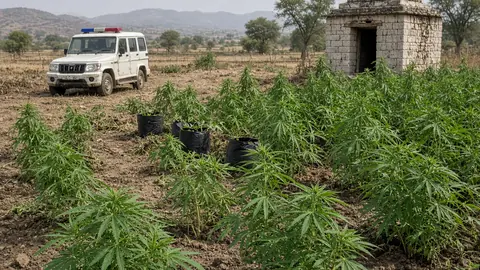
Farmer Arrested After Over 500 Cannabis Plants Found In Karnataka’s Vijayapura
 Entertainment
Kambala Makes Mysuru Dasara Debut With 150 Buffalo Pairs Racing
 Technology
Canada Eyes Expanded Karnataka Partnerships in Quantum Computing, AI, Aerospace, Defence
 Karnataka
 Seeks Centre’s Intervention To Resume LPG Connections, 36,000 Applications Pending
Most read
- 1
Air China Adds Extra Flight for Passengers Stranded in Fuel-Starved Cuba
- 2
Western disturbance to bring rain, hail and strong winds across north India
- 3
Yogi Adityanath Directs No Occupied Houses Be Demolished for Achhalda Bridge
- 4
Gwalior Temple Truck Crash Kills 12, Injures 28-29 Devotees During Navratri
- 5
Heavy Rain Waterlogs Bengaluru, Snarls Traffic; Ride-Hailing Fares Surge
Comments
No comments yet. Be the first to comment.