
Japan Edge Ecuador On Penalties To Reach Kirin Cup Final
Japan advanced to the Kirin Cup final in Yokohama after a goalless semi-final against Ecuador was decided by a penalty shootout.

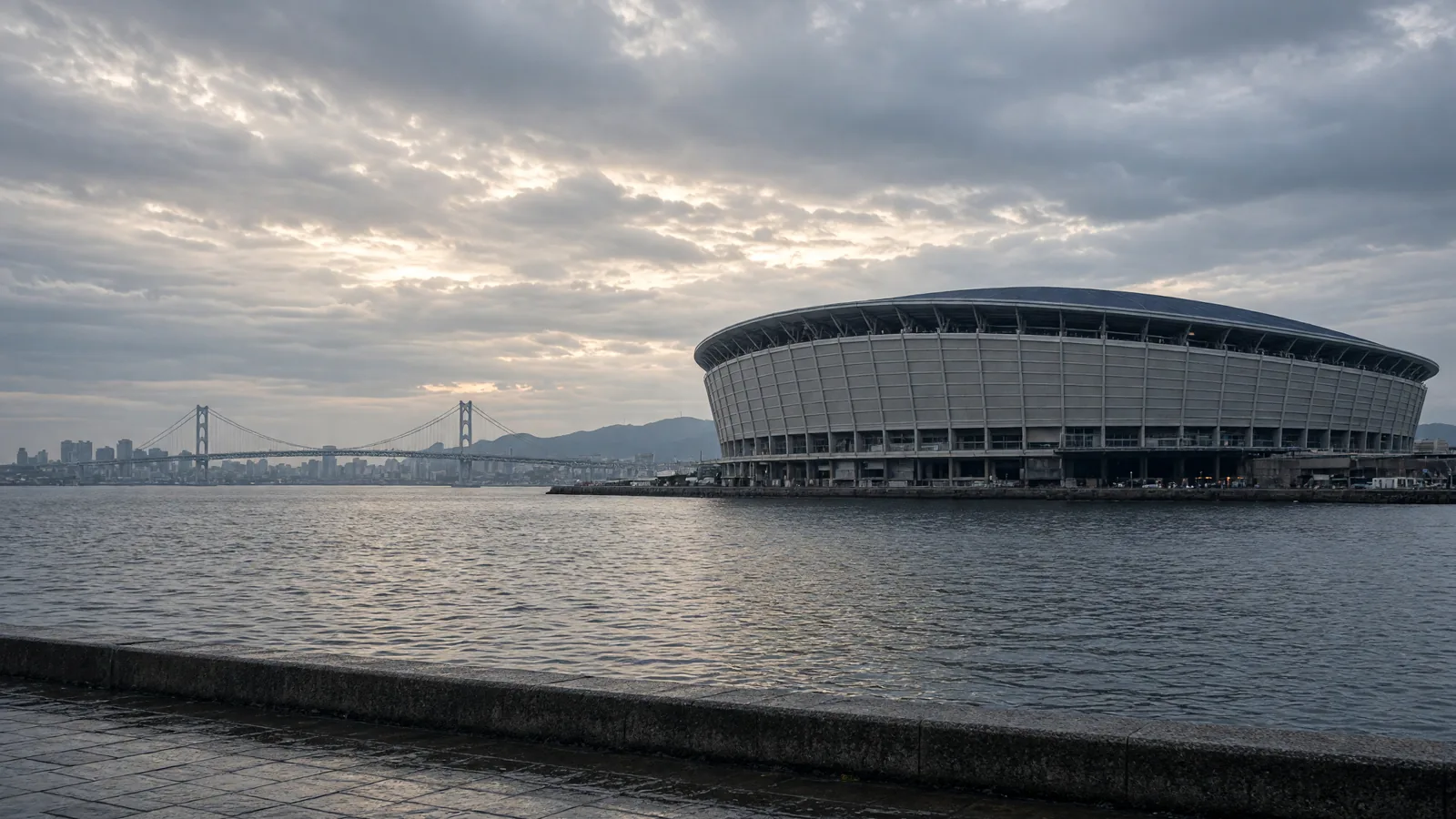
Japan reached the Kirin Cup final in Yokohama after a goalless match with Ecuador went to penalties, with the live report confirming “¡¡JAPÓN PASA A LA FINAL DE LA KIRIN CUP!!” at the end of the shootout.
Japan survive a tight semi-final in Yokohama
The match finished level after regulation time, forcing the penalty shootout that had been identified during the second half as the method for deciding the tie if the score remained even after 90 minutes.
AS reported at full-time that there would be penalties in Yokohama after neither Japan nor Ecuador could break through during open play.
Ecuador were listed to take the first kick from 11 metres, with Japan to follow in the order.
Ueda converted from the penalty spot for Japan, and Hiroki Ito then put the Samurai Blue ahead in the shootout.
Sarmiento kept La Tri’s hopes alive, while Soma scored to maintain Japan’s advantage.
Valencia also scored for Ecuador, leaving the moment in Galíndez’s hands according to the live commentary.
The final confirmation from AS was that Japan had advanced to the Kirin Cup final.
A match of few clear chances
The game had been tight long before penalties became necessary, with AS describing a first half in which danger around goal was minimal.
Japan had more of the ball before the interval, while Ecuador did not manage to seriously threaten the rival defence.
The live report framed the match as a chess game in which neither Japan nor Ecuador were imposing themselves with the ball.
Both goalkeepers had little to do in the early phase, and AS noted that neither side had produced a dangerous chance at that stage.
Much of the early action went through the flanks, with Ecuador’s Arroyo becoming more prominent on the ball.
Japan tried to draw Ecuador forward in possession and then exploit any collective disorganisation from the South American side.
Ecuador alternated between dropping back and pressing higher in Japan’s half after the opening stages.
The opening moments had Ecuador in possession, playing calmly against a Japan side that did not push high to press.
Japan then began to appear dangerously around Ecuador’s area after gaining more control of the ball.
One Japanese attack sent the ball across the small area after a delivery from the left side, but it went out without producing a goal.
Ecuador’s aerial threat also appeared from a corner, with Pacho winning the header but failing to direct a strong effort.
Galíndez makes the first major save
The first save of the match came when Galíndez produced what AS called a spectacular hand after a good Japanese combination.
Tanimura finished with his left foot in that move, but Ecuador’s goalkeeper intervened.
Japan had also tried to create from a Kubo corner, although that attack was later invalidated for a foul on an Ecuador player.
Hiroki Ito spent time down on the pitch after a defensive action, though the live commentary said the problem did not appear serious.
Suzuki also tried his luck from outside the area after a three-pass Japanese combination, but his right-footed shot went wide.
Ecuador’s defence quickly stopped Kubo whenever he became involved, leaving the Real Sociedad winger with little breathing room when he received the ball.
As more spaces opened, both teams’ wide players looked to take on opponents in one-on-one situations.
AS noted that the offensive play from both sides was not shining during that stretch.
Ecuador threaten before half-time
Ecuador produced a strong move down the left before the break, with Angulo taking on his marker and sending a cross into the small area.
No Ecuador teammate arrived to finish that Angulo delivery.
Arroyo then had a good shooting chance, but his effort rose too high and went over the crossbar.
As the first half drew to a close, AS said Japan had more possession while Ecuador still had not threatened the opposing defence.
The lack of chances meant the match needed more rhythm after the dressing-room interval.
The first-half pattern also underlined Ecuador’s defensive organisation, which the live report later said continued to show strong foundations.
AS described Ecuador’s back line as a line with a high level.
Changes begin after the interval
Both teams made early changes after the break.
Ecuador brought on Torres for Franco.
Japan brought on Ueda for Tanimura.
AS said the game needed more rhythm to produce chances after a first half with minimal danger.
Ecuador initially showed a little more willingness to spread out in the early moments after the restart.
Japan still looked for control through build-up play designed to attract pressure.
The live commentary noted that Japan used Suzuki heavily in the build-up.
Suzuki, identified as the Aston Villa goalkeeper, tried to draw pressure from Ecuador’s players so that an opponent would be pulled out of shape.
Sano attempted to advance down the right side and overlapped one of his teammates, but he lost the ball in a duel with Estupiñán.
Possessions became longer for both teams, although the ball remained far from the goals defended by Galíndez and Suzuki.
Japan look to the right side of Ecuador
Japan began finding openings down Ecuador’s right side, according to the live commentary.
Several Japanese moves sought the byline before crossing the ball back, including attacks that ended with shots.
Doan entered from the left side in one Japanese attack, and Tanaka finished the move with a central shot that Galíndez dealt with again.
AS described that moment as a Japanese chance and noted another intervention from Galíndez.
Players from both teams were then seen preparing to enter the pitch, with the commentary anticipating decisions from Moriyasu and Gallardo.
Japan made changes by bringing on Ito, Junnosuke Suzuki and Kamada.
Yuito Suzuki, Kubo and Doan were the players who left for Japan in that set of substitutions.
Ecuador then brought on Sarmiento, Castillo and Juan Angulo.
Yeboah, Alcivar and Arroyo were the Ecuador players withdrawn in that phase.
Ito nearly breaks the deadlock
Ito came close to opening the scoring for Japan after another move down the left.
The pass in that sequence went towards the edge of the area, where the substitute struck with his right foot.
His effort was dragged too far across goal.
At that point, AS said Japan were finding cracks on Ecuador’s right side.
Ecuador, by contrast, were struggling to generate danger.
The live report said La Tri’s attempts down the wing were not making Japan suffer in front of goal.
Japan, under Marcelo Gallardo’s opposite number Hajime Moriyasu, were in a phase where they tried to maintain more possession.
The commentary specifically described the team of Marcelo Gallardo as trying to hold more possession during one second-half spell.
More late substitutions before penalties
Ecuador brought on Valencia for Mercado.
Japan brought on Maeda and Soma.
Nakamura and Tanaka were the Japan players who left the field in that late change.
Ecuador also introduced Medina and Minda.
Vite and Nilson Angulo were withdrawn for Ecuador.
Japan then made another change, with Shiogai entering and Sano leaving.
AS again stressed that Ecuador’s defensive work remained strong despite occasional chances.
The match still had to be settled by penalties if it stayed level after 90 minutes, and the live report pointed out that Panama versus New Zealand had already been decided the same way.
Caicedo later had a chance for Ecuador, taking a first-time shot for the Huracán forward.
He tried to place the effort near the post but sent it wide.
That chance did not change the score, and the match eventually reached penalties.
How the Kirin Cup context shaped the stakes
The Kirin Cup was described by AS as a tournament for friendly matches during the international break, with Japan and Ecuador meeting for a place in the final.
The match in Yokohama was also part of Japan’s route in a competition in which it acts as host against invited national teams.
Japan have won the Kirin Cup 10 times since the tournament was founded in 1992.
AS noted that Japan had finished second in the last two editions of the competition.
Those second-place finishes came against Bosnia-Herzegobina and Tunisia, in 2016 and 2022 respectively.
The tournament returned after several years of “absence,” according to the source.
The first match of this edition brought together New Zealand and Panama.
That game was also closed and ended without a goal as the minutes passed.
New Zealand prevailed 5-4 on penalties.
Panama were punished for a miss on the third penalty.
Jiménez was the Panamanian player who failed to beat the rival goalkeeper from 11 metres.
All five New Zealand penalty takers scored their goals.
That earlier shootout provided the immediate competition context for Japan and Ecuador also being told that penalties would decide their match if 90 minutes did not produce a winner.
Ecuador arrived with absences and a special shirt
Ecuador entered this international break with two absences from the squad called by Marcelo Gallardo.
Piero Hincapié and Moisés Caicedo were not present in the La Tri camp.
AS described both as heavyweights within the national team and as two of the captains inside the group.
Both players were going through injuries and would have to wait to represent their country.
Futbolecuador reported that Ecuador prepared another special kit to wear against Japan in the Kirin Cup, as it had done in the challenge against South Korea.
The report said Ecuador were on Asian soil and had to connect with the cultural spirit of the international tour.
For the match, La Tri were set to wear the main yellow armour used at the World Cup, but with modifications on the body.
One side of the shirt would show the Ecuadorian condor ready for battle.
The front would feature the crane, described by the source as a traditional and ancient animal of Japanese culture.
Futbolecuador said the special design was already on sale for supporters of Ecuador to acquire.
The shirt was described as a unique collector’s garment because it would be used exclusively for this type of international commitment.
The same source said the Tricolor would debut in the Copa Kirin at 05h00.
Gallardo framed the tour as evaluation
Marcelo Gallardo spoke to the media before Ecuador’s match against Japan.
The source described the fixture as an important test against a national team of growing magnitude.
Gallardo said the tour remained one of evaluation and knowledge for both him and the players.
He said it was good to face national teams that would test Ecuador in football terms and also allow them to compete.
Gallardo described Ecuador as a team and group of players prepared to keep growing in evolution and to continue competing at another level.
He called the match a very important challenge not only for him, but also for all the players and for the country.
Gallardo also said the match would be useful to evaluate and continue observing behaviours according to the week Ecuador had to work with the team.
He added that facing a very good national team like Japan placed Ecuador before a fairly interesting test.
AS wrote that Gallardo’s cycle as Ecuador coach had not started well.
The Argentine coach lost his first match from the bench against South Korea by 3-0.
The source added that coaching Ecuador required time.
AS also noted that the shared time between the coach and the team was still minimal.
The preparation for the qualifiers, which begin in 2027, was identified as the objective.
The source said pressure around La Tri was very high.
It also said the current generation of players invited very positive expectations that still had to materialise.
Japan entered with Moriyasu’s project and recent South American tests
For Japan, the Ecuador match was described as a new friendly and as part of the Kirin Cup route to the final.
AS said the teams arrived with different sensations in this preparation.
The match was Japan’s third against a South American opponent in this stretch for Hajime Moriyasu’s side.
Japan had obtained two valuable victories despite not finding their best feelings in the friendlies played.
Those matches against Uruguay and Venezuela left signs that much could still improve.
The source added that Moriyasu rotated heavily in the second of those matches.
AS referred to Japan’s 2-1 victory over Venezuela as one that carried controversy at the end of the meeting.
It also mentioned Japan’s 3-1 victory against Uruguay.
The Samurai Blue renewed Moriyasu after the World Cup amid speculation that he could leave the project and enter the federation.
Moriyasu has been in charge since 2018.
Japan are pursuing a new path under that continuity.
The Asian Cup, which is played at the beginning of 2027, awaits them.
Kubo’s role was watched closely
There was anticipation around a good Japan performance from Kubo after he showed against Venezuela that he had much to offer.
The Japanese winger had spent time without finding his best level both with the national team and with Real Sociedad.
Against the Vinotinto, he came on in the second half and changed the rhythm of the game.
His teammates looked for him on the right wing.
AS said he looked sharp both when taking on opponents and when looking for other Japanese players.
The attacker repeatedly tried one kind of move: entering the area, drawing opponents, and looking for a low pass for a finisher.
Although he did not record an assist or a goal, Kubo was the player who provoked the penalty that gave Japan the final victory in that match.
In the match with Ecuador, however, Ecuador’s defence quickly slowed his interventions.
The live commentary said Kubo, the Real Sociedad winger, did not have much respite when he received the ball.
Japan eventually withdrew Kubo in the second half, with Ito, Junnosuke Suzuki and Kamada entering as Yuito Suzuki, Kubo and Doan left.
Suzuki’s recent scrutiny remained part of the build-up
Japan’s goalkeeper Suzuki was also part of the pre-match focus.
AS said the Japanese goalkeeper had been one of the names of the market after arriving at Aston Villa.
Despite good performances, his most recent international break appearance against Venezuela had left some doubt.
The former Parma player entered in the second half against the South Americans.
The source said he showed some insecurity in his interventions.
The most notable examples were an aerial ball he blocked without catching cleanly, forcing him to gather it in two phases.
Another more important moment came on a long-range shot that he could not repel well.
That rebound left the ball loose for an opponent to shoot from close range, although the effort went out.
Against Ecuador, AS noted that Japan played often through Suzuki when building from the back.
The goalkeeper tried to attract Ecuadorian pressure in order to pull an opponent out of position.
That build-up plan formed part of Japan’s attempt to control the game even as chances remained scarce.
Starting XIs as listed
Ecuador’s listed team was Galíndez; Franco, Porozo, Pacho, Mercado; Arroyo, Alcivar, Vite, Estupiñán; Reboah, Angulo.
Japan’s listed team was Suzuki; Itakura, Seko, Hiroki Ito; Doan, Sano, Tanaka, Nakamura; Kubo, Tanimura, Yuito Suzuki.
The lineups placed Galíndez and Suzuki in goal for Ecuador and Japan respectively.
Porozo and Pacho were included in Ecuador’s defensive line, while Itakura, Seko and Hiroki Ito were listed for Japan.
Arroyo, Alcivar, Vite and Estupiñán were named across Ecuador’s midfield structure.
Doan, Sano, Tanaka and Nakamura were listed in Japan’s midfield line.
Kubo, Tanimura and Yuito Suzuki were listed among Japan’s advanced players.
Reboah and Angulo were listed among Ecuador’s advanced players in the source lineup.
Why the result mattered
The immediate consequence of the result was clear: Japan moved into the Kirin Cup final.
That mattered in the tournament context because the Japan-Ecuador match was framed as a contest for a place in the final.
It also mattered for Japan because the country has a long record in the Kirin Cup, with 10 titles since 1992.
Japan had finished second in the two most recent editions, against Bosnia-Herzegobina and Tunisia.
For Ecuador, the match mattered as part of Gallardo’s early evaluation process with a squad still adapting to his leadership.
Gallardo had said the tour was about evaluation and knowledge for him and the players.
He had also said that facing Japan would be a fairly interesting test.
The game ultimately reflected much of that pre-match framing, with Ecuador showing defensive strength but struggling to produce consistent danger.
Japan controlled larger spells with possession and build-up patterns, yet still needed penalties to separate themselves from Ecuador.
The shootout therefore became the decisive step in a match that had offered few clear openings and had kept both teams locked through 90 minutes.
Frequently asked questions
Who reached the Kirin Cup final?
Japan reached the Kirin Cup final after beating Ecuador on penalties in Yokohama.
What was the score before the penalty shootout?
The match ended goalless after regulation time, so it was decided by penalties.
Where was the Japan vs Ecuador Kirin Cup match played?
The match was played in Yokohama.
Which goalkeeper made the first major save of the match?
Ecuador goalkeeper Galíndez made the first major save, stopping a left-footed effort from Tanimura.
You may also like
 Sports
Zion Suzuki set to return in Japan goal against Venezuela
 Sports
PSG beat Barcelona 4-2 in six-goal Champions League classic
 National
JSS AHER Delegation Visits Japan’s AIST To Explore Research Cooperation
 Business
Japan's Nationality Disclosure Rule Sparks Fears of Slowing Foreign Property Investment
Most read
- 1
Air China Adds Extra Flight for Passengers Stranded in Fuel-Starved Cuba
- 2
Western disturbance to bring rain, hail and strong winds across north India
- 3
Yogi Adityanath Directs No Occupied Houses Be Demolished for Achhalda Bridge
- 4
Gwalior Temple Truck Crash Kills 12, Injures 28-29 Devotees During Navratri
- 5
Schools Shut in Five Tamil Nadu Districts, Including Chennai, Amid Heavy Rain
Comments
No comments yet. Be the first to comment.