
Indian volunteers battle isolation to reach Nepal's most flood-affected communities by helicopter
Indian relief volunteers reach Nepal's remote flood-affected villages where families remain isolated, facing challenges of damaged roads and helicopter-dep

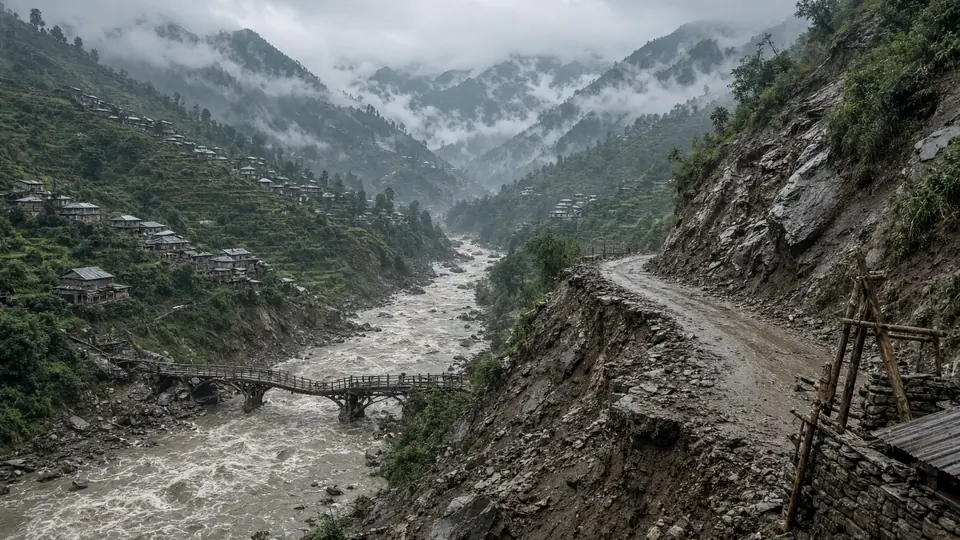
Indian volunteers are now pushing into Nepal's most isolated flood-affected communities, where a 20-member family in Trishuli remains confined to a single room with no outside help and some areas can be reached only by helicopter at $2,000 per trip.
A week after the disaster, the relief effort has shifted from accessible zones to remote villages where families have lost homes, livestock and income, but reaching them requires journeys of up to 10 hours through damaged mountain terrain.
Long treks through broken roads
"Almost a week after the floods, some of the more accessible areas are slowly seeing relief reach them, but our biggest concern now is reaching the families who have been most severely affected and remain isolated," Manohar Naidu, a Khalsa Aid volunteer, told The Hindu from Nepal.
From Kathmandu, some communities take nine to 10 hours by road, with floods having damaged bridges and roads while vehicles suffer damage in transit. Volunteers are travelling on trucks to deliver supplies, but demand for 4x4 vehicles has surged and suppliers are raising prices.
In Rasuwa, some affected areas currently have no road connectivity at all, leaving helicopters as the only practical option in many cases. "So the challenge is not simply having relief material available. The biggest challenge is getting that aid to the families who need it most," Mr. Naidu said.
Shortages beyond transport
Khalsa Aid is procuring supplies locally, but demand has outstripped available stock of essentials such as mattresses, solar lights and other household items. In Trishuli, Tupche and other remote communities, volunteers have found families who have lost everything, while mass burials are being carried out as mortuaries run out of space, with forest lands being cleared to accommodate bodies as the death toll rises and many remain unidentified.
"People need much more than food. They are asking how they are going to rebuild their lives," Mr. Naidu said. Immediate support is focused on food, clothing, bedding and basic household requirements, while teams are assessing what each community will need for longer-term recovery.
Khalsa Aid had earlier proposed adopting some inaccessible villages and supporting them through the recovery process. The proposal is still being assessed, with teams looking at the extent of damage, the number of families affected, loss of livelihoods and infrastructure requirements before committing resources. The organisation is also considering temporary holding centres where affected families could be provided mattresses, portable washroom facilities and cooking arrangements, particularly where several families are living together without basic amenities.
The organisation has sought official permission to help clear debris in some local areas to restore connectivity and make it easier to reach affected families, volunteers said.
Source: The Hindu
Frequently asked questions
How much does it cost to reach Nepal's most isolated flood-affected communities by helicopter?
Helicopter trips to reach isolated flood-affected communities in Nepal cost approximately $2,000 per trip.
Why are helicopters necessary to reach some flood-affected areas in Nepal?
In areas like Rasuwa, floods have damaged bridges and roads, leaving some communities with no road connectivity at all. Long treks through broken mountain terrain can take 9 to 10 hours, making helicopters the only practical option for many cases.
What supplies are in short supply for flood relief in Nepal?
Demand has outstripped available stock of essentials such as mattresses, solar lights, and other household items needed by affected families.
What is Khalsa Aid proposing to support Nepal's flood recovery?
Khalsa Aid has proposed adopting some inaccessible villages and supporting them through the recovery process. They are also considering establishing temporary holding centres where affected families could receive mattresses, portable washroom facilities, and cooking arrangements.
You may also like


Most read
- 1
Tesla audits Chinese suppliers to scale up Optimus robot production
- 2
Former minister Lakhan Singh Rajput to inaugurate temple bhandara at Shri Chakreshwar Mahadev
- 3
Firozabad BSA finds four government schools locked during inspection
- 4
Tamil Nadu dengue cases fall for third consecutive year to 17,049
- 5
Social workers stage silent protest at Fufund railway station for train halts
Comments
No comments yet. Be the first to comment.