
Indian Army signs deal for U.S. Javelin anti-tank missiles after 15-year wait
Indian Army signs deal for U.S. Javelin anti-tank missiles with co-production plans through Tata Advanced Systems and Javelin Joint Venture.

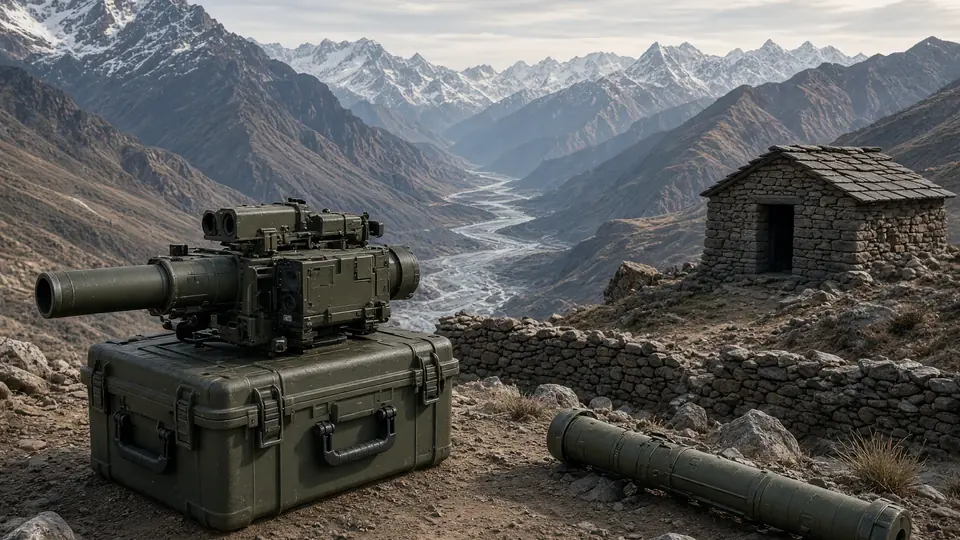
The Indian Army has signed a Letter of Offer and Acceptance to acquire the U.S.-made Javelin anti-tank guided missile system through the Foreign Military Sales programme, ending a 15-year procurement effort that had stalled over disagreements on technology transfer and local production. The deal also opens the door to co-production in India, with Tata Advanced Systems Limited and the Javelin Joint Venture, comprising RTX and Lockheed Martin, signing a memorandum of understanding to explore final assembly and integration of the Javelin All Up Round in the country.
What makes the Javelin attractive
The Javelin's defining feature is its fire-and-forget capability, which allows an operator to launch the missile and immediately relocate, improving survivability in environments where missile teams can become targets within seconds of firing. The medium-range missile is designed to engage tanks, armoured vehicles and fortified positions, and its combat reputation has been reinforced by operational use in several conflicts, most prominently in Ukraine, where portable anti-tank weapons demonstrated their ability to challenge much larger armoured formations.
Another key advantage is its top-attack capability, allowing the missile to strike a tank from above, where armour protection is generally thinner and more vulnerable than the heavily protected front and sides.
Filling a capability gap
India already operates multiple anti-tank missile systems, but these cater to different operational requirements. The DRDO-developed Man-Portable Anti-Tank Guided Missile represents an important indigenous effort in the shoulder-fired category but has yet to reach the scale of volume induction required to equip large numbers of frontline infantry units. The Nag missile family provides heavier anti-tank capabilities for vehicle-mounted and helicopter-launched roles, serving a different operational purpose.
India had earlier acquired limited quantities of Israeli Spike anti-tank guided missiles under emergency procurement arrangements beginning in 2019, but these purchases did not lead to widespread standardisation of a single portable anti-tank missile across infantry formations. The Javelin acquisition offers the Army another battle-proven option while indigenous programmes continue to mature.
The growing importance of portable anti-armour weapons has been one of the clearest lessons from recent conflicts. India is also increasingly restructuring parts of its force for faster and more flexible operations, with the Army's Bhairav rapid-action units and other formations designed for decentralised warfare potentially benefiting from lightweight anti-armour systems that do not depend on heavier vehicles or specialised platforms.
Industrial dimension
Under the proposed co-production arrangement, sub-assembly kits and guidance electronics would be produced in the United States and shipped to India for final assembly and integration. For India, this could bring advanced manufacturing expertise into the domestic defence ecosystem, create specialised jobs and strengthen the country's role in global defence supply chains. The acquisition therefore serves two purposes: it gives the Indian Army immediate access to a modern, combat-proven anti-tank weapon while potentially creating a pathway for deeper U.S.-India defence industrial cooperation.
Source: The Hindu
Frequently asked questions
What is the Javelin anti-tank missile and why is it significant for the Indian Army?
The Javelin is a U.S.-made anti-tank guided missile system that the Indian Army has agreed to acquire after a 15-year procurement effort. It is significant because it offers fire-and-forget capability, allowing operators to launch and immediately relocate, and features top-attack capability to strike tanks from above where armor is thinner. Its combat effectiveness has been proven in conflicts including Ukraine.
How long has India been trying to acquire Javelin missiles?
India has been pursuing Javelin acquisition for 15 years. The procurement effort had previously stalled due to disagreements over technology transfer and local production requirements.
Will Javelin missiles be produced in India?
Yes. Tata Advanced Systems Limited and the Javelin Joint Venture (comprising RTX and Lockheed Martin) have signed a memorandum of understanding to explore co-production in India. Sub-assembly kits and guidance electronics will be produced in the United States and shipped to India for final assembly and integration.
What anti-tank missiles does India currently operate?
India operates multiple anti-tank systems including the DRDO-developed Man-Portable Anti-Tank Guided Missile for shoulder-fired roles, the Nag missile family for vehicle-mounted and helicopter-launched roles, and limited quantities of Israeli Spike anti-tank guided missiles acquired beginning in 2019.
Why are portable anti-tank weapons becoming more important for the Indian Army?
Recent conflicts have demonstrated the growing importance of portable anti-armour weapons. The Indian Army is restructuring forces for faster and more flexible operations, with formations like Bhairav rapid-action units designed for decentralised warfare that benefit from lightweight anti-armour systems not dependent on heavier vehicles.
You may also like




Most read
- 1
Tesla audits Chinese suppliers to scale up Optimus robot production
- 2
Former minister Lakhan Singh Rajput to inaugurate temple bhandara at Shri Chakreshwar Mahadev
- 3
Firozabad BSA finds four government schools locked during inspection
- 4
Tamil Nadu dengue cases fall for third consecutive year to 17,049
- 5
Social workers stage silent protest at Fufund railway station for train halts
Comments
No comments yet. Be the first to comment.