
Gwalior Land Dispute: Charnoi Land Diversion Puts Revenue Process Under Scrutiny
A land-record dispute in Gwalior has raised serious questions about the handling of government and Gwalior Development Authority land, after two separate developments linked to the same survey number

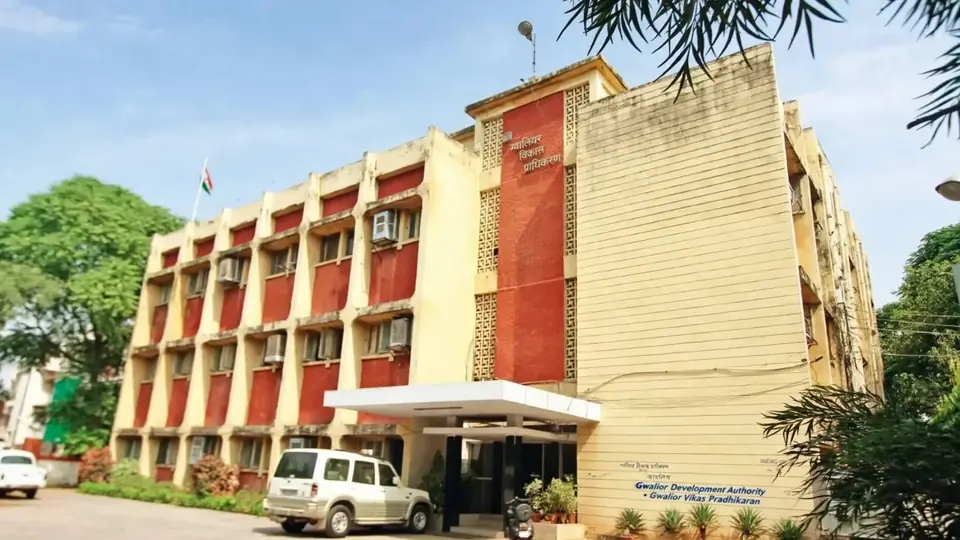
A land-record dispute in Gwalior has raised serious questions about the handling of government and Gwalior Development Authority land, after two separate developments linked to the same survey number came to light. In one case, the Additional Commissioner set aside an SDM order and treated later registries over 25 bigha 8 biswa of land as ineffective. In another, nearly 34,070 square metres, or about 16 bigha, of charnoi land connected with the same Survey No. 302 was converted from agricultural to residential use through an online portal in January 2026, after a total of ₹7,49,540 was deposited as premium and land revenue.
The central question is not merely how an application was filed on the portal. The larger issue is how residential diversion was allowed when the status and ownership of the land were already part of the revenue record dispute. The matter has put the entire revenue process under scrutiny because the same survey number appears in both the earlier GDA acquisition-related proceedings and the later land-use diversion entry.
The first part of the case relates to about 25 bigha 8 biswa of land in village Mau. According to the record, land under Survey Nos. 302, 764, 765, 768, 769 and 770 was notified for the Gwalior Development Authority’s Maharajpura residential scheme in the Madhya Pradesh Gazette dated 20 January 1989. This notification is the starting point of the dispute because it placed the land within the framework of a GDA housing project.
As per the documents, in 1997, the Eva Grih Nirman Sahkari Samiti entered into an agreement with the original farmers. After this, on 29 June 1998, a tripartite agreement was executed among Eva Samiti, the original farmers and the GDA. The record further states that on 1 July 1998, possession of the land was also handed over to the authority through a panchnama.
This means that after the process of acquisition and possession, the GDA gave developed plots to the concerned society as compensation. The authority’s position in the record, therefore, rested on the 1989 notification, the 1998 tripartite agreement and the possession recorded through the panchnama.
The matter took a new turn years later. After the land had come under the possession and authority of the GDA, the heirs of late Ashok Dubey and the Gharonda Grih Nirman Sahkari Samiti claimed to have purchased different portions of the same land. Their claim was that in 2001 and 2002, land falling under the concerned survey numbers had been purchased through registered sale deeds.
On the basis of these documents, the revenue record entered in the name of the GDA was challenged. The matter then reached the SDM. The SDM, Gwalior City, had on 8 February 2021 set aside the order of the Tehsildar. Against this, Eva Samiti filed an appeal before the Additional Commissioner.
On 4 August 2026, Additional Commissioner Virendra Kumar passed an order in the case and set aside the SDM’s order. The order said that under Section 56 of the Town and Country Planning Act, an authority has the right, in special circumstances, to acquire land through an agreement. According to the order, the provisions related to registration and stamp duty are different in the case of such an agreement, and therefore the 1998 agreement could not be treated as invalid merely because it was not registered.
The Additional Commissioner’s conclusion was that if the right over the land and possession had already been given to the authority in 1998, then after that the original farmers did not have the right to sell the same land again. On this basis, serious questions were raised over the later registries carried out in 2001 and 2002.
The Additional Commissioner also held that the SDM had passed an order in relation to Survey No. 302 by going beyond his jurisdiction. This finding is important because Survey No. 302 is also at the centre of the second part of the controversy, involving land recorded as charnoi.
The second and more serious aspect of the case is linked to around 34,070 square metres of land under Survey No. 302. According to the documents, this land was recorded as charnoi in the Misal Bandobast of 1940. In the local revenue context, the description of the land as charnoi is central to the dispute, because the later diversion entry converted the land use from agricultural to residential.
Local residents have complained that activities such as laying out a road, installing electricity poles and preparing to divide the land into plots for sale were carried out gradually on this land. Villagers claim that complaints in this regard were submitted several times to administrative officers. The source material does not state the outcome of these complaints, but it records that such complaints were made.
Meanwhile, on 7 January 2026, through order number 2507400050240, the diversion of the same land from agricultural to residential was recorded on the online portal. This entry is now one of the biggest points of dispute because it relates to land that the documents say had been recorded as charnoi since the Misal Bandobast of 1940.
According to the documents, the diversion was carried out for 34,070 square metres of land in the names of Maa Vaishno Wild Heights and Satish, resident of Jawahar. In return, ₹6,81,400 was deposited as premium and ₹68,140 was deposited as land revenue. The total amount deposited was ₹7,49,540.
In effect, land that had been recorded in the revenue record as charnoi for 86 years came to be shown as residential through an online process. This is where the biggest question arises: can the original ownership or legal status of such land change merely because an application is filed on an online portal and the required fee is deposited?
SDM Pradeep Sharma’s side has also come on record in this matter. He has said that the diversion process takes place through the online portal and that diversion does not place ownership of the land in the name of any individual. According to him, “डायवर्जन जमीन का होता है, व्यक्ति का नहीं।”
He has also said that if the land of Survey No. 302 has been acquired by the GDA, it will remain GDA land. The diversion carried out on the portal does not transfer ownership. He further said that after the Additional Commissioner’s order, if the land is found to be GDA land, the person who got the diversion done will not get any ownership benefit from it.
This clarification, however, leads back to the same administrative question: how was the application accepted in the first place? If the revenue record, old documents and the GDA acquisition-related process already showed a dispute over the status of the land, at what level was the online diversion application examined?
Another question follows from this. If the land is actually acquired land of the GDA, was the position clarified from the concerned authority before the diversion was allowed? And if the land was recorded as charnoi, on what basis was its eligibility for a change in land use determined?
The answers to these questions can emerge only from a scrutiny of the documents and the full process. At present, the documents link four strands of the controversy: the revenue record, the GDA’s claim of ownership, the old registries and the new diversion entry.
The most important connection in the entire case appears to be this contrast. On one side, the Additional Commissioner rejected claims based on private registries made years later over more than 25 bigha of GDA land. On the other side, the residential diversion of about 16 bigha of land linked to the same survey number has raised fresh questions about the revenue process.
This makes it necessary to examine what the original status of the land was, what was recorded in the revenue record at the time of diversion, and on the basis of which documents the application on the portal was approved. Without examining these points, it would not be possible to determine whether the diversion was merely a technical entry generated through an online process or whether it had the effect of giving someone an indirect benefit in relation to the use of the land.
The case also requires scrutiny beyond the status of one piece of land. If the facts recorded in the documents are correct, the inquiry will have to find out who applied for diversion of the charnoi land. It will also have to establish which documents were submitted along with the application.
The inquiry would further need to examine what the status of the land was in the revenue record at that time, whether any NOC or opinion was taken from the GDA, and whether the old acquisition and possession records were checked before the diversion was allowed. The most important question remains this: if the land was acquired land of the GDA, what was the administrative justification for its residential diversion?
The 25 bigha 8 biswa land issue and the 34,070 square metre diversion entry cannot be viewed in isolation because both are tied to Survey No. 302. The 1989 notification, the 1997 agreement with the original farmers, the 29 June 1998 tripartite agreement, the 1 July 1998 panchnama, the 2001 and 2002 sale deeds, the SDM’s order dated 8 February 2021, the Additional Commissioner’s order dated 4 August 2026 and the online diversion order dated 7 January 2026 together form the chain of events now under question.
For now, the documents clearly show that in a land dispute linked to a single survey number, the revenue record, the GDA’s ownership claim, the old registries and the new diversion entry appear to be interconnected. The matter now depends on an administrative examination of whether the rules were followed in the entire process, and whether the diversion of land recorded as charnoi was permitted after a proper check of ownership, status and earlier acquisition records.
Frequently asked questions
What is the main issue in the Gwalior land dispute?
The dispute concerns land linked to Survey No. 302 in village Mau, where GDA acquisition-related records and a later residential land-use diversion entry have raised questions about the revenue process.
What did the Additional Commissioner decide in the case?
On 4 August 2026, Additional Commissioner Virendra Kumar set aside the SDM’s 8 February 2021 order and treated later registries over 25 bigha 8 biswa of land as ineffective.
Why is Survey No. 302 under scrutiny?
The same survey number appears in earlier GDA acquisition-related proceedings and in a later entry converting about 34,070 square metres of charnoi land from agricultural to residential use through an online portal.
How much land was converted from agricultural to residential use?
Nearly 34,070 square metres, or about 16 bigha, of charnoi land connected with Survey No. 302 was converted to residential use in January 2026.
What payment was made for the land-use diversion?
A total of ₹7,49,540 was deposited as premium and land revenue for the residential diversion.
You may also like
 Politics
BJP appoints Ashish Usha Agarwal as national media convenor
 Business
Gwalior illegal mining raid: 6 dumpers seized in Biloua
 National
Gwalior: 4 Habitual Offenders Externed, 4 Ordered To Furnish Bonds
 Madhya Pradesh
High Court Clears Old Service Benefits For 70,000 Teachers, Sets 4-Week Deadline
Most read
- 1
Tesla audits Chinese suppliers to scale up Optimus robot production
- 2
Former minister Lakhan Singh Rajput to inaugurate temple bhandara at Shri Chakreshwar Mahadev
- 3
Firozabad BSA finds four government schools locked during inspection
- 4
Tamil Nadu dengue cases fall for third consecutive year to 17,049
- 5
Social workers stage silent protest at Fufund railway station for train halts
Comments
No comments yet. Be the first to comment.