
Government Urges States to Embrace Electric Cooking and Mobility
The Indian government urges states to adopt electric cooking and mobility to achieve clean energy goals and reduce emissions by 2070.

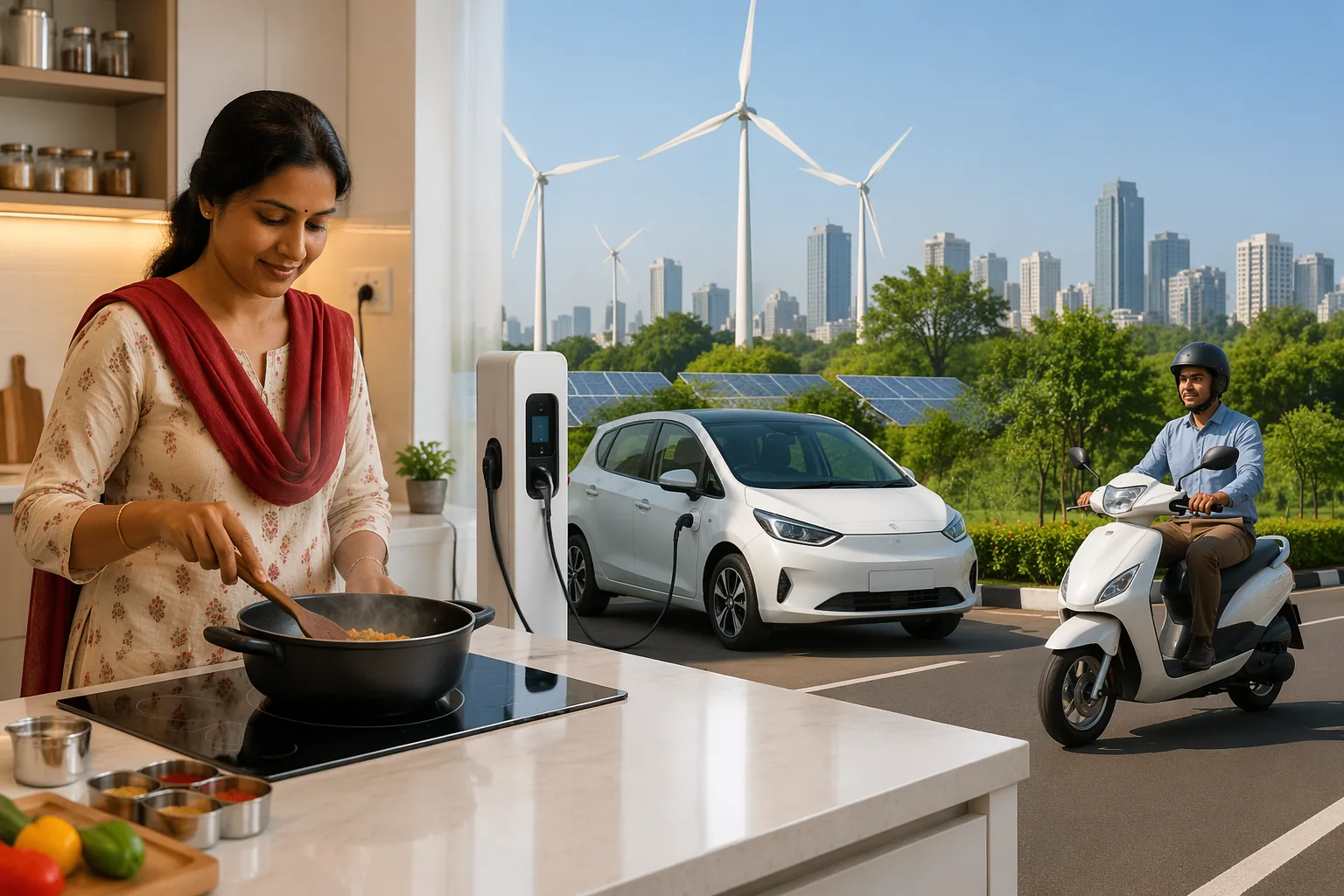
Centre Pushes for Electric Cooking, Mobility to Drive Clean Energy Goals
The Indian government has called on all States, including Telangana, to accelerate the adoption of electric cooking and electric mobility as part of the nation’s ambitious clean energy transition. This initiative is aimed at achieving India’s Net Zero emissions target by 2070.
Milestone in Renewable Energy Capacity
Speaking at the National Workshop on Renewable Consumption Obligation (RCO) in Hyderabad, Milind Deore, Secretary of the Bureau of Energy Efficiency under the Ministry of Power, highlighted the country’s progress in renewable energy. As of June 30, India had installed 297.37 GW of electricity capacity from non-fossil fuel sources, achieving nearly 59.5% of its 2030 target of 500 GW.
Mr. Deore underscored that electric cooking and mobility are critical components of India’s long-term energy strategy. These measures are not only environmentally beneficial but also economically advantageous, offering significant cost savings for households.
Reducing Costs and Import Dependence
Electric cooking, according to Mr. Deore, could slash household cooking expenses by 25-35% while reducing reliance on imported liquefied petroleum gas (LPG) and liquefied natural gas (LNG). He emphasized the importance of promoting affordable, energy-efficient, and safe cooking technologies, suggesting the distribution of induction cooktops to households, educational institutions, and anganwadi centres.
The Secretary also commended Energy Efficiency Services Limited (EESL) for its efforts in advancing clean energy adoption. EESL has been actively distributing induction cooktops and utensils across various States to encourage the shift toward electric cooking.
Why This Matters
The push for electric cooking and mobility aligns with India’s broader goals of reducing carbon emissions and enhancing energy security. By transitioning away from fossil fuels, the country aims to not only meet its international climate commitments but also provide economic relief to households burdened by high cooking fuel costs.
This initiative reflects a dual focus on environmental sustainability and economic efficiency, marking a significant step in India’s journey toward a cleaner and more self-reliant energy future.
Published: July 19, 2026, 09:48 PM IST
Source: The Hindu
Frequently asked questions
What is India's Net Zero emissions target?
India aims to achieve Net Zero emissions by 2070 through accelerated adoption of electric cooking and electric mobility as part of its clean energy transition.
How much has India achieved toward its renewable energy capacity target?
As of June 30, India had installed 297.37 GW of electricity capacity from non-fossil fuel sources, achieving nearly 59.5% of its 2030 target of 500 GW.
What cost savings can electric cooking provide?
Electric cooking could reduce household cooking expenses by 25-35% while decreasing reliance on imported liquefied petroleum gas (LPG) and liquefied natural gas (LNG).
Which technologies is the government promoting for electric cooking?
The government is promoting induction cooktops as affordable, energy-efficient, and safe cooking technologies, with distribution planned for households, educational institutions, and anganwadi centres.
You may also like
 Politics
India plans new subsidy framework for polysilicon manufacturing to boost solar capacity
 Delhi NCR
India’s Agrivoltaic Capacity Expected To Cross 5 GW In 3-4 Years
 Politics
Modi accuses developed nations of shifting climate blame to India
 Uttar Pradesh
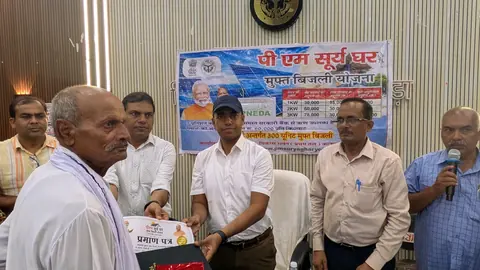
Kanpur villages get rooftop solar push to slash electricity bills to zero
Most read
- 1
Air China Adds Extra Flight for Passengers Stranded in Fuel-Starved Cuba
- 2
Western disturbance to bring rain, hail and strong winds across north India
- 3
Yogi Adityanath Directs No Occupied Houses Be Demolished for Achhalda Bridge
- 4
Gwalior Temple Truck Crash Kills 12, Injures 28-29 Devotees During Navratri
- 5
Schools Shut in Five Tamil Nadu Districts, Including Chennai, Amid Heavy Rain
Comments
No comments yet. Be the first to comment.