
GITAM researcher tracks how pollutants reach Arctic ice and meltwater
GITAM chemist Manoj Panayamthatta Rayaroth collected Arctic water samples in Svalbard to study how pollutants move through ice, meltwater and seas.

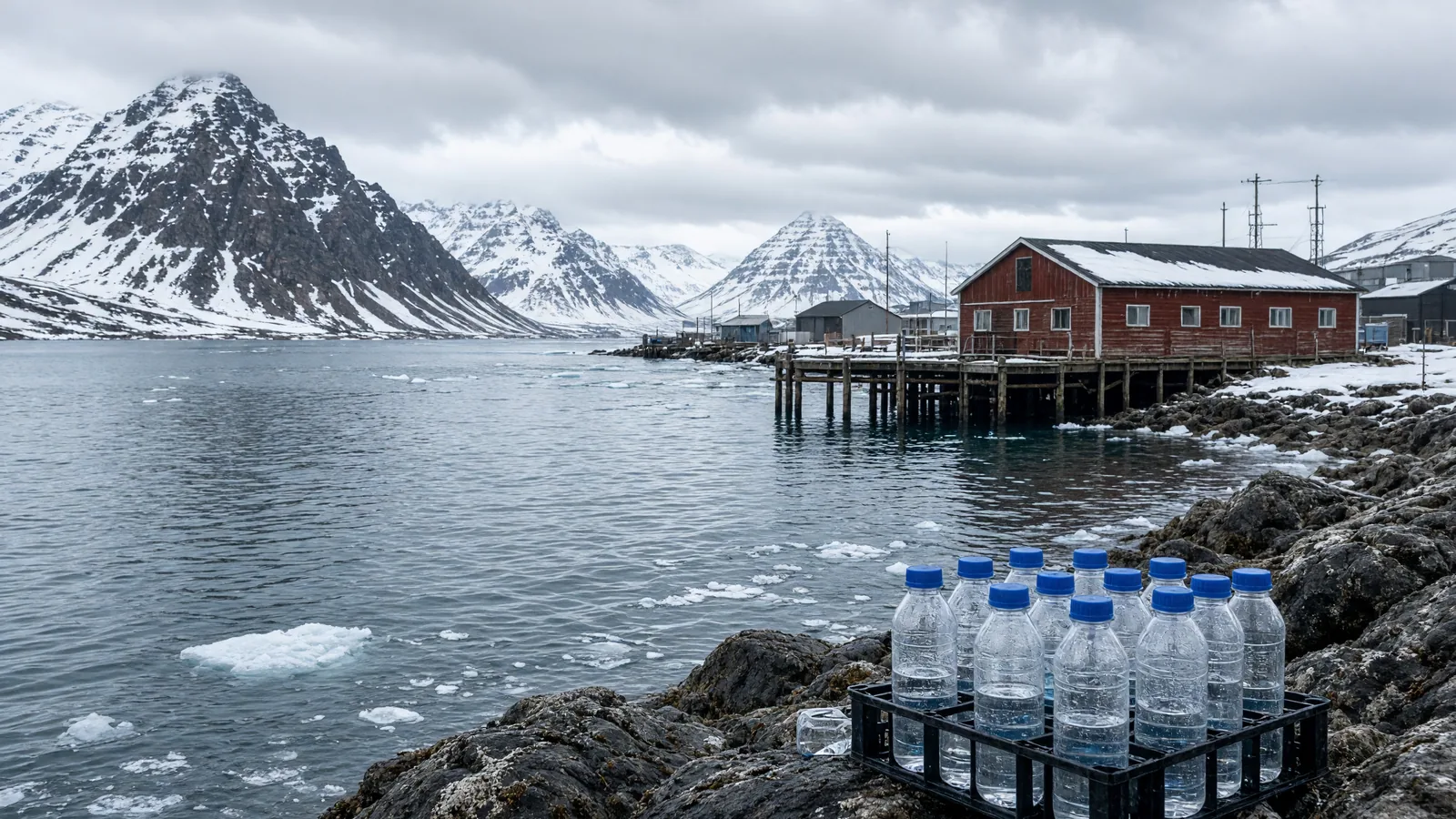
From Kannur to Ny-Ålesund, researcher tracks pollutants into the Arctic
Samples collected during Manoj Panayamthatta Rayaroth’s Arctic research assignment are expected to reach Visakhapatnam in a month or two, and his team has not yet arrived at any findings.
The work follows his recent stint at Ny-Ålesund in Svalbard, Norway, as part of the Indian Arctic Expedition 2026-27.
Mr. Manoj, Assistant Professor in the Department of Chemistry at GITAM School of Science, says polar regions may look remote on a map, but their isolation makes them crucial for studying climate change.
“To study climate change, we need research in such isolated areas,” he says.
Why the Arctic matters to the research
Mr. Manoj’s central point is that what is released elsewhere can eventually reach the Arctic.
“If you dispose of some chemical here, it can reach the Arctic because all the oceans are interconnected,” he says.
The project he joined seeks to study how organic pollutants transform in Arctic ice and meltwater and how they eventually reach the sea.
His opportunity came through a call for research proposals on the National Centre for Polar and Ocean Research website.
The proposal had N.V.S. Venugopal, Professor at GITAM School of Science, as Co-Principal Investigator.
It was defended before a panel and subsequently accepted, with one berth allotted to the team.
Fieldwork shaped by water, ice and wind
Mr. Manoj was deputed from August 17 to September 14, excluding the travel period.
His days in the Arctic were shaped by water and wind.
He collected fjord water and glacier meltwater from a boat.
Rough weather often forced the team to suspend sampling.
Temperatures remained between 2°C and 4°C during the assignment.
For most of his stay, daylight continued round the clock.
About two hours of darkness appeared only during the final days.
The glacier-fed rivers were constantly changing.
“The melting changes every day, and if you check every six hours, the weather changes,” he says.
It rained for two or three days during his stay.
During that period, he met scientists who had worked in the region for 20 to 25 years.
“They were saying that there was not this much rain before,” he recalls.
Life at Himadri
Mr. Manoj stayed at Himadri, India’s research station established in 2008.
The station can accommodate eight scientists.
Meals were prepared in a common kitchen shared by researchers from several countries.
The arrangement placed him in regular contact with scientists working in the region.
His Arctic assignment therefore combined field collection, weather-related delays, station life and interaction with researchers who had long experience in the region.
A path that began in student years
Mr. Manoj’s journey to the Arctic began years ago.
As a B.Sc. student, he was among 35 students taken to the National Centre for Polar and Ocean Research in Goa.
There, scientists who had returned from the Arctic spoke about their work.
“That excitement was in our minds at that time,” he says.
In 2011, as a project fellow at Mahatma Gandhi University, Kerala, he worked on the removal of endosulfan from environmental samples.
He also visited affected areas in Kasaragod, near his native Kannur.
“People are still struggling because of endosulfan,” he says.
After completing his Ph.D. in 2017, he pursued postdoctoral research in South Korea, Germany, Poland, France and the United States.
He joined GITAM in 2024.
From monitoring to mitigation
Although the Arctic samples are yet to yield findings, Mr. Manoj says his next objective is to move beyond monitoring towards mitigation.
“Monitoring everyone can do, but mitigation can be done by only a few,” he says.
C. Kavitha, Director, School of Science, GITAM, who joined the conversation, said she hoped that students would be given opportunities to participate in such national research projects in the future.
The assignment places his current work within a longer arc that runs from student exposure at NCPOR to environmental research in Kerala and now to Arctic field sampling at Ny-Ålesund.
Source: The Hindu
Frequently asked questions
What is Manoj Panayamthatta Rayaroth studying in the Arctic?
He is part of a project studying how organic pollutants transform in Arctic ice and meltwater and how they eventually reach the sea.
Why does the research focus on the Arctic?
Mr. Manoj says pollutants released elsewhere can reach the Arctic because the oceans are interconnected, making isolated polar regions important for climate change research.
Where did Mr. Manoj conduct his Arctic assignment?
He worked at Ny-Ålesund in Svalbard, Norway, and stayed at Himadri, India’s research station established in 2008.
What samples did he collect during the fieldwork?
He collected fjord water and glacier meltwater from a boat, though rough weather sometimes forced the team to suspend sampling.
Has the research team announced any findings yet?
No. The samples are expected to reach Visakhapatnam in a month or two, and the team has not yet arrived at any findings.
You may also like
 Opinion
Big Indian AI SuperChip Dream: Bharatiya Chips Powering the Electronic Revolution
 Politics
BJP MP Gulam Ali Khatana alleges Pakistan orchestrated OIC’s anti-India resolutions
 National
Singareni revises pay scales for 1,800 officers, aligning them with Coal India
 Sports
Nandani Sharma Climbs 26 Places to 45th in ICC T20I Rankings
Most read
- 1
Air China Adds Extra Flight for Passengers Stranded in Fuel-Starved Cuba
- 2
Western disturbance to bring rain, hail and strong winds across north India
- 3
Yogi Adityanath Directs No Occupied Houses Be Demolished for Achhalda Bridge
- 4
Gwalior Temple Truck Crash Kills 12, Injures 28-29 Devotees During Navratri
- 5
Schools Shut in Five Tamil Nadu Districts, Including Chennai, Amid Heavy Rain
Comments
No comments yet. Be the first to comment.