
Gautam Gambhir Questions India’s 406-Run Chase, Calls Pitch Unfair to Bowlers
Gautam Gambhir says India’s 406-run ODI chase exposed an unfair pitch, with too little help for bowlers despite Shubman Gill’s double century.

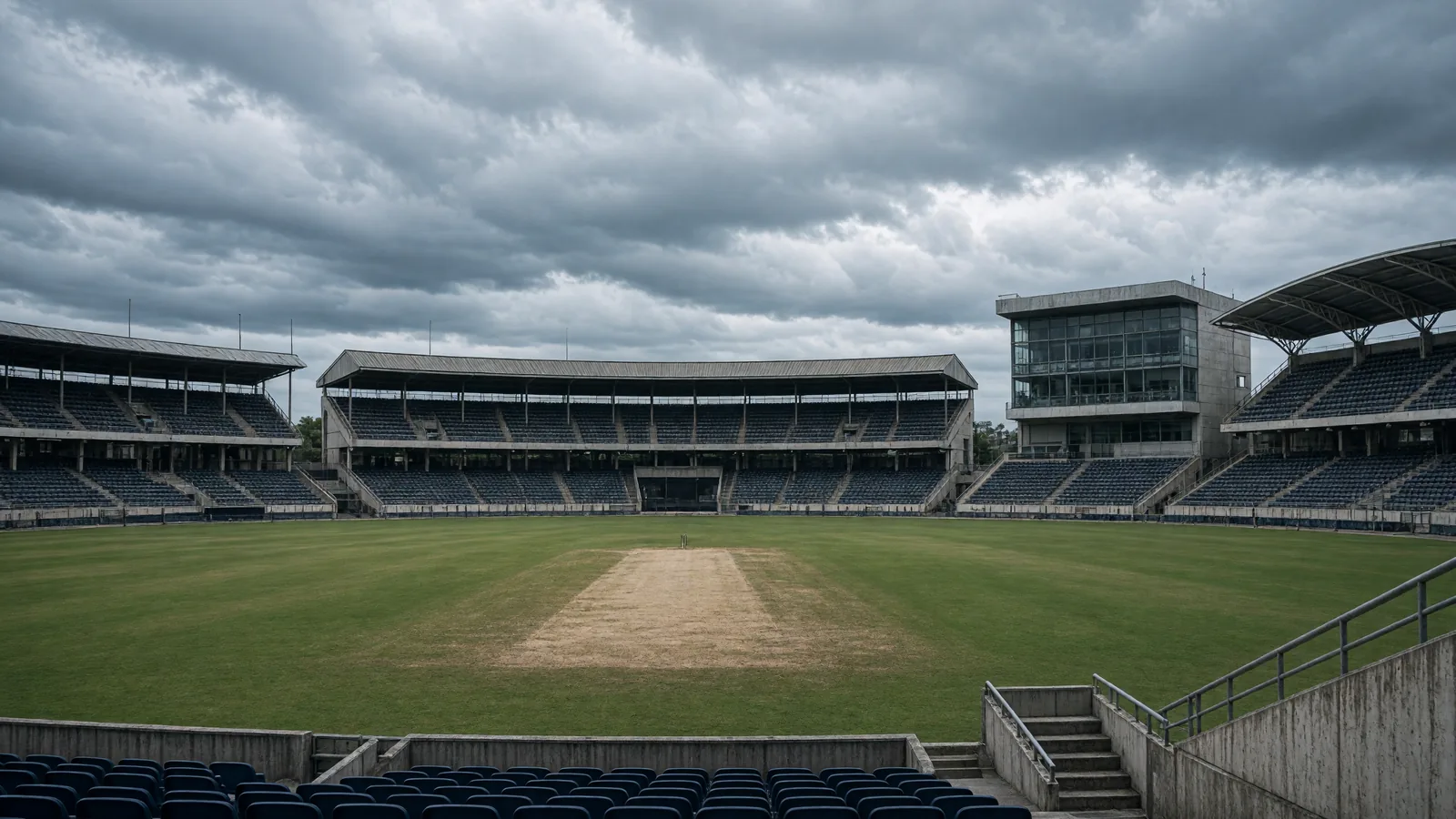
Gambhir questions 406-run chase as Gill’s double century exposes ODI imbalance
Gautam Gambhir has questioned the value of India’s record 406-run chase against the West Indies in Guwahati, saying the pitch did not offer bowlers a fair opportunity to influence the game.
The India head coach said the contest had become too heavily tilted towards batting, even as Shubman Gill produced a double-century and led India’s pursuit with control, range and endurance.
“Look, if I have to be absolutely honest, I feel I think there has to be a bit of more contest between bat and ball, because I think you talk about cricket... but this is not cricket, this is only batting,” Gambhir said on JioHotstar.
Gambhir says the pitch was unfair to bowlers
Gambhir’s criticism came after a match in which India chased 406, following an innings that also contained three other centuries and contributed to an 811-run aggregate.
He said wickets offering so little for bowlers made it difficult for them to have a meaningful impact, even though the result produced outstanding records and entertainment.
“Because imagine a young bowler bowling on this wicket, and the opposition getting 400 and then we go on to chase 400,” Gambhir said.
“Obviously, for the records it’s outstanding, for the crowd it’s outstanding, for the broadcaster it’s outstanding, but if you ask me as a genuine cricket fan and as a coach, because I have to have sympathy for the bowlers as well.”
“When you bowl on this kind of a wicket, it’s not fair for the bowlers,” he added.
Gambhir said the conditions needed to give bowlers something to work with, rather than reducing them to participants in a run-scoring contest.
“So we’ve got to give something to the bowlers so there’s at least something which the bowlers can work with,” he said.
His comments also reflected the difficulty of judging bowling performances only through figures in a match where the margin for error was unusually small.
Gurnoor Brar finished with 2/96 in his 10 overs, while debutant Auqib Nabi conceded 84 runs in 8.5 overs.
Gambhir nevertheless said their performances had to be assessed through execution and not only through the numbers beside their names.
“The first thing is that you need some sympathy and a bit of margin for the bowlers,” he said.
“Often you can’t be hard on bowlers, because sometimes bowling figures are such that they haven’t bowled as poorly as their figures suggest. Because the margin is very small.”
He also pointed to the restrictions and pressures facing bowlers in the current format, including five fielders inside, two new balls and the power-hitting available to batters.
“Plus, I think you can only bowl in good areas because besides that, with five fielders inside, two new balls, and the kind of power-hitting there is now, bowlers don’t really have many options,” Gambhir said.
Gill turns a huge chase into a personal showcase
The imbalance Gambhir described formed the background to Gill’s innings, which dominated the evening despite several notable performances in the match.
Gill reached his double-century after batting through a chase that demanded both a quick start and sustained concentration.
The Guwahati pitch was flatter than the one used previously and slightly slower to the first contact, while one side of the ground was shorter than the other.
Three other batters had already made centuries before Gill’s innings took the contest to another level.
He moved faster than the other centurions through a combination of calculation and attack, choosing when to press forward without losing the shape of his strokes.
Against pace, Gill maintained his shape and played on the rise when the surface offered some assistance, while also striking a series of grounded shots across the mat.
He was able to read wristspinner Vitel Lawes early and adjust even though Lawes was not immediately easy to score against.
Gill’s innings did not depend on uncontrolled hitting, with his strokes retaining their shape even as he pushed the chase forward.
The innings required him to sustain the tempo of a 400-run chase from beginning to end without allowing his concentration to fall away.
Deep into the innings, he needed stretches from the physio as the effort began to affect him physically.
“Every part of me is cramping right now,” Gill said after the game.
Even after the cramps set in, his stance remained firm and the shots continued to be delivered with the same neatness.
At 207, after roughly 90 overs on the field and while dealing with cramps, Gill dispatched a six to midwicket with a wristy stroke that the report compared with the ease of flicking a matchstick.
The innings made Gill the only batter with multiple ODI double-centuries after Rohit Sharma.
Rohit’s opening stand and Kohli’s quieter contribution
Rohit Sharma accompanied Gill in a 255-run opening stand, providing India with a powerful platform at the start of the chase.
Rohit used the bounce early from the tall opening trio, attacked Keemo Paul’s erratic deliveries and selected his opportunities against the spinners.
Virat Kohli did not make a big score, but the result still ensured that the large crowd wearing ‘18’ on their backs was not disappointed.
Gill’s method was described as similar to that of a great ODI batter: he divided the target into smaller sections rather than treating the chase as one uninterrupted task.
He had been aiming to reach 200-210 by the 25-over mark, but eventually finished 20 runs higher than that target.
His ability to calculate the chase while attacking helped make the result look controlled, even though the overall contest had produced an exceptional volume of runs.
The match’s batting-heavy character was summed up by India’s head coach, who refused to let the excitement around the record chase obscure the conditions in which it had taken place.
“It was batting, it was not cricket,” the head coach said.
Gambhir made a similar argument in longer terms, calling for a better contest between bat and ball in which bowlers could have a meaningful role.
An 811-run day leaves bowlers in the shadow
By the time Gill removed his helmet for the final time, bowlers on both sides had been worn down during a match that produced an 811-run aggregate.
The three other centuries from the first innings were overshadowed by Gill’s double-century, even though those performances had also taken advantage of the same flat surface and repeated errors in bowling and fielding.
The first innings featured three special efforts built on relentless punishment of sub-par bowling and fielding phases.
The result was a Guwahati ODI that, in effect, resembled a back-to-back sequence of five T20I innings.
That description underlined the extent to which the match was shaped by high-scoring batting rather than by sustained pressure from the bowlers.
West Indies bowling coach Ravi Rampaul also criticised the conditions, saying the pitch had “nothing for the spinners, nothing for the quicks”.
The assessment from Rampaul reinforced the concern that the surface had not given either type of bowler enough assistance.
The match therefore carried two contrasting messages: Gill’s performance demonstrated his ability to dominate a demanding chase, while the conditions made it difficult to establish how much of that dominance came against a genuinely competitive balance between bat and ball.
Nothing in that assessment diminished Gill’s display, which was described as a demonstration of endurance and hunger.
It did, however, create a qualification around the scale of the achievement, particularly as the bowlers had so little room to recover once the batters established control.
Gill’s ODI growth and the challenge ahead
Gill’s performance arrived during a period in which he has combined the tempo of modern run-making with consistency across the larger part of three years.
He turned 27 this September.
By the same age, Sachin Tendulkar had already crossed 9,000 runs in the format and played nearly 250 games.
This June, Gill became the second-fastest batter to reach 3,000 ODI runs, completing the milestone 13 innings faster than Kohli.
The comparison also showed the different volume of opportunities available across eras, with the report noting that the number of matches would not allow Gill to compete with all-time great ODI statistics purely through accumulation.
Even within that mismatch in volume, his impact on the format has already been significant.
The next test will be whether that impact continues when the conditions are less favourable to batting and the opposition can create a fairer contest.
Over the last three years, Gill has played only three games in Australia and has a highest score of 24 there.
He has never played an ODI in South Africa, which is one of the World Cup hosts.
New Zealand is next for him, and he last visited that country in 2022, recording one fifty in five games so far.
Those figures do not take away from his Guwahati innings, but they indicate the different conditions and challenges that await him beyond the familiar setting of the latest chase.
Gill now goes into the next phase as ODI captain and the top-ranked batter in the world.
He heads towards the World Cup with expectations already high, while still awaiting the kind of test that comes when the balance between bat and ball is less heavily tilted towards batting.
The next match is at his home ground, adding another setting to the sequence of performances that has placed him at the centre of India’s ODI batting.
A record chase, with a warning attached
Gill’s double-century remained the defining performance of the Guwahati ODI, even on a day that also produced four other centuries.
He showed a high degree of control, an extensive range of shots and an unremitting appetite to take charge of a mammoth chase.
The reception continued well after the innings had ended, with a few ardent fans remaining an hour and a half after Gill posed in the middle of the stadium with his helmet on his bat and acknowledged the cheers for his double-century.
The cheers began again when he emerged from the stadium lobby to board the team bus, reaching similar decibel levels to those for two other batting stars with whom he often bats.
That response captured the significance of the innings for the crowd, even though the match had offered little for the bowlers to celebrate.
Gill’s eventual greatness in ODIs, however, will not be measured only by the volume of runs he collects on surfaces where batting is dominant.
It will also be defined by how consistently he performs when the odds are not so heavily stacked against the bowlers.
That is the central tension surrounding his Guwahati achievement: the innings was extraordinary in its endurance, execution and scale, but the conditions also prompted a wider question about what an ODI contest should provide.
For Gambhir, the answer is a surface that gives bowlers at least something to work with.
For Gill, the immediate evidence is a record chase, a second ODI double-century and a place at the centre of India’s plans as captain and top-ranked batter.
Both developments emerged from the same match, making the Guwahati ODI significant not only for what Gill achieved, but also for the debate it revived about the balance at the heart of one-day cricket.
Frequently asked questions
Why did Gautam Gambhir question India’s 406-run chase?
He said the pitch did not offer bowlers a fair opportunity to influence the game and made the contest too heavily tilted towards batting.
What did Shubman Gill achieve in the match?
Shubman Gill scored a double-century and led India’s pursuit of 406 runs.
How many runs were scored in total during the match?
The match produced an 811-run aggregate.
What changes did Gambhir say bowlers need?
He said conditions should give bowlers something to work with and provide them with more margin for error.
You may also like
 Opinion
Big Indian AI SuperChip Dream: Bharatiya Chips Powering the Electronic Revolution
 Politics
BJP MP Gulam Ali Khatana alleges Pakistan orchestrated OIC’s anti-India resolutions
 National
Singareni revises pay scales for 1,800 officers, aligning them with Coal India
 Sports
Nandani Sharma Climbs 26 Places to 45th in ICC T20I Rankings
Most read
- 1
Air China Adds Extra Flight for Passengers Stranded in Fuel-Starved Cuba
- 2
Western disturbance to bring rain, hail and strong winds across north India
- 3
Yogi Adityanath Directs No Occupied Houses Be Demolished for Achhalda Bridge
- 4
Gwalior Temple Truck Crash Kills 12, Injures 28-29 Devotees During Navratri
- 5
Schools Shut in Five Tamil Nadu Districts, Including Chennai, Amid Heavy Rain
Comments
No comments yet. Be the first to comment.