
China’s Gold Rise Shows Strategy Beat Scarce Reserves, Columnist Says
China’s gold rise shows how industrial planning and innovation helped overcome scarce reserves and lift output from a modest 1975 base.

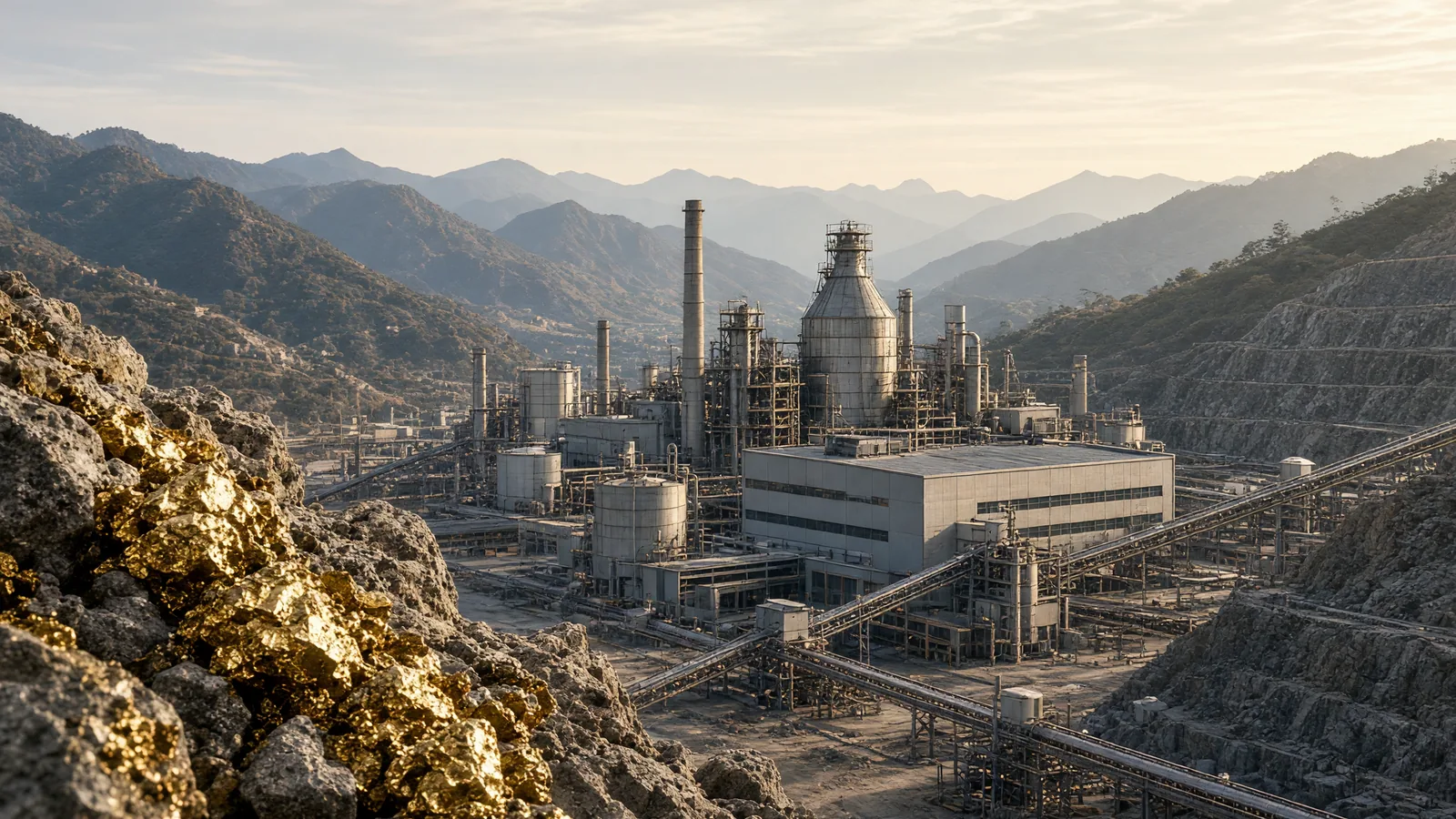
China’s rise as the world’s gold superpower is being presented as an example of how industrial strategy, innovation and meticulous planning can outweigh limited natural reserves. In an opinion piece titled “How China became the world’s gold superpower,” the central argument is that Beijing did not build dominance in gold because it had superior deposits. Instead, the piece says China’s rise came despite the fact that its own gold reserves were historically scarce.
The article is associated with Chow Chung-yan, who began his journalistic career at the South China Morning Post and rose to become editor-in-chief in 2025. The piece describes China’s gold story as one of the clearest examples of the wider pattern behind the country’s industrial success. As the source puts it, perhaps no story illustrates the secret of China’s industrial success better than its rise as the world’s gold superpower.
The key point is that China’s position in gold was not built on an easy natural advantage. China has revered gold for millennia, according to the piece, but it has never had a gold-based economy. The reason given is straightforward: its own deposits were simply too scarce. That shortage makes the later rise more striking, because the country’s position is not described as the result of having the richest mines or the biggest natural endowment.
The timeline highlighted in the piece goes back to 1975, when China was beginning its economic modernisation. At that stage, the country needed gold for two linked purposes: to fund reform and to build up foreign reserves. Those needs came at a time when China’s own production was still very limited. Despite its best efforts, the piece says, China produced only 13.8 metric tons a year.
That figure is central to the comparison made in the article. In 1975, China was far behind the leading gold producers of the time. South Africa was described as the undisputed king of gold and produced many times more than China. The gap was not limited to South Africa. Canada, the United States and Australia each comfortably outproduced China as well.
The contrast is important because it shows the scale of the challenge China faced at the beginning of this story. The country had a long cultural connection with gold and a strong need for the metal during the early phase of economic modernisation, but it did not have the level of domestic output that would normally be associated with a gold superpower. Its annual production of 13.8 metric tons placed it well behind South Africa, Canada, the United States and Australia.
The opinion piece therefore frames China’s gold rise as a story of strategy rather than geology. Beijing’s dominance, according to the source material, was built through innovation and meticulous planning, not through superior natural reserves. That distinction is the core of the argument: China’s advantage emerged from the way it organised and developed its industrial capacity, rather than from simply sitting on abundant deposits.
The article also links the gold story to a broader explanation of China’s industrial success. It treats gold not as an isolated case, but as an example of a larger pattern in which planning and innovation helped the country overcome weak starting conditions. In this telling, China’s limited gold deposits and modest 1975 production are not side details; they are the starting point that makes its later status as a gold superpower significant.
By setting China’s 13.8 metric tons of annual production in 1975 against South Africa’s far larger output and the stronger positions of Canada, the United States and Australia, the piece underlines how far China had to climb. It also explains why the country’s rise is described as unusual: China valued gold for thousands of years, needed it during economic modernisation, and yet lacked the natural reserves that could have made dominance seem inevitable.
The conclusion drawn from the source material is clear. China’s gold rise is being used as an industrial case study. It shows, in the columnist’s view, that Beijing’s strength came not from better natural resources, but from innovation, careful planning and the ability to turn a position of scarcity into global dominance.
Frequently asked questions
What is the main argument of the opinion piece about China’s gold rise?
The piece argues that China became a gold superpower through industrial strategy, innovation and meticulous planning, rather than because it had superior natural gold reserves.
Did China have abundant gold deposits historically?
No. The article says China’s own gold reserves were historically scarce, even though gold has been revered in the country for millennia.
How much gold did China produce annually in 1975, according to the article?
The article says China produced only 13.8 metric tons of gold a year in 1975.
Which countries outproduced China in gold in 1975?
The article says South Africa, Canada, the United States and Australia all outproduced China in 1975.
Why did China need gold during the start of its economic modernisation?
The article says China needed gold to help fund reform and build up foreign reserves.
You may also like
 International
China building global gold vaults to boost yuan's appeal in international trade
 International
China to Lower Flags for Former Premier Zhu Rongji's Funeral
 International
Zhu Rongji's Death Marks End of an Era in US-China Relations
 International
Zhu Rongji, architect of China's economic reforms, dies at 97
Most read
- 1
Air China Adds Extra Flight for Passengers Stranded in Fuel-Starved Cuba
- 2
Western disturbance to bring rain, hail and strong winds across north India
- 3
Yogi Adityanath Directs No Occupied Houses Be Demolished for Achhalda Bridge
- 4
Gwalior Temple Truck Crash Kills 12, Injures 28-29 Devotees During Navratri
- 5
Heavy Rain Waterlogs Bengaluru, Snarls Traffic; Ride-Hailing Fares Surge
Comments
No comments yet. Be the first to comment.