
China’s desalination plant cuts energy use 60%, turns waste brine into salt
A Hebei desalination plant cuts electricity use by 60% while converting waste brine into fresh water and industrial salt.

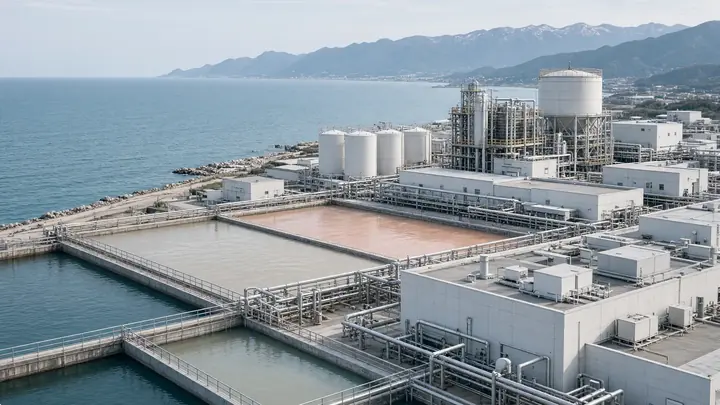
A large desalination plant on Bohai Bay in China has reduced electricity consumption by 60% by turning waste brine into high-value industrial chemical salt. The technology could offer a practical way to deal with the global problem of discharging concentrated seawater, a by-product of fresh water production, into the sea.
The plant is located in the Caofeidian industrial zone of Tangshan, in Hebei province. It has recently entered the trial production stage, marking a move towards the practical use of technology designed to process waste brine from desalination.
The development was reported last month by the state-run Science and Technology Daily. The report, by Dannie Pengin in Beijing, described the facility as a large desalination plant that has achieved a major breakthrough in energy efficiency.
According to the report, the plant has cut electricity consumption by 60%. This means the electricity used by the process has fallen by more than half.
The facility is also designed to process millions of tonnes of toxic waste brine and convert it into high-value chemical salt. In this way, the plant is intended to address both the energy used in desalination and the difficult problem of what to do with the concentrated brine left behind.
The plant processes the waste brine at a three-to-one ratio. For every three tonnes of waste brine processed, the system produces 1 tonne of refined concentrated seawater and 2 tonnes of fresh water.
The refined concentrated seawater has a salinity of 120 grams per litre. This concentrated stream can then be used in the production of industrial chemical salt, rather than being treated only as a waste product for disposal.
The process therefore combines two outcomes. It produces fresh water while also recovering material from the concentrated by-product of desalination. At the same time, the plant uses less electricity than before, with consumption reduced by 60%.
The facility’s location in the Caofeidian industrial zone places it within Tangshan, Hebei province, on the coast of Bohai Bay. The plant’s trial production stage is being watched as an example of how waste brine processing technology can be used at an operating desalination facility.
The Science and Technology Daily report said the technology provides a viable pathway to solving the global challenge of discharging concentrated seawater into the sea. The issue arises from the production of fresh water from seawater, which leaves behind a concentrated stream containing much more salt than the original water.
Rather than viewing this concentrated seawater only as a disposal problem, the project uses it as a source of industrial chemical salt while producing fresh water. The plant is designed to process the waste brine, recover the concentrated material and reduce the electricity required for the operation.
The reported energy saving and the conversion of millions of tonnes of toxic waste brine into high-value chemical salt are the two main features of the facility. Its trial production stage is now providing a test of how the technology works in practical use.
The development was carried by the South China Morning Post, based on the report from Science and Technology Daily. While the facility has only recently entered trial production, the technology is being presented as a possible answer to the wider challenge of managing concentrated seawater from desalination without simply discharging it into the sea.
Frequently asked questions
Where is the desalination plant located?
It is located in the Caofeidian industrial zone of Tangshan, Hebei province, on the coast of Bohai Bay.
How much electricity has the plant saved?
The plant has reduced electricity consumption by 60%.
What does the plant do with waste brine?
It processes waste brine and converts it into high-value industrial chemical salt.
What does the plant produce from three tonnes of waste brine?
It produces one tonne of refined concentrated seawater and two tonnes of fresh water.
You may also like
 Education
Nanjing University Course Asks Students to Call Strangers to Build Confidence
 Technology
Brazil, China Agree Five-Year Programme to Bring AI to Small Farmers
 International
Thailand Gains Edge Over Vietnam as Chinese Firms Expand Overseas
 International
China’s Hybrid Car Exports to EU Surge 204% Ahead of Import Cap
Most read
- 1
Air China Adds Extra Flight for Passengers Stranded in Fuel-Starved Cuba
- 2
Western disturbance to bring rain, hail and strong winds across north India
- 3
Yogi Adityanath Directs No Occupied Houses Be Demolished for Achhalda Bridge
- 4
Gwalior Temple Truck Crash Kills 12, Injures 28-29 Devotees During Navratri
- 5
Heavy Rain Waterlogs Bengaluru, Snarls Traffic; Ride-Hailing Fares Surge
Comments
No comments yet. Be the first to comment.