
China's once-free gutter oil now costly feedstock for Hong Kong's green jet fuel
Hong Kong is exploring sustainable aviation fuel made from recycled kitchen waste, but rising feedstock costs threaten the transition.

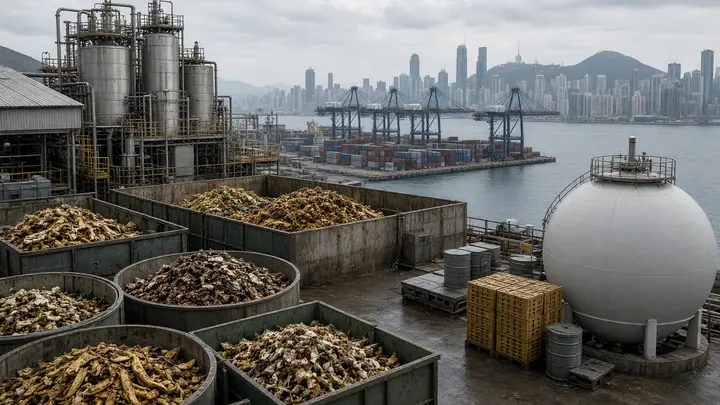
China’s once-notorious “gutter oil”, made from kitchen and drainage waste, has undergone a dramatic change in value. Once collected almost for free, the material has become a highly sought-after feedstock for clean energy, especially sustainable aviation fuel, or SAF.
The shift is unfolding as Hong Kong sets goals for adopting sustainable aviation fuel and examines how supply chains for the fuel can be built on a larger scale. Industry leaders are also looking at how to win over passengers who are sensitive to prices.
In recent years, gutter oil has almost vanished from dining tables in China. The material, once linked to a nationwide food safety concern, is now known by a very different nickname: “liquid gold”.
Gutter oil is recycled from kitchen and drainage waste. It has become valuable because it can be used as a feedstock for producing clean energy. Sustainable aviation fuel is one of the areas where demand for the material has grown sharply.
Biofuel producers such as Hong Kong-based EcoCeres are sourcing gutter oil across the Greater Bay Area. The company’s work reflects the way the material’s status has changed, from a waste product and food safety concern to a valuable commodity used in the production of cleaner energy.
EcoCeres’ co-chairman, Alan Chan Ying-lung, has witnessed that transformation. He said the cost of collecting gutter oil had changed significantly over the past 10 years.
“I can recall that the gutter oil we collected was basically free 10 years ago, and authorities even offered subsidies [to collectors], but now the unit cost is even more expensive than fuel,” he said.
Chan’s account highlights the sharp rise in the price of a material that was previously available at little or no cost. Authorities once offered subsidies to collectors, while the same material is now being sought by biofuel producers as an important feedstock.
That rise in cost also points to the challenge facing Hong Kong as it works towards adopting sustainable aviation fuel. Setting goals for SAF is one part of the process, but building a supply chain capable of supporting those goals is another.
The issue is not limited to the price of gutter oil. Industry leaders are examining how collection and supply chains can be expanded to a larger scale. They are also considering how to encourage passengers to accept sustainable aviation fuel at a time when many travellers remain sensitive to price.
The changing value of gutter oil therefore captures both sides of Hong Kong’s SAF challenge. Material that was once treated as waste now offers an opportunity for producing clean energy. At the same time, its rising cost has become a major supply and affordability issue for the move towards greener jet fuel.
The shift from almost free collection to a unit cost that is even more expensive than fuel shows how quickly the economics of this feedstock have changed. For companies such as EcoCeres, sourcing gutter oil across the Greater Bay Area is now part of the effort to support sustainable aviation fuel.
For Hong Kong, the task is to develop the supply chains needed to scale up SAF while addressing the price concerns of passengers. The material’s journey from kitchen and drainage waste to “liquid gold” has created a new opportunity for clean energy, but it has also made the cost of that transition harder to ignore.
Source: South China Morning Post
Frequently asked questions
What is gutter oil?
Gutter oil is recycled from kitchen and drainage waste.
Why has gutter oil become valuable?
It can be used as a feedstock for producing clean energy, including sustainable aviation fuel.
How has the cost of gutter oil changed?
It was collected almost for free 10 years ago but now costs more per unit than fuel.
How is EcoCeres using gutter oil?
The Hong Kong-based biofuel producer sources gutter oil across the Greater Bay Area.
What challenges does Hong Kong face in adopting sustainable aviation fuel?
Hong Kong must build larger-scale collection and supply chains while encouraging price-sensitive passengers to accept the fuel.
You may also like
 National
Hong Kong Direct Subsidy Schools Enrol 170 Non-Local Students This Year
 Business
Jiangsu Slender West Lake Postpones Hong Kong IPO Amid Weak Market, Regulatory Checks
 National
APEC Finance Ministers Agree to Strengthen Economic Coordination Amid Global Risks
 Madhya Pradesh
 Government's New Bombardier Challenger 3500 Jet Reaches Bhopal
Most read
- 1
Air China Adds Extra Flight for Passengers Stranded in Fuel-Starved Cuba
- 2
Western disturbance to bring rain, hail and strong winds across north India
- 3
Yogi Adityanath Directs No Occupied Houses Be Demolished for Achhalda Bridge
- 4
Gwalior Temple Truck Crash Kills 12, Injures 28-29 Devotees During Navratri
- 5
Heavy Rain Waterlogs Bengaluru, Snarls Traffic; Ride-Hailing Fares Surge
Comments
No comments yet. Be the first to comment.