
China's mineral-rich provinces see most senior corruption dismissals under Xi Jinping
Analysis shows China's resource-abundant provinces have the highest senior official removals during Xi's anti-corruption campaign, suggesting resource weal

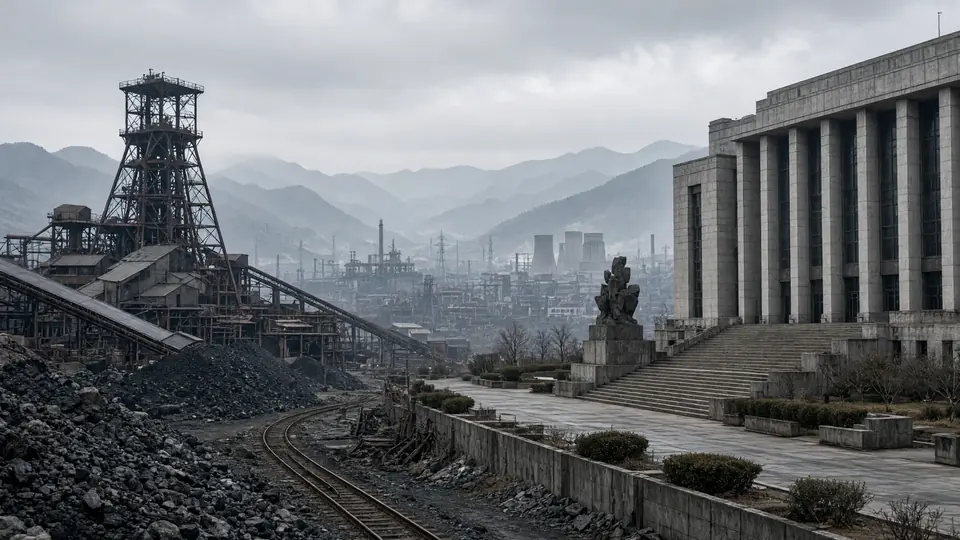
A South China Morning Post analysis has found that China's mineral-rich provinces have seen the highest number of senior officials dismissed during President Xi Jinping's decade-long anti-corruption campaign, suggesting that the country's resource wealth may be fueling corruption at the highest levels of government.
Jiangxi, Liaoning, Inner Mongolia, Shanxi and Hebei, all abundant in minerals, top the list of provinces with the most senior officials removed for corruption. These regions hold resources ranging from coal, which powers China's economy, to rare minerals essential for advanced industrial equipment and military technology. The research highlights how areas rich in natural resources critical to the world's second-largest economy have become hotbeds for deep-seated corruption.
The abundance of extractable resources in China's less developed regions appears to create conditions that enable entrenched corruption. Beneath the desolate Gobi Desert and sparsely populated mountains lie massive mineral deposits that are vital to both China's basic energy needs and its cutting-edge technological ambitions. The Central Commission for Discipline Inspection's annual plenary sessions have repeatedly emphasized the need to intensify anti-corruption efforts in areas "where power, funds and resources are concentrated."
The pattern documented in the Post's research suggests Beijing is attempting to combat what analysts call the "resource curse", a phenomenon where regions rich in natural resources paradoxically suffer from poor governance and corruption. China's border and resource-rich provinces have become focal points of this crackdown as authorities work to break this cycle.
Despite sitting atop resources critical to the world's second-largest economy, the Gobi Desert and mountainous areas where these mineral reserves are located remain sparsely populated and economically underdeveloped. The gap between resource abundance and local development has created opportunities for officials to exploit their control over mining rights and associated funds, making these regions prime targets in Xi's ongoing battle against official misconduct.
Frequently asked questions
Which Chinese provinces have seen the most senior corruption dismissals?
According to a South China Morning Post analysis, Jiangxi, Liaoning, Inner Mongolia, Shanxi, and Hebei, all mineral-rich provinces, top the list of regions with the most senior officials removed for corruption during Xi Jinping's anti-corruption campaign.
What types of minerals are found in these corruption-prone provinces?
These mineral-rich provinces contain resources ranging from coal, which powers China's economy, to rare minerals essential for advanced industrial equipment and military technology.
Why do mineral-rich regions experience higher corruption levels?
The abundance of extractable resources in less developed regions creates conditions that enable entrenched corruption, as officials exploit their control over mining rights and associated funds. This pattern is known as the 'resource curse.'
What is the 'resource curse' that China is trying to combat?
The 'resource curse' is a phenomenon where regions rich in natural resources paradoxically suffer from poor governance and corruption, despite their wealth in critical minerals and energy resources.
Why have these mineral-rich areas become focal points of anti-corruption efforts?
China's border and resource-rich provinces have become focal points of the anti-corruption crackdown because they concentrate power, funds, and resources, creating opportunities for official misconduct that authorities are working to break.
You may also like
 International
Chinese lawyers see surge in demand for anti-corruption interrogation guidance
 International
Xi's anti-corruption drive accelerates after more than a decade in power
 International
Xi's anti-corruption drive punished 983,000 people last year alone
 International
Xinjiang cotton industry shows resilience as US blacklist fails to rattle traders
Most read
- 1
Tesla audits Chinese suppliers to scale up Optimus robot production
- 2
Former minister Lakhan Singh Rajput to inaugurate temple bhandara at Shri Chakreshwar Mahadev
- 3
Firozabad BSA finds four government schools locked during inspection
- 4
Tamil Nadu dengue cases fall for third consecutive year to 17,049
- 5
Social workers stage silent protest at Fufund railway station for train halts
Comments
No comments yet. Be the first to comment.