
Xinjiang cotton industry shows resilience as US blacklist fails to rattle traders
Chinese textile mills report resilience as Washington expands import blacklist, citing diversification and expanded processing capacity in Xinjiang.

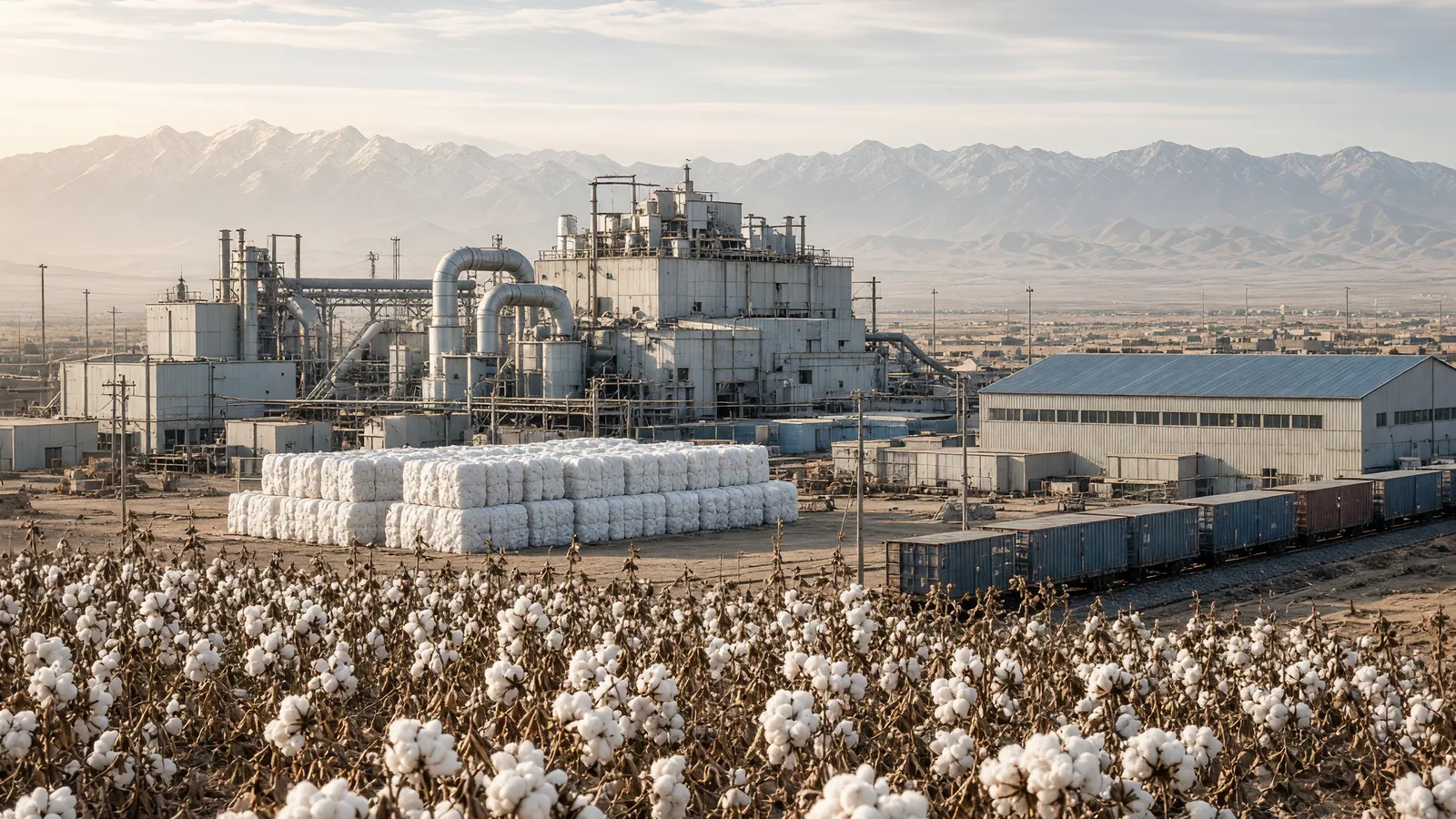
A cotton-ginning mill owner in southern Xinjiang dismissed the latest US import blacklist additions as unlikely to significantly affect the sector, signalling a sharp reversal from the anxiety that gripped the region's textile industry four years earlier.
In late July, Washington added 43 Chinese companies to its import blacklist over forced labour allegations in Xinjiang Uygur autonomous region, targeting several well-known food and apparel brands. The announcement triggered what the mill owner described as a "surprisingly calm" local response.
Industry rebounds after years of disruption
"At least for Xinjiang cotton, I feel the industry has weathered the storm," said the mill owner, who requested anonymity. He contrasted the muted reaction to the "panic triggered four years ago, when Xinjiang cotton became a geopolitical flashpoint between Washington and Beijing".
The region's cotton processing capacity has expanded substantially, with local processing rates now reaching 30 to 40 per cent, levels the mill owner characterised as "remarkably high". Development spans the full supply chain, from spinning and weaving to printing and dyeing, with companies "steadily expanding their scale," he added.
Diversification blunts sanction impact
The shift in confidence reflects years of export diversification by Chinese textile firms and a changing power balance between Washington and Beijing, particularly since the trade war that escalated last year. Chinese industries now appear to respond to US sanctions "with greater resilience and confidence," according to the report.
The mill owner's assessment captures what may be a broader transformation in how Chinese manufacturers view Western trade restrictions. "It felt like a sudden batch of companies was added out of nowhere … but it shouldn't have much of an impact on the sector," he said of the July blacklist expansion.
Source: South China Morning Post
Frequently asked questions
What did the US do to the Xinjiang cotton industry in late July?
Washington added 43 Chinese companies to its import blacklist over forced labour allegations in Xinjiang, targeting several well-known food and apparel brands.
How did the local textile industry react to the latest US blacklist additions?
The response was described as surprisingly calm, contrasting sharply with the panic that gripped the region four years earlier when Xinjiang cotton became a geopolitical flashpoint.
What has changed in Xinjiang's cotton processing capacity?
The region's cotton processing capacity has expanded substantially, with local processing rates now reaching 30 to 40 per cent, and development spanning the full supply chain from spinning and weaving to printing and dyeing.
Why is the Xinjiang cotton industry showing greater resilience to US sanctions?
The shift reflects years of export diversification by Chinese textile firms, a changing power balance between Washington and Beijing, and Chinese industries now responding to US sanctions with greater resilience and confidence.
You may also like
 Business
US Trade Official Blames China and US for Industrial Decline
 International
Thailand Gains Edge Over Vietnam as Chinese Firms Expand Overseas
 International
Beijing Approves Japanese Business Delegation Expansion From Five To Around 20
 International
EU Leaders Back Potential Trade “Kill Switch” Amid Record China Deficit
Most read
- 1
Air China Adds Extra Flight for Passengers Stranded in Fuel-Starved Cuba
- 2
Western disturbance to bring rain, hail and strong winds across north India
- 3
Yogi Adityanath Directs No Occupied Houses Be Demolished for Achhalda Bridge
- 4
Gwalior Temple Truck Crash Kills 12, Injures 28-29 Devotees During Navratri
- 5
Schools Shut in Five Tamil Nadu Districts, Including Chennai, Amid Heavy Rain
Comments
No comments yet. Be the first to comment.