
Chennai's Buckingham Canal gets Rs 876 crore revival plan for passenger boats
Tamil Nadu government reviews restoration of historic Buckingham Canal's 7.2km stretch, planning passenger boats and cargo services in Chennai.

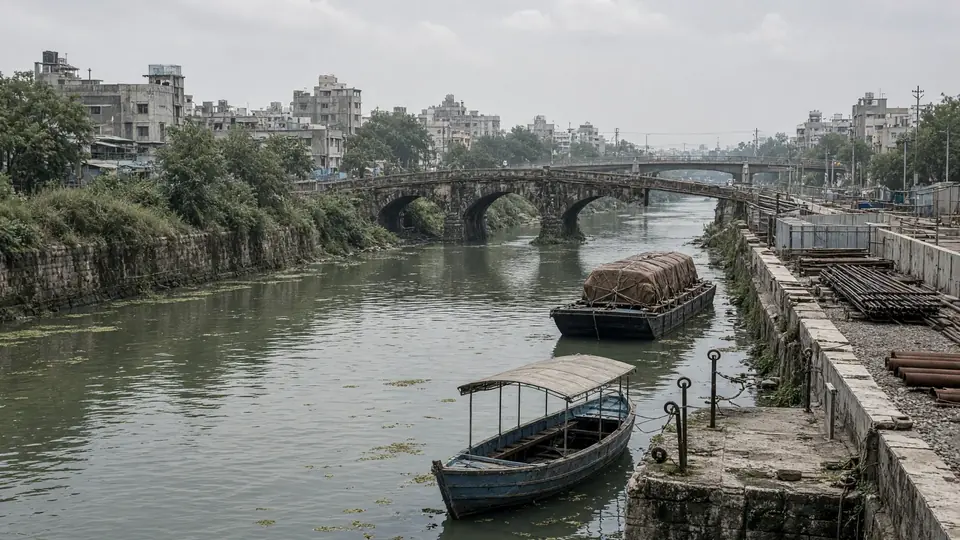
Government reviews Rs 876 crore plan to restore navigation along a 7.2-kilometre stretch of Chennai's historic waterway, aiming to introduce passenger boats, floating restaurants and cargo movement.
The Buckingham Canal has returned to the centre of policy attention three and a half months after the Tamilaga Vettri Kazhagam-led government assumed office in Tamil Nadu. The restoration plan focuses on the central portion of the canal, from Napier Bridge over the beach road to the Adyar river over Greenways Road in R.A. Puram, according to media reports examined by the State government.
From private enterprise to government asset
Originally constructed in 1806 by Basil Cochrane as a privately owned waterway called Cochrane Canal, the channel initially covered just under 18 kilometres, cutting through strips of land and shallow backwaters from Chennai to the Ennore estuary. The government took over the waterway in 1837, renaming it the East Coast Canal, and extended it to Dugarajapatnam in present-day Andhra Pradesh's Tirupati district by 1857. In 1878, it was rechristened the Buckingham Canal after the Governor of Madras, the Duke of Buckingham and Chandos.
At its peak, the 450-kilometre waterway, 250 kilometres in Andhra Pradesh and 200 kilometres in Tamil Nadu, formed a continuous navigable stretch of approximately 650 kilometres when linked with the Krishna and Godavari irrigation canal systems. Veteran Tamil poet Bharathidasan documented a boat journey he took with friends from Chennai to Mamallapuram along the canal in 1934. The waterway connected Chennai with Kakinada, Rajamahendravaram, Eluru, Vijayawada, Machilipatnam, Ongole and Nellore, operating 28 locks, 21 in the northern section and seven in the south, each measuring 45.5 metres by six metres.
Decades of pollution and neglect
In 1952-53, during the Madras Presidency, about 2.11 lakh tonnes of goods valued at Rs 3.75 crore were transported on the canal; nine years later, cargo had dropped to 1.47 lakh tonnes. Passenger traffic gradually declined as other transport modes gained popularity.
The Hindu noted in a February 18, 1951 editorial that the canal had become "a convenient receptacle for the drainage of Madras," though it could carry larger cargoes of grain, salt, fish, firewood, chunam shells and charcoal if improved. The newspaper added that passengers might use it more if the smell disappeared. Public Works Minister N. Ranga Reddi told the Legislative Council on March 19, 1953, that pollution sources had been located and a remedial programme had been fixed.
A government-constituted high-level committee recommended in 1960 that the Chennai Municipal Corporation be dissuaded from letting sewage into the waterway to make it "tidy and clean".
Infrastructure versus waterway
The canal fell into disuse during the 1970s and 1980s, prompting State and Central governments to implement the Mass Rapid Transit System along its alignment in central Chennai. Elevated MRTS structures came up on the canal banks, drastically shrinking the waterway's width for about 15 kilometres up to Thiruvanmiyur.
When authorities considered closing the central segment from the Cooum Lock near Sivananda Salai to the Adyar Lock near Greenways Salai and developing the land commercially, Chennai witnessed unusual floods in June 1996 that severely affected central areas including Mylapore. The government dropped the closure plan and decided to make the watercourse functional.
An intensive desilting programme during the Dravida Munnetra Kazhagam regime of 1996-2001 restored the original 23-metre width of a 14-kilometre southern stretch between Thoraipakkam and Muttukadu, making it navigable again. Then-Public Works Minister Duraimurugan inspected the improved stretch and took a boat ride along it, but there was no follow-up.
The Union government declared the 316-kilometre North Buckingham Canal and the 110-kilometre South Buckingham Canal as stretches of National Waterway 4 in April 2016. With the ruling TVK having secured the lion's share of Assembly constituencies along the canal, it now bears responsibility for making the waterway both a functional flood carrier and an effective transportation channel.
Source: The Hindu
Frequently asked questions
What is the Rs 876 crore plan for Buckingham Canal?
The government is reviewing a Rs 876 crore plan to restore navigation along a 7.2-kilometre stretch of Chennai's Buckingham Canal, focusing on the central portion from Napier Bridge to the Adyar river. The plan aims to introduce passenger boats, floating restaurants, and cargo movement.
When was the Buckingham Canal originally constructed?
The canal was originally constructed in 1806 by Basil Cochrane as a privately owned waterway called Cochrane Canal. The government took it over in 1837, renamed it the East Coast Canal, and later rechristened it the Buckingham Canal in 1878.
How large was the Buckingham Canal at its peak?
At its peak, the Buckingham Canal was a 450-kilometre waterway with 250 kilometres in Andhra Pradesh and 200 kilometres in Tamil Nadu. When linked with the Krishna and Godavari irrigation canal systems, it formed a continuous navigable stretch of approximately 650 kilometres and operated 28 locks.
Why did the Buckingham Canal fall into disuse?
The canal declined due to decades of pollution and neglect, with passenger and cargo traffic dropping significantly from the 1950s onwards as other transport modes gained popularity. It fell into disuse during the 1970s and 1980s, prompting governments to implement the Mass Rapid Transit System along its alignment instead.
You may also like
 National
If there can be housewives, there can be house husbands also; let
 Politics
Tamil Nadu Congress leader says he told Chennai Police about Veer
 Accident
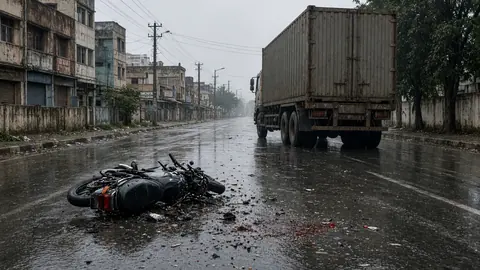
Delivery agent dies after container truck hits two-wheeler, flees scene
 Crime
Crime
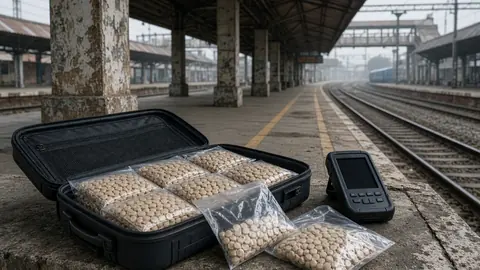
Police bust drug smuggling ring with 600 narcotic tablets seized at railway station
Most read
- 1
Tesla audits Chinese suppliers to scale up Optimus robot production
- 2
Former minister Lakhan Singh Rajput to inaugurate temple bhandara at Shri Chakreshwar Mahadev
- 3
Firozabad BSA finds four government schools locked during inspection
- 4
Tamil Nadu dengue cases fall for third consecutive year to 17,049
- 5
Social workers stage silent protest at Fufund railway station for train halts
Comments
No comments yet. Be the first to comment.