
BIMSTEC Emerges as Key Player in India's Regional Diplomacy
Explore the strategic significance of BIMSTEC and NATO's transformation in India's foreign policy for UPSC Mains GS Paper 2.

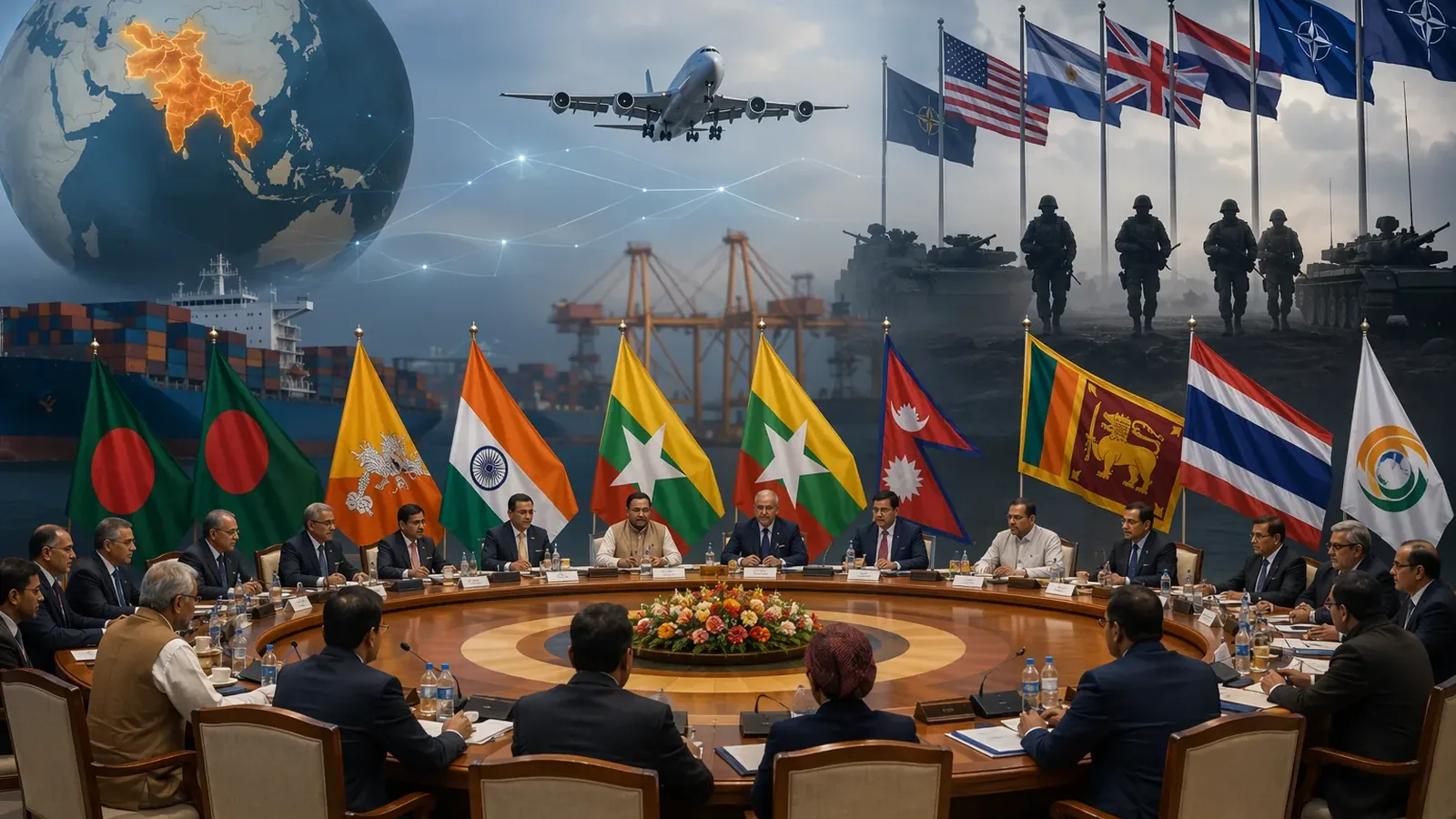
Understanding the Strategic Significance of BIMSTEC and NATO’s Transformation
The UPSC Essentials initiative has highlighted two critical topics for GS Paper 2: the strategic importance of BIMSTEC in India’s regional diplomacy and the evolving role of NATO amidst shifting global geopolitics. These topics not only align with the UPSC syllabus but also provide insights into India's foreign policy challenges and opportunities.
---
BIMSTEC: A Pillar of India’s Regional Strategy
The Bay of Bengal Initiative for Multi-Sectoral Technical and Economic Cooperation (BIMSTEC) has become a vital platform for India to advance its ‘Neighbourhood First’, ‘Act East’, and Indo-Pacific policies. Comprising Bangladesh, Bhutan, India, Myanmar, Nepal, Sri Lanka, and Thailand, the grouping bridges South Asia and Southeast Asia, particularly through Thailand and Myanmar.
Why BIMSTEC Matters to India
1. Regional Connectivity: Initiatives like the India-Myanmar-Thailand Trilateral Highway aim to enhance trade and people-to-people ties.
2. Maritime Security and Blue Economy: BIMSTEC supports India’s vision for a free, open, and rules-based Indo-Pacific.
3. Economic Integration: By fostering stronger regional value chains, the organisation complements India’s economic goals.
4. Alternative to SAARC: With SAARC's effectiveness hindered by India-Pakistan tensions, BIMSTEC offers a functional alternative for regional cooperation.
Challenges Hindering BIMSTEC
Despite its potential, BIMSTEC faces hurdles such as:
- Slow Implementation: Translating political intent into action remains a challenge.
- Connectivity Gaps: Infrastructure and logistical issues impede seamless integration.
- Geopolitical Complexities: Divergent national interests among member states often slow progress.
India’s success in leveraging BIMSTEC will depend on addressing these challenges to create a secure and prosperous Bay of Bengal region.
---
NATO’s Transformation and India’s Strategic Autonomy
NATO’s evolution from a Cold War-era military alliance to a broader security and technology partnership has significant implications for India. This transformation coincides with the deepening geopolitical divide between Russia and the West, testing India’s policy of strategic autonomy.
India’s Evolving Partnerships
1. With the United States: India has expanded cooperation in defence manufacturing, marine security, and supply chain resilience.
2. With Europe: Initiatives like the India-EU Security and Defence Partnership and the Trade and Technology Council have strengthened ties. Europe’s increased defence spending also opens opportunities for Indian defence firms under the ‘Make in India’ initiative.
Balancing Act Amidst Geopolitical Shifts
India’s long-standing defence ties with Russia pose challenges as NATO strengthens its role in global security. However, India’s approach is no longer about equidistance but about enhancing strategic flexibility, leveraging partnerships with the West while maintaining its sovereignty and historical ties with Russia.
---
Why These Topics Matter for UPSC Aspirants
Both BIMSTEC and NATO’s transformation underscore the complexities of India’s foreign policy in a multipolar world. For UPSC aspirants, understanding these dynamics is crucial for tackling questions on regional groupings, strategic autonomy, and India’s role in global geopolitics. These themes also highlight the importance of balancing regional priorities with global ambitions, a key aspect of India’s evolving international strategy.
Source: Indian Express
Frequently asked questions
What is BIMSTEC?
BIMSTEC stands for the Bay of Bengal Initiative for Multi-Sectoral Technical and Economic Cooperation, comprising Bangladesh, Bhutan, India, Myanmar, Nepal, Sri Lanka, and Thailand.
How does BIMSTEC support India's regional diplomacy?
BIMSTEC supports India's regional diplomacy by enhancing regional connectivity, promoting maritime security, fostering economic integration, and serving as an alternative to SAARC.
What challenges does BIMSTEC face?
BIMSTEC faces challenges such as slow implementation of initiatives, connectivity gaps, and geopolitical complexities among member states.
What is the significance of NATO's transformation for India?
NATO's transformation impacts India by testing its policy of strategic autonomy amidst a deepening geopolitical divide between Russia and the West.
How is India enhancing its partnerships with the United States and Europe?
India is enhancing partnerships with the U.S. through defense cooperation and with Europe via the India-EU Security and Defence Partnership and increased defense spending opportunities.
You may also like
 National
Former RAW chief says India's spy agencies must lead geopolitical offence and defence
 Politics
China and India can coexist despite rivalry, Xi tells Modi at summit
 Politics
Convergence of space, AI, quantum tech will define 21st century geopolitical power: Minister
 Uttar Pradesh
The Success Story: IPS officer left dentistry to crack UPSC, now inspiring civil services aspirants
Most read
- 1
Air China Adds Extra Flight for Passengers Stranded in Fuel-Starved Cuba
- 2
Western disturbance to bring rain, hail and strong winds across north India
- 3
Yogi Adityanath Directs No Occupied Houses Be Demolished for Achhalda Bridge
- 4
Gwalior Temple Truck Crash Kills 12, Injures 28-29 Devotees During Navratri
- 5
Schools Shut in Five Tamil Nadu Districts, Including Chennai, Amid Heavy Rain
Comments
No comments yet. Be the first to comment.