
Convergence of space, AI, quantum tech will define 21st century geopolitical power: Minister
Union Minister says convergence of space tech, AI, quantum computing will determine 21st century geopolitical dominance and economic leadership.

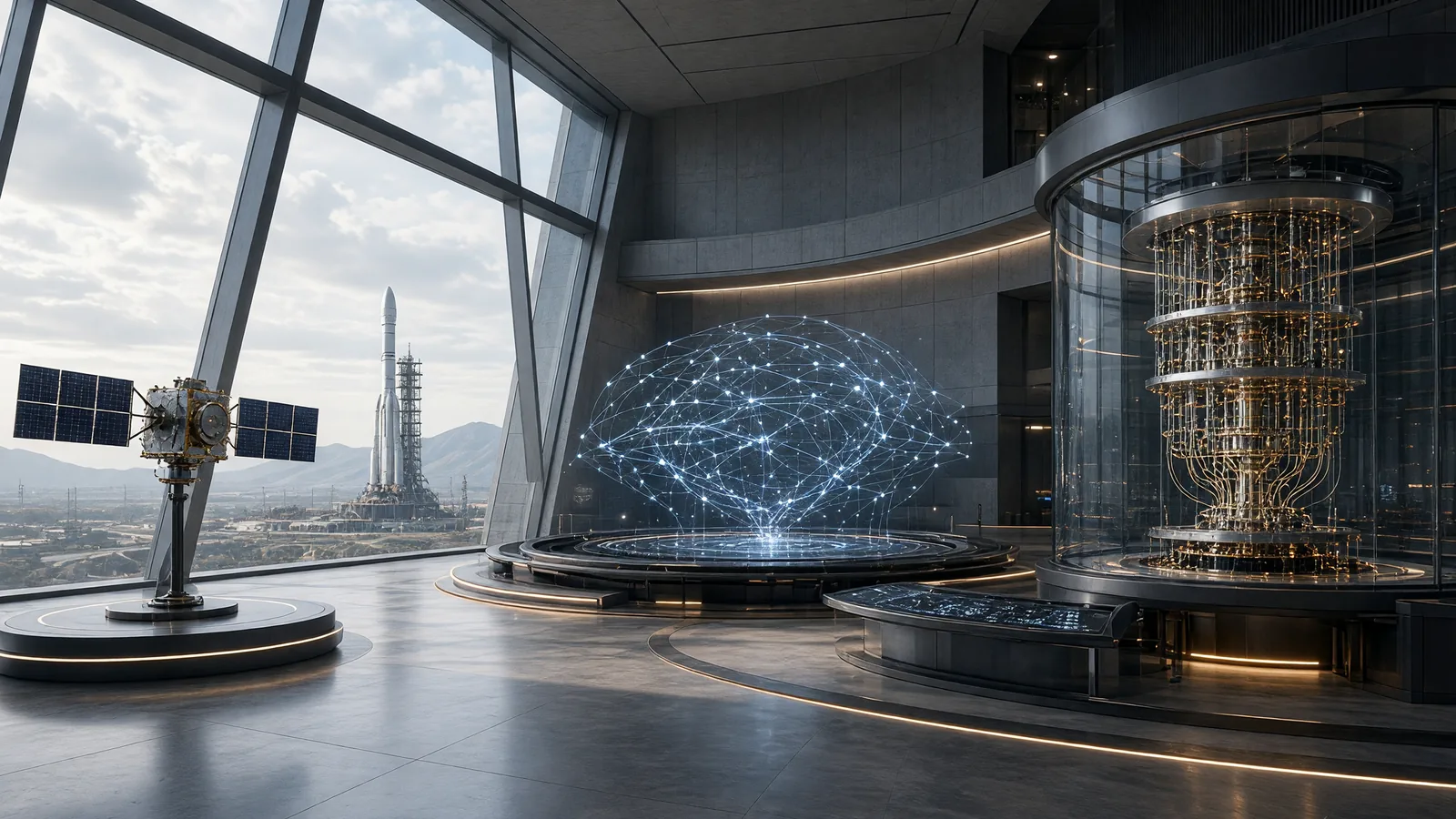
The convergence of space technology, artificial intelligence, quantum computing, robotics, semiconductors and high-performance computing will determine which nations command geopolitical power in the 21st century, Union Minister Gajendra Singh Shekhawat said Sunday.
Speaking at the 3rd National Space Day in Ahmedabad, the Union Culture and Tourism Minister told an audience at the Space Applications Centre that technological leadership in these fields will translate directly into economic dominance and global influence.
Convergence, not isolation, will define power
"Just as science is ultimately integrating in the form of a pyramid, in the coming years, all these technological streams will no longer remain separate. Their convergence will determine the direction of human life, the global economy and geopolitical positioning," Mr. Shekhawat said. He added that the nation possessing this convergence "will have not only technological leadership in the 21st century, but also economic leadership and the capacity to inspire".
The Minister warned that global competition and geopolitical conflict will centre on disrupting technological capabilities, urging India to work with determination while keeping these challenges in mind.
Private sector is 'democratisation,' not dilution
Mr. Shekhawat addressed concerns that opening the space sector to private players might diminish ISRO's importance, calling such fears unfounded. When the government opened the sector and created IN-SPACe to enable and supervise private entities, "some people had doubts" about commercialisation reducing ISRO's role, he said.
"Privatisation of space is the 'democratisation of space opportunities,'" Mr. Shekhawat asserted, arguing that private participation meant "multiplying the capacities, opportunities and strength of an institution like ISRO" rather than reducing its role.
He said India has shifted from an organisation-centric model to an ecosystem-centric one, with private industry, startups, academia and investors now working together.
Debris, cyber threats and AI ethics loom
The Minister flagged future challenges including space debris, cybersecurity, data security and the responsible use of artificial intelligence.
ISRO Chairman V. Narayanan, who attended the Department of Science-organised event alongside Gujarat Science and Technology Minister Arjun Modhwadia and IN-SPACe Chairman Dr. Pawan Kumar Goenka, recalled that August 23, 2023 marked Chandrayaan-3's historic soft landing near the moon's south pole. He thanked Prime Minister Narendra Modi for designating the date as National Space Day.
Mr. Narayanan noted that space-sector reforms in 2020 spurred a surge in startups, with around 440 now operating in the sector. He outlined targets including the Gaganyaan mission, Chandrayaan-4 and Chandrayaan-5, missions to Mars and Venus, a plan to launch over 300 satellites in six to seven years with startup participation, and establishing an Indian Space Station by 2035.
Source: The Hindu
Frequently asked questions
What technologies will determine geopolitical power in the 21st century?
According to Union Minister Gajendra Singh Shekhawat, the convergence of space technology, artificial intelligence, quantum computing, robotics, semiconductors, and high-performance computing will determine which nations command geopolitical power in the 21st century. Technological leadership in these fields will translate directly into economic dominance and global influence.
Does opening the space sector to private companies diminish ISRO's role?
No. Minister Shekhawat stated that privatization of space is the 'democratisation of space opportunities,' not a dilution of ISRO's importance. Private participation multiplies the capacities, opportunities and strength of institutions like ISRO rather than reducing their role.
What challenges does India face in the space sector?
Minister Shekhawat flagged future challenges including space debris, cybersecurity threats, data security concerns, and the responsible use of artificial intelligence. He also warned that global competition will centre on disrupting technological capabilities.
What are India's upcoming space missions and targets?
ISRO Chairman V. Narayanan outlined targets including the Gaganyaan mission, Chandrayaan-4 and Chandrayaan-5, missions to Mars and Venus, launching over 300 satellites in six to seven years with startup participation, and establishing an Indian Space Station by 2035.
You may also like
 Technology
Canada Eyes Expanded Karnataka Partnerships in Quantum Computing, AI, Aerospace, Defence
 Technology
India's engineers evolve beyond coding to shape global solutions, AI transforms role
 Technology
AI can elevate ordinary workers to exceptional levels, says Bharat Biotech chief
 Technology
Teachers shape character and values in ways technology cannot, says Yathindra in Mysuru
Most read
- 1
Air China Adds Extra Flight for Passengers Stranded in Fuel-Starved Cuba
- 2
Western disturbance to bring rain, hail and strong winds across north India
- 3
Yogi Adityanath Directs No Occupied Houses Be Demolished for Achhalda Bridge
- 4
Gwalior Temple Truck Crash Kills 12, Injures 28-29 Devotees During Navratri
- 5
Schools Shut in Five Tamil Nadu Districts, Including Chennai, Amid Heavy Rain
Comments
No comments yet. Be the first to comment.