
Wall Street rebounds as oil prices fall after US-Iran deal
US stock markets recover as oil prices fall post US-Iran deal, boosting investor confidence. S&P 500 and Dow gain significantly.

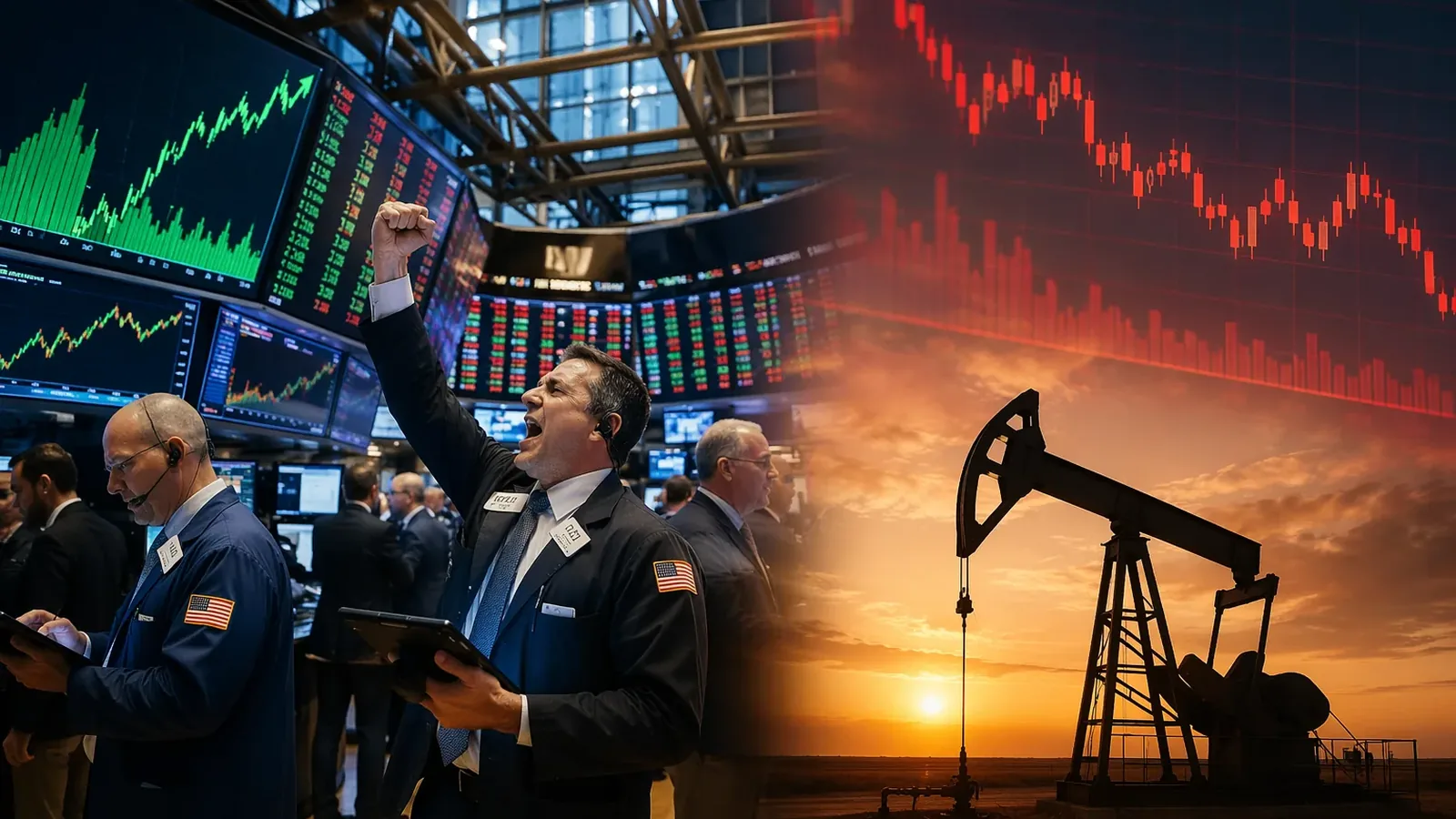
US stock markets bounced back on Thursday, recovering from the previous session's losses as falling oil prices and easing Treasury yields bolstered investor confidence. This came in the wake of a US-Iran agreement aimed at ending hostilities and reopening the Strait of Hormuz. The S&P 500 rose 1% in early trading, while the Dow Jones Industrial Average gained 383 points. The Nasdaq Composite climbed 1.2%, driven by strong performance in technology stocks.
The market recovery followed a sharp retreat on Wednesday, which was triggered by concerns that the US Federal Reserve might still raise interest rates later this year to combat persistent inflation. Meanwhile, oil prices continued to decline after the US and Iran signed an initial agreement that sets a 60-day negotiation period for reaching a final settlement on Iran's nuclear program. Brent crude dropped $1.19 to $78.36 per barrel, and US benchmark crude fell $1.56 to $74.45 per barrel.
Despite the recent decline, oil prices remain above pre-war levels of around $70 per barrel but are significantly lower than the $100-plus highs seen weeks ago. The US-Iran agreement includes provisions for Iran to resume oil exports through a waiver of US-backed sanctions, while Tehran has agreed to reduce its stockpile of highly enriched uranium during the negotiation period.
Technology stocks led the gains on Wall Street, with Intel surging 8.7% after US President Donald Trump announced that the chipmaker had agreed to produce chips for Apple domestically. This development followed reports that Apple was considering price hikes due to memory chip shortages. However, SpaceX continued its downward trend, falling 3.2% in premarket trading after a 4.9% drop on Wednesday. Lower energy prices also provided a boost to travel-related stocks.
Airlines such as Delta Air Lines, United Airlines, and American Airlines saw their shares rise between 1.5% and 2%, while cruise operators Royal Caribbean and Carnival posted gains exceeding 2%. Investors were also digesting signals from the Federal Reserve after its latest policy meeting. Fed Chair Kevin Warsh refrained from offering a specific forecast for interest rates in 2026 but noted that the central bank is reassessing how it communicates with markets and households.
Of the 18 members of the Fed's rate-setting committee, nine expressed support for raising interest rates this year, with six advocating for two or more quarter-point hikes. While higher interest rates are intended to curb inflation, they can also dampen economic activity and weigh on asset prices. European markets traded lower, with Germany's DAX slipping 0.1%, France's CAC 40 down 0.2%, and Britain's FTSE 100 losing 1%.
In Asia, Japan's Nikkei 225 surged 1.7% to close at a record high of 71,053.49, buoyed by optimism over a potential end to the conflict and continued enthusiasm for AI-related stocks. "This is a very broad-based rally... showing some confidence that the Japanese economy is going to recover further," said Neil Newman, head of strategy at Astris Advisory Japan. South Korea's Kospi also climbed 2.3% to a record high, driven by gains in technology giants Samsung Electronics and SK Hynix.
Frequently asked questions
Why did Wall Street rebound on Thursday?
Wall Street rebounded due to falling oil prices and easing Treasury yields following a US-Iran agreement aimed at ending hostilities and reopening the Strait of Hormuz. The S&P 500 rose 1%, the Dow Jones gained 383 points, and the Nasdaq Composite climbed 1.2%.
What was the impact of the US-Iran deal on oil prices?
Oil prices declined after the US and Iran signed an initial agreement with a 60-day negotiation period. Brent crude dropped $1.19 to $78.36 per barrel, and US benchmark crude fell $1.56 to $74.45 per barrel. The deal includes provisions for Iran to resume oil exports through a waiver of US-backed sanctions.
Which sectors performed best in Thursday's market?
Technology stocks led the gains, with Intel surging 8.7% after announcing a domestic chip production deal with Apple. Travel-related stocks also performed well, with airlines like Delta and United rising 1.5% to 2%, and cruise operators Royal Caribbean and Carnival posting gains exceeding 2%.
What is the Federal Reserve's stance on interest rates?
Of the 18 Fed committee members, nine expressed support for raising interest rates this year, with six advocating for two or more quarter-point hikes. Fed Chair Kevin Warsh refrained from offering a specific forecast for 2026 interest rates but noted the central bank is reassessing how it communicates with markets.
You may also like



Most read
- 1
Air China Adds Extra Flight for Passengers Stranded in Fuel-Starved Cuba
- 2
Western disturbance to bring rain, hail and strong winds across north India
- 3
Yogi Adityanath Directs No Occupied Houses Be Demolished for Achhalda Bridge
- 4
Gwalior Temple Truck Crash Kills 12, Injures 28-29 Devotees During Navratri
- 5
Schools Shut in Five Tamil Nadu Districts, Including Chennai, Amid Heavy Rain
Comments
No comments yet. Be the first to comment.