
Vietnamese customs seizes 1.2 tonnes of elephant ivory hidden in timber logs
Vietnamese authorities uncovered nearly 1.2 tonnes of smuggled African elephant ivory hidden in timber logs at Quy Nhon port, exposing transnational traffi

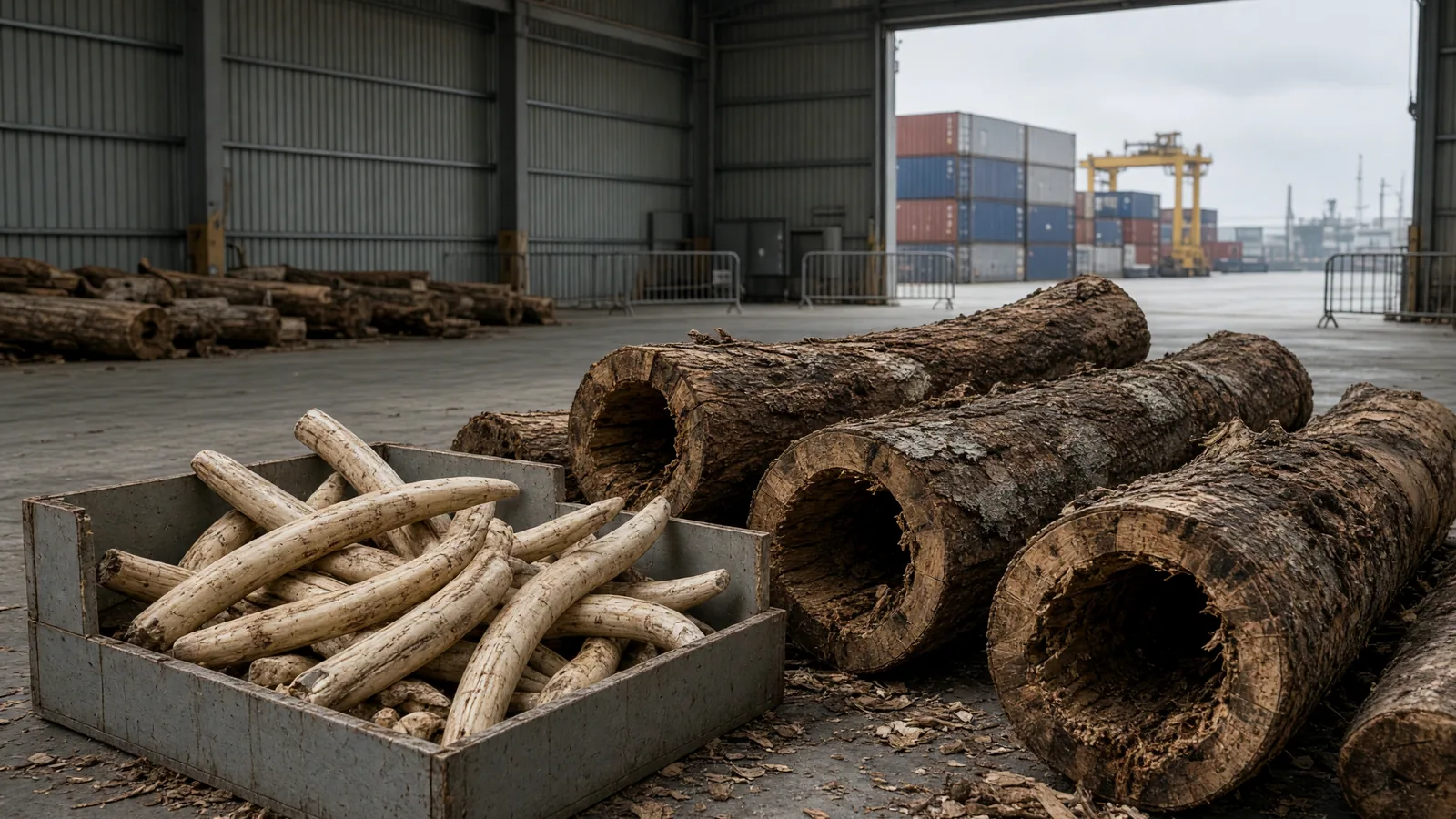
Vietnamese customs uncovered nearly 1.2 tonnes of elephant ivory hidden inside hollowed-out timber logs at Quy Nhon port in August, marking the largest seizure at the coastal facility and exposing the mechanics of a transnational smuggling network that continues to funnel African ivory into Asia despite China's domestic ban.
The contraband travelled 9,000 nautical miles from an inland port on the Congo River, making stops in Sri Lanka and Singapore before reaching Vietnam's central coast three months later. Customs officers drilled into the logs on August 6 after port scanners flagged hollow cavities, discovering 221 pieces of sawn tusk sealed inside compartments with wax.
Syndicates exploit Vietnam as transit hub
The seizure points to Vietnam's role as a critical waypoint for ivory moving from Africa to markets in China, where the tusks could command millions of dollars. Tracking data reviewed by This Week in Asia mapped the shipment's route across multiple continents, revealing the logistical complexity traffickers employ to evade detection.
Between 2009 and 2018, Vietnamese authorities seized 56 tonnes of ivory within the country's borders, according to the Environmental Investigation Agency, an international NGO that monitors wildlife crime. An additional 20 tonnes linked to Vietnam were intercepted in other countries during the same period, underscoring the scale of the networks operating through the Southeast Asian nation.
The August bust was far from an isolated incident, smuggled ivory has been uncovered repeatedly at Vietnamese ports, despite regulatory efforts. The use of timber shipments as cover and the three-week gap between the cargo's arrival and discovery illustrate the challenges customs agencies face in disrupting these supply chains.
Source: South China Morning Post
Frequently asked questions
How much elephant ivory was seized at Quy Nhon port in August?
Vietnamese customs seized nearly 1.2 tonnes of elephant ivory hidden inside hollowed-out timber logs at Quy Nhon port in August, marking the largest seizure at the coastal facility.
Where did the confiscated ivory originate?
The contraband travelled 9,000 nautical miles from an inland port on the Congo River, making stops in Sri Lanka and Singapore before reaching Vietnam's central coast three months later.
Why is Vietnam a key hub for ivory smuggling?
Vietnam serves as a critical waypoint for ivory moving from Africa to markets in China, where the tusks could command millions of dollars. Syndicates exploit Vietnam as a transit hub despite China's domestic ban on ivory.
How much ivory linked to Vietnam has been seized historically?
Between 2009 and 2018, Vietnamese authorities seized 56 tonnes of ivory within the country's borders, with an additional 20 tonnes linked to Vietnam intercepted in other countries during the same period, according to the Environmental Investigation Agency.
How did customs detect the hidden ivory?
Customs officers drilled into the logs on August 6 after port scanners flagged hollow cavities, discovering 221 pieces of sawn tusk sealed inside compartments with wax.
You may also like
 Crime
Crime
Hong Kong seizes 535kg cannabis in largest seaborne drug bust ever
 International
Thailand Gains Edge Over Vietnam as Chinese Firms Expand Overseas
 National
Pandora Opens $150 Million Vietnam Factory, Its First Outside Thailand
 Crime
Crime
Forest officials arrest two poachers with spotted deer meat in Bahraich wildlife division
Most read
- 1
Air China Adds Extra Flight for Passengers Stranded in Fuel-Starved Cuba
- 2
Western disturbance to bring rain, hail and strong winds across north India
- 3
Yogi Adityanath Directs No Occupied Houses Be Demolished for Achhalda Bridge
- 4
Gwalior Temple Truck Crash Kills 12, Injures 28-29 Devotees During Navratri
- 5
Schools Shut in Five Tamil Nadu Districts, Including Chennai, Amid Heavy Rain
Comments
No comments yet. Be the first to comment.