
US and China race to build self-improving artificial intelligence systems
Both nations pursue recursive self-improvement technology, where AI systems develop and train themselves. OpenAI and Chinese firms compete in this transfor

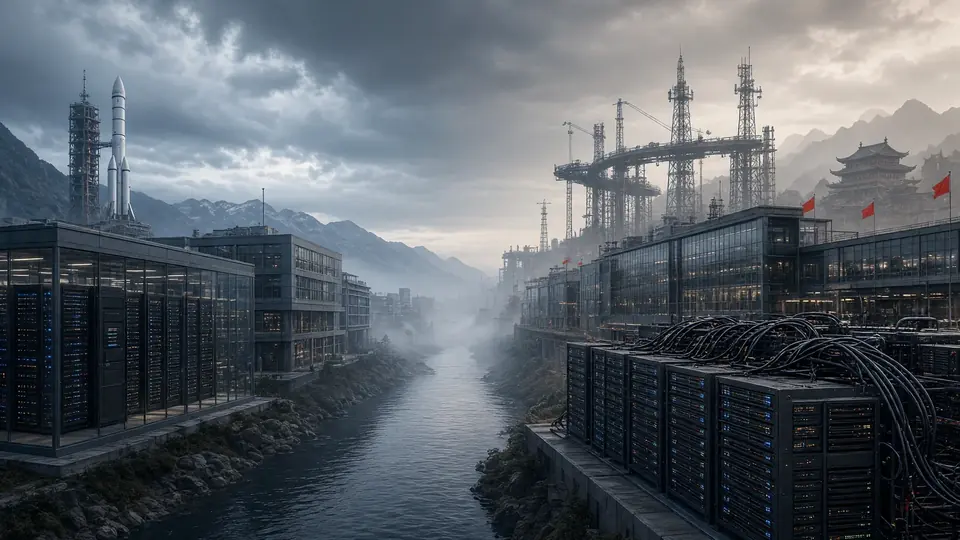
The race to develop artificial intelligence systems capable of building and improving themselves has emerged as the defining frontier in the US-China technology competition, with both nations viewing the capability as potentially transformative.
Autonomous AI development becomes new battleground
Leading AI companies in both the United States and China are increasingly deploying advanced models to write code, design experiments, and develop training techniques aimed at creating more powerful successor systems. The industry has termed this ambition recursive self-improvement, or RSI, the creation of AI systems that can train themselves without human intervention.
The technology holds the potential to fundamentally reshape the AI landscape. As AI systems contribute to building more capable successors, which in turn become better at improving the next generation, the process could create an accelerating feedback loop that propels the evolution of AI onto an entirely new trajectory.
OpenAI outlines research goals
In a blog post last week, OpenAI stated it aimed to build an automated AI researcher capable of advancing deep learning research, though the company acknowledged it remained unsure "how to safely get all the way to aligned, full RSI". The company described its GPT-6 Astra model, released in early September, as "the world's most intelligent and aligned model".
Both the United States and China view recursive self-improvement as a game-changer in the AI race. The competition raises questions about which side will achieve the capability first, and whether the technology will pose broader risks.
Source: South China Morning Post
Frequently asked questions
What is recursive self-improvement (RSI) in AI?
Recursive self-improvement (RSI) refers to AI systems that can train themselves and build more capable successor systems without human intervention. As these AI systems create better versions of themselves, the process creates an accelerating feedback loop that propels AI evolution forward.
Why are the US and China competing to develop self-improving AI?
Both nations view recursive self-improvement as a potentially transformative technology that could be a game-changer in the AI race. The competition centers on which side will achieve this capability first and what broader implications it may have.
What is OpenAI's approach to autonomous AI development?
OpenAI aims to build an automated AI researcher capable of advancing deep learning research. The company released its GPT-6 Astra model in early September, describing it as the world's most intelligent and aligned model, though it acknowledged uncertainty about how to safely achieve full recursive self-improvement.
How are AI companies currently working toward self-improving systems?
Leading AI companies in both the United States and China are deploying advanced models to write code, design experiments, and develop training techniques aimed at creating more powerful successor systems.
You may also like
 International
US and China seek stability amid race for AI and semiconductor dominance
 International
US and China should establish AI safety standards like nuclear-era safeguards, says lawmaker
 Technology
KL Deemed University partners with HCL to launch agentic AI campus for students
 Technology
Asian investors now demand AI revenue proof, not just tech exposure, BofA finds
Most read
- 1
Tesla audits Chinese suppliers to scale up Optimus robot production
- 2
Former minister Lakhan Singh Rajput to inaugurate temple bhandara at Shri Chakreshwar Mahadev
- 3
Firozabad BSA finds four government schools locked during inspection
- 4
Tamil Nadu dengue cases fall for third consecutive year to 17,049
- 5
Social workers stage silent protest at Fufund railway station for train halts
Comments
No comments yet. Be the first to comment.