
UPI now processes 7,600 transactions per second across India's banking network
Discover the technical infrastructure and step-by-step process behind UPI transactions in India, handling 7,600+ payments per second.

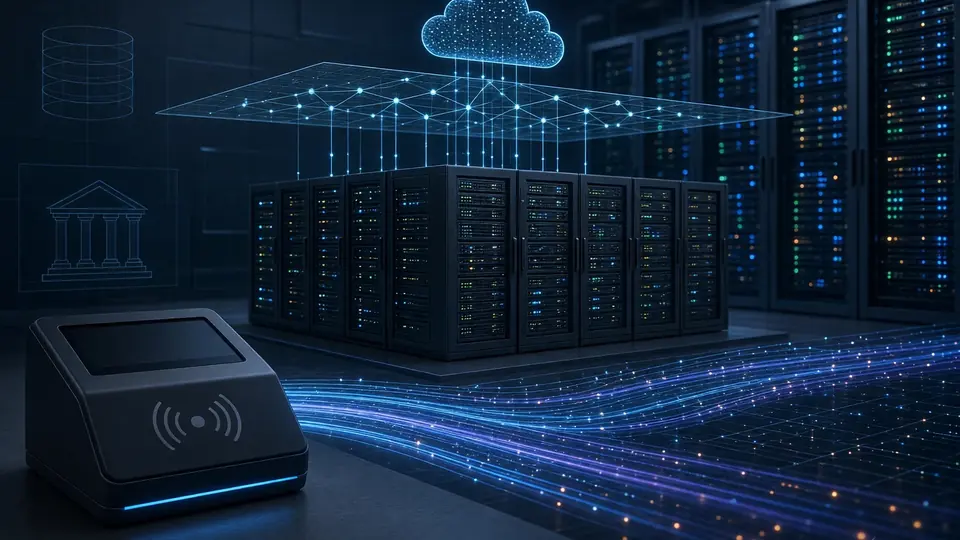
The Unified Payments Interface now handles nearly 7,600 transactions every second in India, powered by a multi-layered infrastructure that connects hundreds of banks through the National Payments Corporation of India's switching and routing system.
How a single UPI transaction unfolds
When a user initiates a payment, their UPI app, Google Pay, PhonePe, or similar, receives the recipient's UPI ID, a two-part identifier combining a unique name and bank handle, such as shankar@flutebank. This ID serves as an alias for the recipient's actual bank account.
The app sends a payment request to the NPCI, which operates UPI and links approximately 730 participating banks. The system responds by prompting the sender to authenticate the transaction using their UPI PIN.
Once authenticated, the sender's bank verifies the account's validity, available balance, transaction limits, and checks for fraudulent activity. If cleared, the bank notifies the NPCI system it is ready to proceed.
The NPCI routes the transaction to the recipient's bank, which credits the designated account. The sender's bank debits the amount, the recipient's bank confirms the addition, and the NPCI relays confirmation back through the sender's bank to the UPI app.
The technical architecture beneath
This simplified flow conceals substantial complexity. Apps communicate with TPAP/PSP infrastructure, where TPAP refers to companies providing payment apps and PSP to banks or companies connecting apps to NPCI systems. Banks exchange multiple messages during each transaction, covering payment initiation, authentication, authorization, debit confirmation, credit confirmation, and status updates at each stage.
On the hardware side, UPI requires thousands of servers for transaction processing, databases, API calls, monitoring, and security systems, along with high-speed network switches, routers connecting banks and data centers, and redundant power supplies and cooling systems. Software components include APIs, transaction switches and routers, databases, message queues, encryption and authentication services, fraud detectors, reconciliation software, and disaster recovery protocols.
UPI IDs and multiple aliases
Banks create and maintain UPI IDs following their own rules. When two account holders share a name, banks distinguish them with numbers, selvi1@violinbank and selvi2@violinbank. Users may customize their IDs, such as selvithestar@violinbank. A single bank account can support multiple aliases, all encoded in QR codes.
Growth and international expansion
The RBI's then-Governor Raghuram Rajan piloted UPI in April 2016 with 21 banks, with Infosys co-founder Nandan Nilekani serving as advisor. The system crossed 100 crore transactions monthly in October 2019.
NPCI International Payments, a wholly owned NPCI subsidiary, has enabled UPI in Bhutan (2021), Singapore (2021), the UAE (2022), France, Mauritius, Sri Lanka and Nepal (2024), Qatar (2025), and Cambodia, Greece and the Maldives in 2026. Work is reportedly underway to make UPI interoperable with payment systems in Indonesia, Malaysia, and Thailand.
In the 2025-26 financial year, UPI processed 24,160 crore transactions worth ₹314 lakh crore, representing 85% of India's digital payment transactions by volume and 49% of all real-time payments worldwide in 2025, according to the International Monetary Fund.
Source: The Hindu
Frequently asked questions
How many transactions does UPI process per second?
UPI now processes nearly 7,600 transactions every second across India's banking network, powered by a multi-layered infrastructure connecting hundreds of banks through the National Payments Corporation of India's switching and routing system.
What is a UPI ID and how does it work?
A UPI ID is a two-part identifier combining a unique name and bank handle (such as shankar@flutebank) that serves as an alias for the recipient's actual bank account. Users can customize their IDs, and a single bank account can support multiple aliases encoded in QR codes.
How does a UPI transaction get processed?
When a user initiates a payment, the UPI app sends a request to NPCI, which prompts the sender to authenticate with their UPI PIN. The sender's bank verifies the account and checks for fraud. If approved, NPCI routes the transaction to the recipient's bank, which credits the account while the sender's bank debits it. NPCI then confirms the transaction back to the sender's app.
How many banks participate in UPI?
Approximately 730 participating banks are linked through UPI via the National Payments Corporation of India's switching and routing system.
Which countries have UPI available outside India?
NPCI International Payments has enabled UPI in Bhutan (2021), Singapore (2021), the UAE (2022), France, Mauritius, Sri Lanka and Nepal (2024), Qatar (2025), and Cambodia, Greece and the Maldives in 2025.
You may also like




Most read
- 1
Tesla audits Chinese suppliers to scale up Optimus robot production
- 2
Former minister Lakhan Singh Rajput to inaugurate temple bhandara at Shri Chakreshwar Mahadev
- 3
Firozabad BSA finds four government schools locked during inspection
- 4
Tamil Nadu dengue cases fall for third consecutive year to 17,049
- 5
Social workers stage silent protest at Fufund railway station for train halts
Comments
No comments yet. Be the first to comment.