
Texas Students Launch Drone Startup with $1.85 Million Funding for Medical Logistics
Rice University students launch Haast Autonomous to revolutionize healthcare logistics with drones, raising $1.85 million for life-saving deliveries.

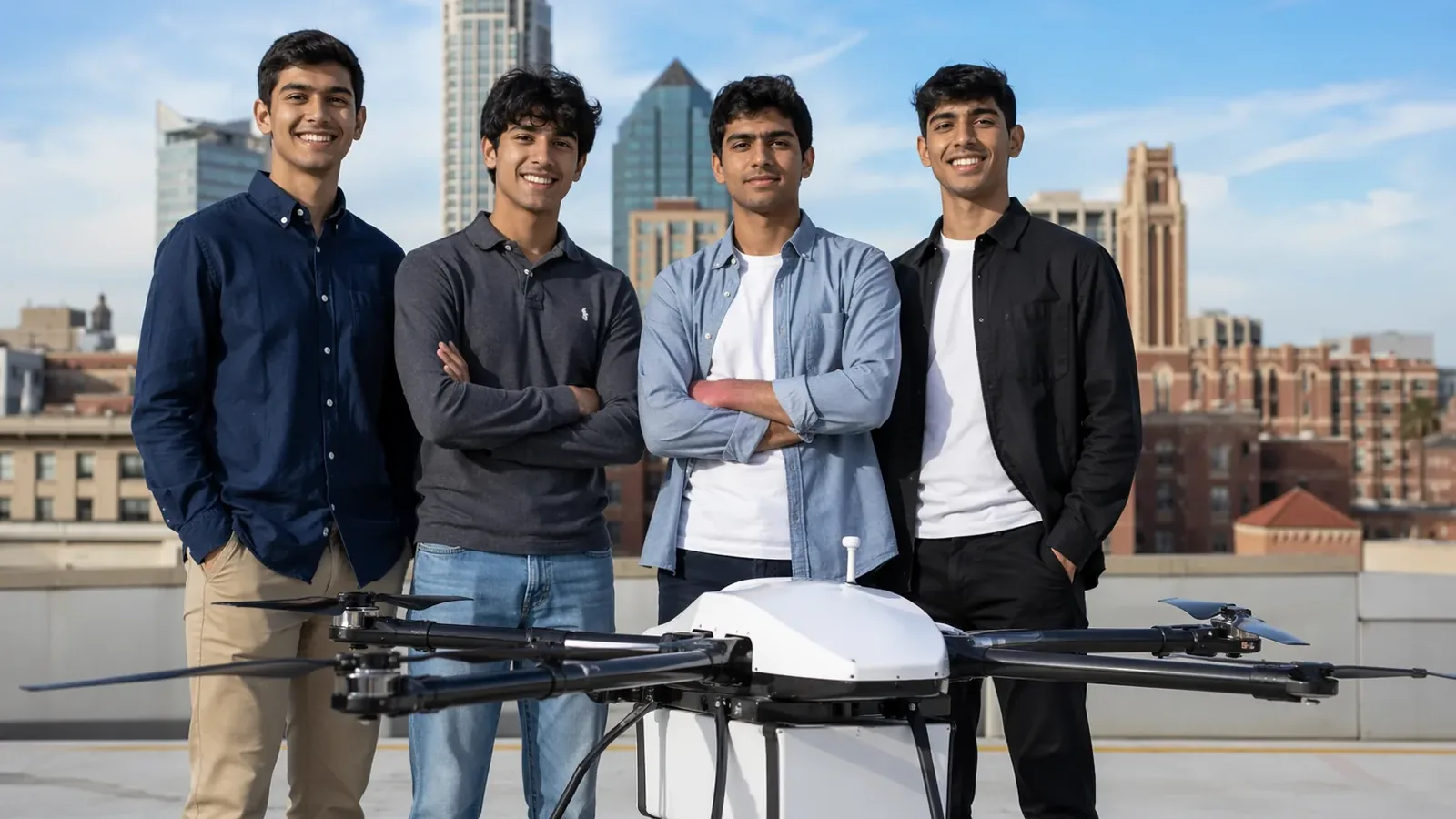
Seven engineering students from Rice University in Texas have turned a classroom project into a promising startup, Haast Autonomous, aimed at revolutionizing healthcare logistics. The company has raised $1.85 million in pre-seed funding to develop a drone-based system capable of quickly and safely transporting critical medical supplies between hospitals. The founders argue that current healthcare logistics rely too heavily on road couriers and expensive air transport, leading to delays that could jeopardize patient care.
Haast Autonomous combines custom-built drones with advanced software for dispatching and tracking deliveries in real time. The team plans to dedicate their first year after graduation to working full-time on the venture, with pilot trials scheduled to begin in early 2027. The startup was co-founded by graduating seniors Ege Halac, Jason Chen, and Santiago Brent, who initially developed the concept through Rice University's Liu Idea Lab for Innovation and Entrepreneurship Summer Venture Studio. They later built prototypes at the Oshman Engineering Design Kitchen, joined by fellow engineering students Felix Hasson, Ethan Javedan, Kenna Sanders, and Caden Schmidt.
The need for Haast's solution has grown as healthcare systems become more centralized, with specialized laboratories, blood banks, and diagnostic services concentrated in fewer locations. Transporting biological samples and emergency supplies often depends on road couriers or costly aircraft, which can introduce delays. Haast’s platform aims to address this by ensuring faster, more reliable delivery of critical materials to doctors and patients when every second counts.
The drones are designed for efficiency and versatility. They can take off and land vertically, making them suitable for use at existing hospital facilities, and transition to horizontal flight for longer distances. The current prototype can carry at least five pounds of cargo over a range of 50 to 62 miles. The payload compartment is engineered to maintain stable temperature, pressure, vibration, and tilt, enabling the safe transport of sensitive items such as patient samples, antivenom, poisoning kits, and specialized therapies.
Beyond the drone itself, Haast’s system includes software that allows hospitals to request flights, track shipments in real time, and maintain detailed chain-of-custody records. The software also manages aircraft availability, flight telemetry, and compliance with airspace regulations. The team envisions operating a fleet of drones rather than individual units to build a robust transport network.
The startup has already achieved significant milestones. In just 16 weeks, the team produced 13 iterations of their aircraft using 3D printing technology, keeping prototype costs under $1,000. Their rapid testing and iterative design process have allowed them to refine the drones while maintaining affordability.
Haast's innovation has earned recognition on and off campus. At the 2026 Oshman Engineering Design Showcase and Competition, the team won the Best Aerospace or Transportation Technology award and placed third for the Willy Revolution Award for Outstanding Innovation. They also received the Chan-Kang Family Prize for Bold Ambition and the Healthcare Innovations Prize at the 2026 H. Albert Napier Rice Launch Challenge.
The startup has engaged with hundreds of potential customers, secured letters of intent, and partnered with Airspace Link to facilitate autonomous flight operations. While the founders initially focused on transporting transplant organs, they soon realized their platform could address a broader range of mission-critical logistics needs across industries.
With $1.85 million in funding, Haast plans to launch pilot trials in early 2027 and move toward commercial deployment later that year. The team believes their combination of advanced aircraft and logistics software could establish one of the fastest and most secure transport networks for sensitive cargo, potentially transforming healthcare and beyond.
Frequently asked questions
What is Haast Autonomous and what problem does it solve?
Haast Autonomous is a medical logistics startup founded by seven Rice University engineering students. It uses custom-built drones to transport critical medical supplies between hospitals, addressing delays caused by current reliance on road couriers and expensive air transport.
How much funding has Haast Autonomous raised?
The company has raised $1.85 million in pre-seed funding to develop and launch its drone-based medical delivery system.
What can the Haast drone carry and how far can it travel?
The current prototype can carry at least five pounds of cargo over a range of 50 to 62 miles. It features a temperature, pressure, and vibration-controlled payload compartment designed for transporting sensitive items like patient samples, antivenom, and specialized therapies.
When does Haast plan to begin pilot trials?
The company has scheduled pilot trials to begin in early 2027, with the founding team dedicating their first year after graduation to working full-time on the venture.
What technology does Haast's platform include beyond the drones?
Haast's system includes software that allows hospitals to request flights, track shipments in real time, maintain chain-of-custody records, manage aircraft availability, monitor flight telemetry, and ensure compliance with airspace regulations.
You may also like
 Technology
Hong Kong intensifies push to attract tech startups and create unicorns
 Business
Sino Group Supports Innovators From Ideas To Potential Market Adoption
 National
National Innovation Challenge In Shravasti Showcases 17 Student Models
 National
AP Advisor Urges Youth To Build Innovation, Technical Skills At ANU
Most read
- 1
Air China Adds Extra Flight for Passengers Stranded in Fuel-Starved Cuba
- 2
Western disturbance to bring rain, hail and strong winds across north India
- 3
Yogi Adityanath Directs No Occupied Houses Be Demolished for Achhalda Bridge
- 4
Schools Shut in Five Tamil Nadu Districts, Including Chennai, Amid Heavy Rain
- 5
Gwalior Temple Truck Crash Kills 12, Injures 28-29 Devotees During Navratri
Comments
No comments yet. Be the first to comment.