
Southeast Asia's outdoor workers face rising heat with weak legal protections
Southeast Asian outdoor workers lack adequate heat protections despite rising temperatures, with weak regulations and limited schedule flexibility.

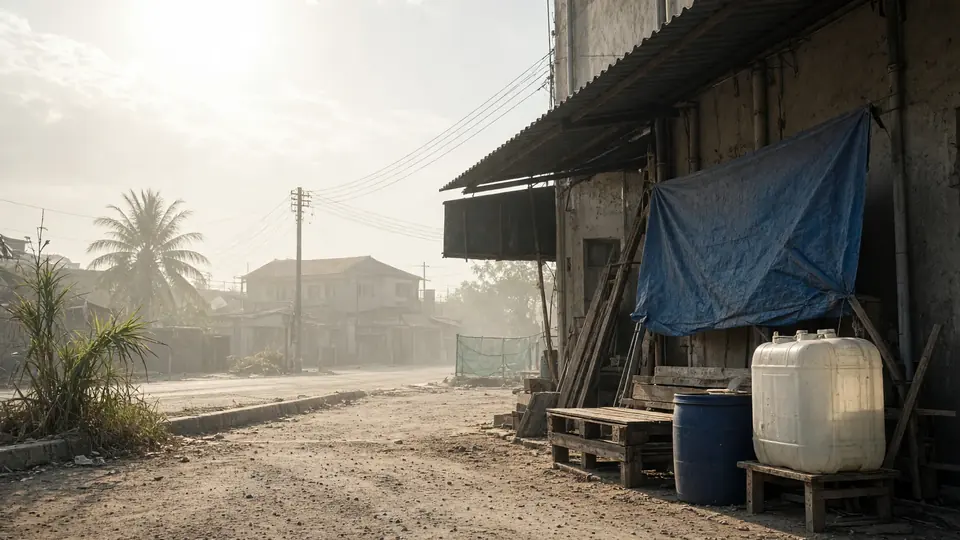
An Asian Development Bank report released in June revealed that many Southeast Asian cities lack adequate heat risk assessments, while regulations protecting outdoor workers from extreme heat are either weak or unenforced.
The region's temperatures have been steadily climbing, with the annual mean temperature rising by 0.14 degrees Celsius to 0.2 degrees Celsius per decade since the 1960s, according to the report.
The regulatory gaps leave millions of construction, agriculture and platform workers vulnerable, as their schedules are determined by employers or output targets rather than their own ability to adjust to dangerous heat conditions.
Some workers have found ways to adapt. Chung, a palm oil smallholder, tends to oil palms younger than three years in the early mornings and evenings, as these younger trees offer little shade. His tasks include spraying pesticide, applying fertiliser and weeding.
"We try our best to avoid going to the plantation around noon," Chung said. He carries extra drinking water and, as a smallholder, has the autonomy to decide when to slow down or change his hours.
However, not everyone shares that flexibility. Many outdoor workers across Southeast Asia cannot escape midday heat because their schedules are set by others, placing them at risk as temperatures continue to rise.
The Asian Development Bank findings highlight a troubling gap between the region's climbing temperatures and the policy framework needed to protect those most at risk from heat exposure.
Frequently asked questions
What are the main heat-related risks for outdoor workers in Southeast Asia?
Outdoor workers in Southeast Asia, including those in construction, agriculture, and platform work, face growing heat risks due to rising regional temperatures. The region's annual mean temperature has been rising by 0.14 to 0.2 degrees Celsius per decade since the 1960s. Many workers cannot adjust their schedules to avoid dangerous midday heat because their work is determined by employers or output targets rather than their own ability to adapt to heat conditions.
Why are legal protections inadequate for outdoor workers in Southeast Asia?
According to an Asian Development Bank report released in June, many Southeast Asian cities lack adequate heat risk assessments, and regulations protecting outdoor workers from extreme heat are either weak or unenforced. This regulatory gap leaves millions of vulnerable workers without sufficient legal safeguards against heat exposure.
How do some outdoor workers manage heat exposure in Southeast Asia?
Workers with flexibility in their schedules, such as smallholders, can take adaptive measures to reduce heat exposure. These include working during cooler early morning and evening hours, carrying extra drinking water, and having autonomy to slow down or adjust work hours as needed. However, many workers lack this flexibility due to employer-set schedules or output targets.
You may also like
 International
China opens first river-to-sea canal since 1949 to boost inland trade
 National
Southeast Asia confronts energy crisis as LNG prices surge amid Iran conflict
 Cyber Security
Thai police bust international scam ring targeting South Korean nationals from Bangkok luxury house
 Cyber Security
Cambodia's scam networks relocate rather than dismantle after arrests
Most read
- 1
Tesla audits Chinese suppliers to scale up Optimus robot production
- 2
Former minister Lakhan Singh Rajput to inaugurate temple bhandara at Shri Chakreshwar Mahadev
- 3
Firozabad BSA finds four government schools locked during inspection
- 4
Tamil Nadu dengue cases fall for third consecutive year to 17,049
- 5
Social workers stage silent protest at Fufund railway station for train halts
Comments
No comments yet. Be the first to comment.