
Skyroot Aerospace's Vikram-1 Becomes India's First Private Orbital Rocket
Skyroot Aerospace's Vikram-1 successfully reaches orbit, marking a milestone for India's private space sector and facing challenges ahead.


Skyroot Aerospace’s Vikram-1 Successfully Reaches Orbit, Marking a Milestone for India’s Private Space Sector
In a historic achievement, Skyroot Aerospace’s Vikram-1 rocket became the first privately developed Indian orbital launch vehicle to successfully reach low-earth orbit. The launch took place at 12:05 p.m. on July 18, marking a significant shift in India’s space programme, which until now had been dominated by the state-funded Indian Space Research Organisation (ISRO).
A New Era for India’s Space Industry
The mission, aptly named ‘Aagaman’, Hindi for ‘arrival’, symbolizes the arrival of private players in India’s space sector. This development comes after the Indian government’s 2020 decision to open the domestic space industry to private companies, allowing them to build launch vehicles and use ISRO’s infrastructure. Globally, only a handful of private firms, including SpaceX and Rocket Lab, have achieved similar milestones.
Vikram-1, a four-stage rocket, is designed to carry payloads of up to 480 kg to low-inclination orbits and 290 kg to sun-synchronous orbits at 500 km altitude. Mission Aagaman was a developmental flight aimed at testing critical parameters such as stage separation, propulsion, guidance, and orbital insertion. While the rocket carried payloads, the primary focus was on validating its performance.
Challenges in a Competitive Market
Despite the successful launch, Skyroot faces significant hurdles in establishing itself as a sustainable business. The global small-satellite launch market, which the company aims to tap into, is increasingly competitive and cost-sensitive. Many small satellite makers opt for rideshare options on larger rockets like SpaceX’s Falcon 9, which offer lower costs but less flexibility. This has driven down launch fees, making it harder for dedicated small-satellite launch vehicles to compete.
Skyroot’s roadmap includes two more developmental flights for Vikram-1 before it is deemed market-ready. The company also plans to develop Vikram-2, capable of carrying up to 1,000 kg to low-earth orbit, with a maiden flight targeted for 2027. Additionally, Skyroot is working on a fully reusable launch vehicle, a move that could help it reduce costs and enhance its competitiveness.
Domestic and Global Opportunities
India’s lower manufacturing and labour costs, combined with access to ISRO’s infrastructure, provide Skyroot with a potential edge. However, the domestic market for small-satellite launches remains limited, and even ISRO does not currently launch 12 small satellites annually. This means Skyroot will need to secure international customers to sustain its operations.
The company also faces competition from ISRO’s Small Satellite Launch Vehicle and startups in Europe, the U.S., China, and elsewhere. Many of these firms have struggled to secure contracts or have pivoted away from launch services due to the high costs and low margins involved.
A Milestone with a Long Road Ahead
Skyroot’s achievement is undeniably a milestone for India’s nascent private space sector. Designing, building, and successfully launching an orbital-class rocket on the first attempt is a rare feat globally. However, the path to commercial success will require the company to repeatedly deliver reliable launches at competitive prices while navigating a challenging market landscape.
With Mission Aagaman, Skyroot has demonstrated its technical capabilities. The next challenge will be turning this success into a sustainable business model in an evolving and highly competitive space industry.
Source: The Hindu
Frequently asked questions
What is the Vikram-1 rocket?
The Vikram-1 rocket is India's first privately developed orbital launch vehicle, designed by Skyroot Aerospace to carry payloads to low-earth orbit.
When did Vikram-1 successfully reach orbit?
Vikram-1 successfully reached orbit on July 18 at 12:05 p.m.
What is the primary focus of the Vikram-1 mission named 'Aagaman'?
The primary focus of the 'Aagaman' mission was to validate the performance of the Vikram-1 rocket, including testing critical parameters such as stage separation and propulsion.
What are Skyroot Aerospace's future plans for the Vikram rocket series?
Skyroot plans to conduct two more developmental flights for Vikram-1 before it is market-ready and aims to develop Vikram-2, capable of carrying up to 1,000 kg to low-earth orbit, with a maiden flight targeted for 2027.
What challenges does Skyroot Aerospace face in the market?
Skyroot faces challenges from a competitive global small-satellite launch market, where many satellite makers prefer rideshare options on larger rockets, driving down launch fees.
You may also like
 International
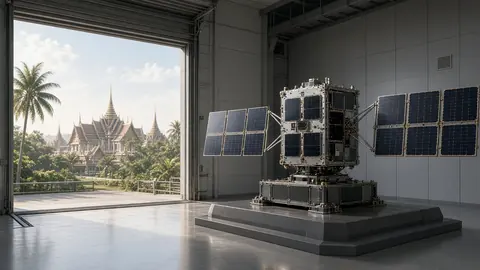
Chinese space firm GalaxySpace delivers first turnkey satellite system to Thailand
 Politics
Convergence of space, AI, quantum tech will define 21st century geopolitical power: Minister
 National
U.S. nuclear industry prepares joint response to India's new atomic energy rules
 Defence
Vietnam-BrahMos missile deal nearing finalization, says BrahMos Aerospace chief
Most read
- 1
Air China Adds Extra Flight for Passengers Stranded in Fuel-Starved Cuba
- 2
Western disturbance to bring rain, hail and strong winds across north India
- 3
Yogi Adityanath Directs No Occupied Houses Be Demolished for Achhalda Bridge
- 4
Gwalior Temple Truck Crash Kills 12, Injures 28-29 Devotees During Navratri
- 5
Schools Shut in Five Tamil Nadu Districts, Including Chennai, Amid Heavy Rain
Comments
No comments yet. Be the first to comment.